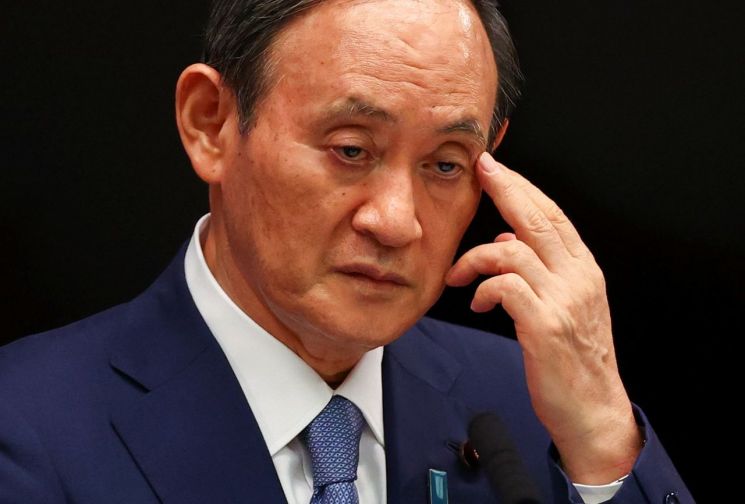
[Asia Economy Reporter Park Byung-hee] It is forecasted that the ruling Liberal Democratic Party (LDP) will not secure a majority in this fall's Japanese House of Representatives election (general election).
The Japanese weekly magazine "Shukan Bunshun" reported in its latest issue released on the 5th that, based on an analysis of the overall situation in all 289 electoral districts conducted together with Masashi Kubota, head of the Political Public Relations System Research Institute, this prediction was made.
Shukan Bunshun and the Political Public Relations System Research Institute assumed a scenario where Prime Minister Yoshihide Suga dissolves the House of Representatives immediately after the Tokyo Olympics and Paralympics (July 23 to September 5), and analyzed the 289 district seats and 176 proportional representation seats.
The LDP is predicted to secure a total of 230 seats, combining 164 district seats and 66 proportional representation seats out of the total 465 House of Representatives seats. This is three seats short of the 233 needed for an outright majority. Compared to the 276 seats the LDP won in the 2017 general election, this represents a loss of nearly 50 seats.
The coalition partner Komeito Party is expected to gain 30 seats, an increase of one seat from the current number, combining 7 district seats and 23 proportional representation seats. Even if the LDP loses its majority, the combined seats with Komeito would be 260, comfortably securing a majority and allowing the coalition government to continue.
The main opposition Constitutional Democratic Party is predicted to increase its seats from the current 109 to 125, the Communist Party from 12 to 18, and the Democratic Party for the People from 7 to 15.
The right-wing party Nippon Ishin no Kai is expected to make significant gains, increasing from 10 to 32 seats.
Prime Minister Suga is known to have a strategy to lead the LDP to victory in the general election by highlighting the successful hosting of the Tokyo Olympics and Paralympics and the COVID-19 vaccination achievements, aiming for re-election in the LDP presidential election.
However, if the Suga Cabinet's approval rating falls to the extent that the LDP struggles in the general election, voices within the party may grow to hold the presidential election first and then dissolve the House of Representatives.
Prime Minister Suga's term as LDP president lasts until September 30, and the term of the House of Representatives lasts until October 21.
© The Asia Business Daily(www.asiae.co.kr). All rights reserved.

















