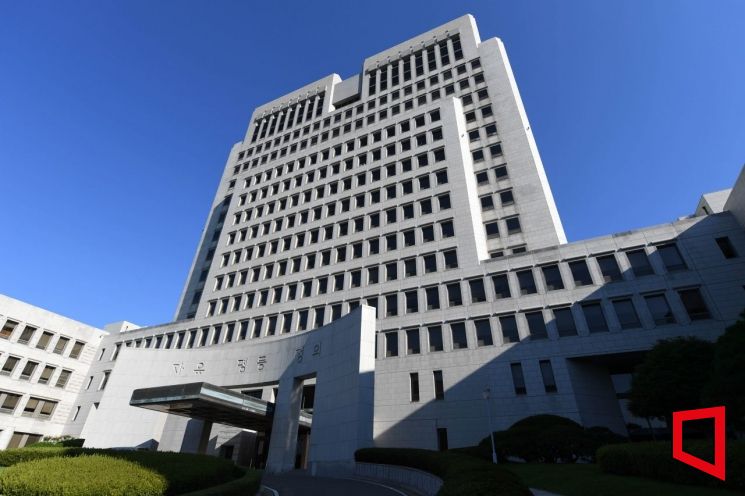
 Supreme Court, Seocho-gu, Seoul. Photo by Mun Ho-nam munonam@
[Asia Economy Reporter Kim Daehyun] The Supreme Court has ruled that even if a waste treatment facility is acquired, the obligation to process existing abandoned waste is not automatically transferred.
On the 5th, the Supreme Court's 3rd Division (Presiding Justice Lee Heung-gu) announced that it overturned the lower court's ruling, which had ruled against Company A, a manufacturer and seller of toilet paper, in its appeal against the Wanju County Governor's order to process abandoned waste, and sent the case back to the Gwangju High Court for retrial.
Previously, Company B, which operated a waste treatment facility in Wanju County, Jeonbuk, was ordered in 2016 to process about 5,000 tons of waste but failed to comply. Wanju County revoked Company B's intermediate recycling business permit.
The following year, Company A acquired ownership of the crushing and grinding facilities of the waste treatment plant from Company B through an auction. Wanju County ordered Company A to process the waste abandoned by Company B.
The first trial ruled against the plaintiff. At that time, the court stated, "The plaintiff succeeds the rights and obligations according to Wanju County's permits, approvals, registrations, or reports," and "The defendant did not bear the legal obligation to notify about the abandoned waste during the auction process, and there was no mention of the abandoned waste in the auction process, so it cannot be considered an abuse or excess of discretion." The second trial also upheld this judgment and dismissed Company A's appeal.
However, the Supreme Court ruled, "Company A cannot be considered to have succeeded the rights and obligations under the permit through the auction," and ordered the case to be re-examined and judged.
The court pointed out, "The effect of succession of rights and obligations under the permit occurs when the transferee of the waste treatment facility reports the succession of rights and obligations to the administrative authority and the permitting authority accepts it," and "Company A has not reported the succession of rights and obligations." It also added, "Company A is engaged in a business unrelated to waste treatment," and "The lower court erred in its understanding of the law regarding delayed damages under the Labor Standards Act, which affected the judgment."
© The Asia Business Daily(www.asiae.co.kr). All rights reserved.
















