Mitsubishi, Fujitsu Face Worsening Semiconductor Shortage
Some Air Conditioner Production Reduced in Response
Daikin to Resume August Production with Alternative Semiconductor Secured
Domestic Home Appliance Companies Report "No Issues" in Semiconductor Procurement
[Asia Economy Reporter Suyeon Woo] The semiconductor supply crisis is impacting the global air conditioner market, including Japan and China, causing production disruptions. While domestic companies that have strengthened their parts supply chains report no issues so far, they remain alert to the potential negative effects on the overall market in the future.
According to Nikkei on the 5th, amid the recent prolonged heatwave, Japanese air conditioning companies are experiencing some production setbacks due to semiconductor parts shortages. Leading Japanese air conditioner manufacturers such as Mitsubishi, Fujitsu, and Panasonic are struggling to secure parts supplies, reducing production on some lines, while Daikin, the world's largest air conditioner company, is seeking alternative semiconductors.
Mitsubishi began adjusting production volumes focusing on small air conditioners from the end of June, and Fujitsu reportedly prioritized production of popular models while reducing output of some premium products. Daikin has managed to secure alternative semiconductor supplies, but actual production is expected to start only from August, raising concerns that it may not fully benefit from the peak air conditioner season.
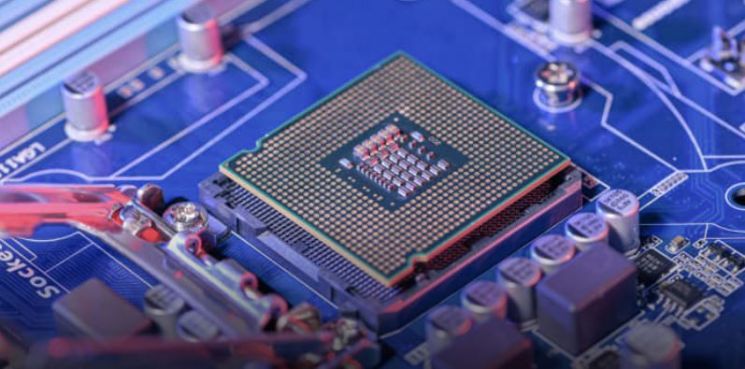
The severe semiconductor supply shortage faced by Japanese air conditioning companies is due to a fire accident at Renesas, a Japanese semiconductor company. The Renesas Naka plant halted production following a fire in March, taking more than four months to fully normalize. Although production has recently returned to normal, additional time appears necessary to resolve the short-term supply shortage in the market.
Renesas primarily produces microcontroller units (MCUs) used in automobiles and home appliances, holding about 20% of the global MCU market share as the industry's second-largest company. As the global MCU shortage worsens, the shutdown of Renesas, the second-largest player, has hit Japanese home appliance companies, which rely heavily on its supply.
Furthermore, since priority is given to producing automotive MCUs, which are in severe shortage, it is expected to be difficult to increase production of MCUs for home appliances. Fortunately, as August approaches, the peak air conditioner season is ending, but there are concerns that this supply shortage could spread beyond air conditioners to other home appliances or other countries.
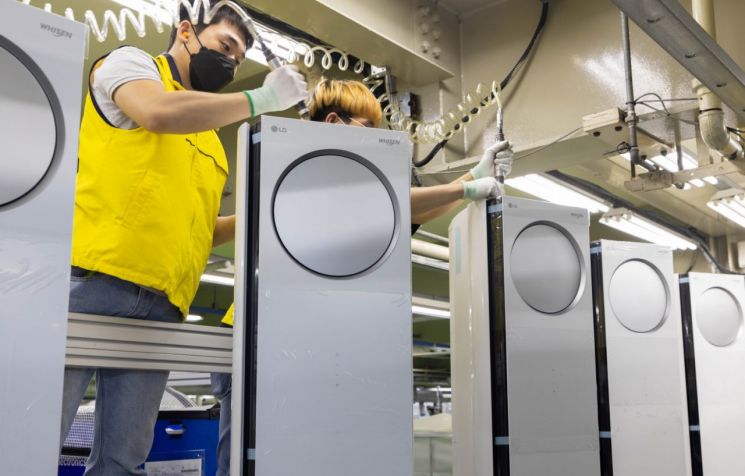 LG Electronics employees are busy working on the air conditioner production line in Changwon, Gyeongnam. Photo by LG Electronics
Domestic home appliance companies such as Samsung and LG Electronics currently report no issues with semiconductor supply for air conditioners. They are confident they can meet the surging air conditioner demand through strengthened supply chain management and diversification of suppliers. An industry official said, "Although there are concerns about parts price increases due to MCU shortages, we are not currently experiencing difficulties in securing quantities," adding, "Parts procurement to respond to the peak air conditioner season in late July and early August has already been completed."
In fact, Samsung Electronics' domestic air conditioner sales in July this year increased 2.5 times compared to the previous year, and sales of Wind-Free air conditioners in overseas markets in the first half of this year also rose by more than 75% year-on-year. LG Electronics is operating its air conditioner production line in Changwon, Gyeongnam, at full capacity to meet the surging demand and is maintaining smooth production by running some lines even during this week's summer vacation.
Seungwoo Lee, a semiconductor analyst at Eugene Investment & Securities, said, "Japanese companies with high procurement dependence on Renesas seem to be affected," adding, "Samsung Electronics produces home appliance MCUs in its semiconductor division and procures them internally, and LG Electronics also appears to have no supply issues so far due to diversified supply chains."
© The Asia Business Daily(www.asiae.co.kr). All rights reserved.


















