Average Maximum Water Temperature of Seoul Rivers Rises 3.1°C Due to July Heatwave After 27 Years
Anyangcheon Average Maximum Water Temperature Hits 31.2°C, Higher Than the Worst Heatwave in 2018

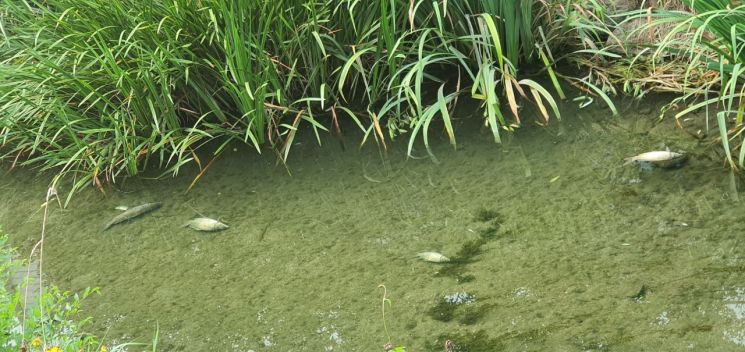
[Asia Economy Reporter Lim Cheol-young] Due to the record-breaking heatwave in July this year, the average maximum water temperature of rivers in the Seoul area has risen by up to 3.1 degrees Celsius compared to previous years.
According to the Seoul Institute of Health and Environment on the 5th, since 1993, real-time water quality monitoring stations have been operated at two main sites on the Han River?Noryangjin and Seonyu?and three tributaries?Jichon, Jungnangcheon, Tancheon, and Anyangcheon. Analyzing 13 to 17 water quality parameters, including water temperature, at five-minute intervals per station, it was found that the average water temperature of Seoul’s rivers increased by 2.2 to 2.3 degrees in the main Han River compared to the 1994?2020 average, and by 2.2 to 2.8 degrees in the tributaries.
The rising trend in water temperature was even more pronounced in the average maximum water temperature. At Noryangjin on the Han River, it rose to 26.7°C, an increase of 2.6 degrees compared to the previous average of 24.1°C, and in Anyangcheon, the average maximum water temperature rose by as much as 3.1 degrees to 31.2°C from the previous 28.1°C.
In particular, Anyangcheon recorded an average maximum water temperature of 31.2°C. This is the highest in 27 years since the severe heatwave in July 1994 and is 1.0 degree higher than the 30.2°C average maximum water temperature recorded during the worst heatwave in July 2018.
The Seoul Institute of Health and Environment analyzed that the reason for the greater increase in water temperature in tributaries compared to the main Han River is that tributaries have shallower depths and lower flow rates, making them much more sensitive to temperature changes. In small streams or stagnant sections with very low flow, the impact of air temperature is expected to be even greater.
Shin Yong-seung, director of the Seoul Institute of Health and Environment, said, "The rise in temperature due to climate change could threaten river ecosystems," adding, "The institute plans to continue researching measures to address the increasingly high water temperatures caused by summer heatwaves."
© The Asia Business Daily(www.asiae.co.kr). All rights reserved.
![Clutching a Stolen Dior Bag, Saying "I Hate Being Poor but Real"... The Grotesque Con of a "Human Knockoff" [Slate]](https://cwcontent.asiae.co.kr/asiaresize/183/2026021902243444107_1771435474.jpg)

















