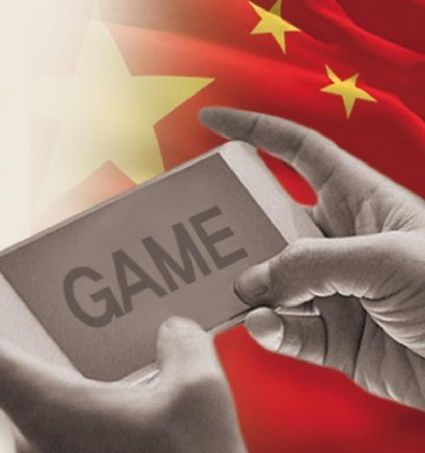
A state-run media outlet under the Chinese government has criticized online games as "spiritual opium," causing renewed tension in the domestic gaming industry.
According to the gaming industry on the 4th, Economic Information Daily, a sister publication of Xinhua News Agency, criticized online games the day before as "spiritual opium" and "electronic drugs." Following the impact of the article, the stock prices of Chinese game companies such as Tencent and NetEase plummeted, and the stock prices of domestic game companies, including Nexon listed on the Japanese stock market, were also affected. Although the article was later deleted, the aftershock remained. Tencent, mentioned in the article, backed down and announced it would strengthen its shutdown system.
The domestic gaming industry believes that this controversy will not have an immediate significant impact on business areas such as 판호 (game service licenses in China), but expressed concerns that the "China risk" remains. This is because the intentions of the Chinese government remain unclear. Recently, the Chinese government granted 판호 to domestic game companies such as Pearl Abyss for Black Desert Mobile, raising expectations for entry into the Chinese market.
A representative from a major domestic game company said, "This is an example showing the uncertainty of the Chinese market," adding, "It is a happening that shows how risky and unpredictable it is for domestic companies to do business in China." So far, China has maintained the Hanhanryeong (Korean Wave restriction order) policy in response to the deployment of the Terminal High Altitude Area Defense (THAAD) system without officially stating its position. Since March 2017, the number of 판호 issued by China for Korean games has been only three. There have also been cases where services in China were delayed. Nexon's Dungeon & Fighter Mobile has had its service in China postponed for nearly a year. Nexon cited improvements to the "minor game addiction prevention system" as the reason for the delay, but the industry widely believes that issues related to the Chinese government arose.
There are also many concerns that if China's pressure on games continues, it could affect the entire market. A representative from a mid-sized game company operating in China said, "We need to watch how China takes follow-up measures," adding, "If regulations on game policies become stricter, the size of the Chinese market itself could shrink, which may indirectly impact and make things difficult." Another game company representative said, "There is no direct damage yet, but it is true that this situation is worrisome," and added, "We are closely monitoring the situation in China."
© The Asia Business Daily(www.asiae.co.kr). All rights reserved.

















