268 Poultry Farms in the Province: 34 Types of Insecticides, 47 Types of Antibiotics, etc.
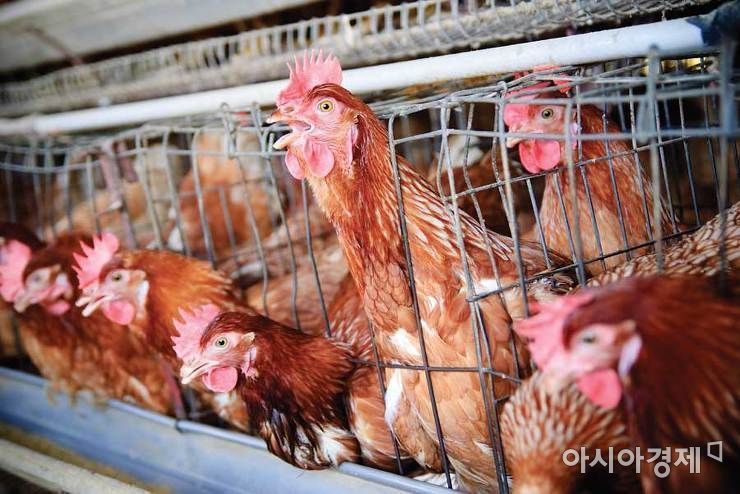
[Asia Economy Reporter Ra Young-cheol] Gyeonggi Province will strengthen egg safety inspections until the end of August, the summer season.
According to the province on the 4th, due to the increased risk of pesticide and other chemical use during the summer when mites become more prevalent, inspections for residual substances such as pesticides and antibiotics in edible eggs have been underway since May.
The inspection team collects eggs at the production stage directly from laying hen farms and tests for compliance with 34 types of pesticides and 47 types of antibiotics.
The inspection targets all 268 laying hen farms in the province, and as of the 30th of last month, 134 laying hen farms were deemed compliant.
If a farm is judged non-compliant due to illegal use of chemicals, a fine is imposed on the farm, and it is designated as a regulated farm for six months. Additionally, egg shipments are suspended, and the farm is included in special management subjects such as detailed inspections.
The province plans to conduct pre-shipment inspections on farms that are exempt from the summer intensive inspections, such as those temporarily closed or not yet started laying eggs, and will prohibit egg distribution without inspection certificates.
In particular, 97 laying hen farms culled due to the outbreak of highly pathogenic avian influenza (AI) this year are currently undergoing restocking, and additional safety inspections will be conducted when egg production begins in the second half of the year.
Furthermore, all spent laying hens in the province are required to undergo pesticide inspections before shipment, and slaughter is only permitted if the results are negative.
After completing the intensive safety inspections of eggs at the production stage, the province plans to conduct monitoring inspections on eggs distributed through large supermarkets and edible egg collection and sales businesses from next month until October.
Currently, edible egg collection and sales businesses are required to keep self-quality inspection certificates for pesticides and antibiotics within six months for each farm.
In addition, for farms previously found non-compliant, the province will check environmental improvement status and provide guidance on cleaning and washing methods to fundamentally block the distribution of non-compliant eggs.
A provincial official urged, "Only eggs that have undergone thorough inspections should be produced and distributed, and farms should actively cooperate in improving barn environments and eradicating illegal chemical use."
© The Asia Business Daily(www.asiae.co.kr). All rights reserved.
![Clutching a Stolen Dior Bag, Saying "I Hate Being Poor but Real"... The Grotesque Con of a "Human Knockoff" [Slate]](https://cwcontent.asiae.co.kr/asiaresize/183/2026021902243444107_1771435474.jpg)
















