Summer Heat and Medical Staff Battling Quarantine
4 out of 10 Quarantine Response Team Members Suffer Health Damage During COVID Period
Experts: "Authorities Must Provide Material Support and Social Solidarity Together"
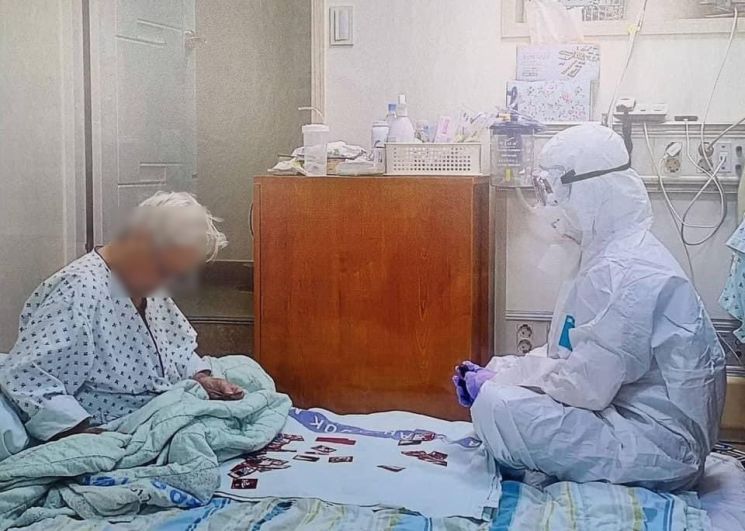 On the 1st, medical staff wearing protective suits are seen sitting with an elderly person playing Hwatu / Photo by Twitter Capture
[Asia Economy Reporter Lim Juhyung] "It's truly touching.", "The medical staff are real heroes."
Recently, an image of a medical worker wearing protective gear playing Hwatu (Korean card game) with an elderly woman lying in a hospital bed spread online, becoming a hot topic. Citizens praised the nurse's spirit of sacrifice, who puts patients first despite the tough work, but some expressed concerns about the medical staff suffering from the "double hardship" of heatwaves and frontline quarantine work.
On the 1st, a photo was posted on Twitter with the caption "This photo is so sad." The photo shows a medical worker wearing protective equipment such as a face shield and quarantine suit playing Hwatu with an elderly person. The medical worker watches over the elderly person, who is lost in thought while looking down at their Hwatu cards.
The photo is an entry for the Korea Nurses Association's "2nd Nurse Field Essay and Photo Contest" held this year, and it is known to depict a nurse caring for a COVID-19 confirmed patient hospitalized in a negative pressure room at a hospital in Seoul in August last year. The nurse reportedly wore protective clothing and played Hwatu together to comfort the elderly patient suffering from high fever and loneliness.
After the story became known, netizens poured out praise such as "It's really touching" and "Thanks to the medical staff's spirit of sacrifice, we can endure COVID-19."
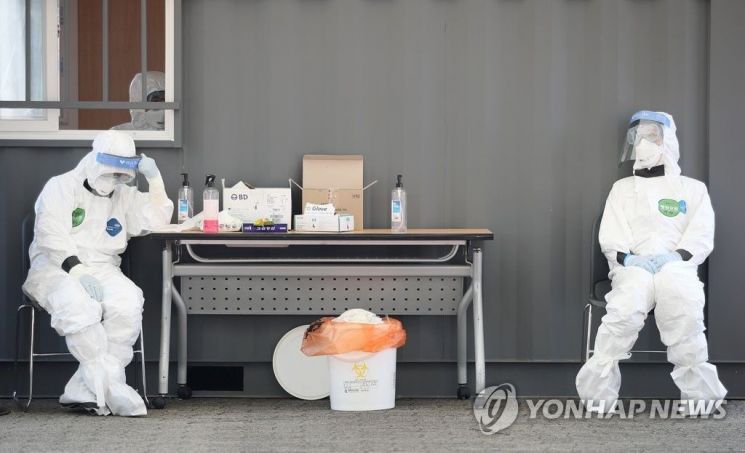 On the afternoon of March 23 last year, medical staff were sitting and taking a short break at the drive-thru screening clinic set up at Jamsil Baseball Stadium in Songpa-gu. / Photo by Yonhap News
However, some expressed sorrow for the medical staff who have to work on the front lines of COVID-19 quarantine wearing protective suits during the scorching midsummer heat.
A netizen presumed to be a medical worker wrote on Twitter, "Wearing full protective gear makes it so hard to breathe that it's suffocating," and emphasized, "Playing with the elderly woman in such an environment while enduring heavy workloads means truly sacrificing one's own body."
As the spread of COVID-19 in Korea continues for about 1 year and 7 months, medical staff working in quarantine sites are enduring their second "COVID summer" this year.
Summer is especially tough for medical workers. Since temporary screening clinics are outdoors, there are some limitations in thoroughly implementing cooling measures. Also, wearing protective gear such as Level D protective suits during the hot summer increases the risk of dehydration and heat-related illnesses.
The Level D protective suit, consisting of protective clothing, goggles, masks, and face shields, weighs a total of 5 to 6 kg, and it is difficult for sweat to evaporate, causing the internal temperature to reach 40 degrees Celsius.
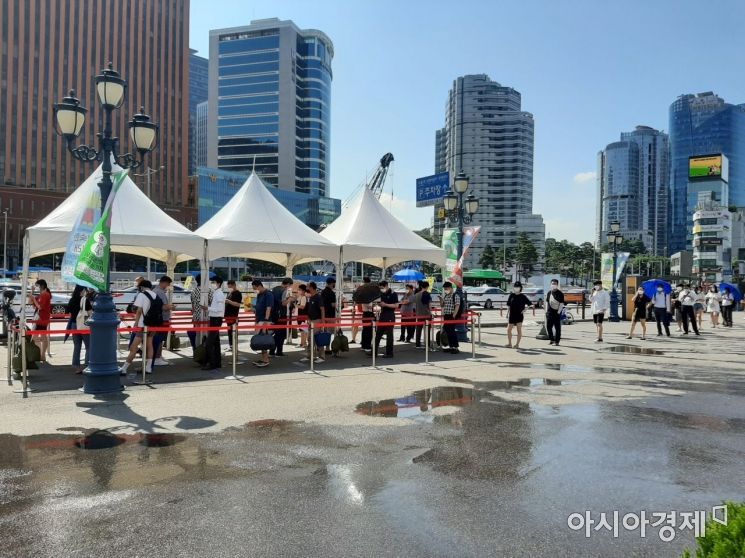
On June 9 last year, three nurses working at a temporary screening clinic set up at Nam Incheon Girls' Middle School in Michuhol-gu, Incheon, collapsed due to exhaustion and were transported to a hospital.
So far, the physical and emotional health of medical staff has significantly deteriorated. A survey conducted last year by Professor Yoo Myungsun's team at Seoul National University Graduate School of Public Health in collaboration with the Gyeonggi-do Public Health Medical Support Group targeted 1,880 medical quarantine response team members. Among respondents, 37.5% reported their health worsened while working. This means about 4 out of 10 medical workers suffered health damage while performing quarantine duties.
The deterioration of emotional state was even more serious. 16.3% of respondents said they experienced "high-level stress requiring immediate help." 73% were classified as a "group requiring re-monitoring." This means about 9 out of 10 are suffering from high levels of stress.
Experts emphasize the need for improved working conditions and material compensation for medical staff working in quarantine sites.
Professor Yoo pointed out the limits of relying solely on medical workers' sense of duty, stating, "Social investment and support must be secured to make their work environment safer and fairer, and authorities' support and social solidarity should be demonstrated together to enable early response to mental and psychological risk signals."
© The Asia Business Daily(www.asiae.co.kr). All rights reserved.



















