Egg Price Reduction Ordered in On-Site Inspection Amid Soaring Prices Ahead of Chuseok
Import Volume Expanded to 200 Million Units Over Two Months Starting August
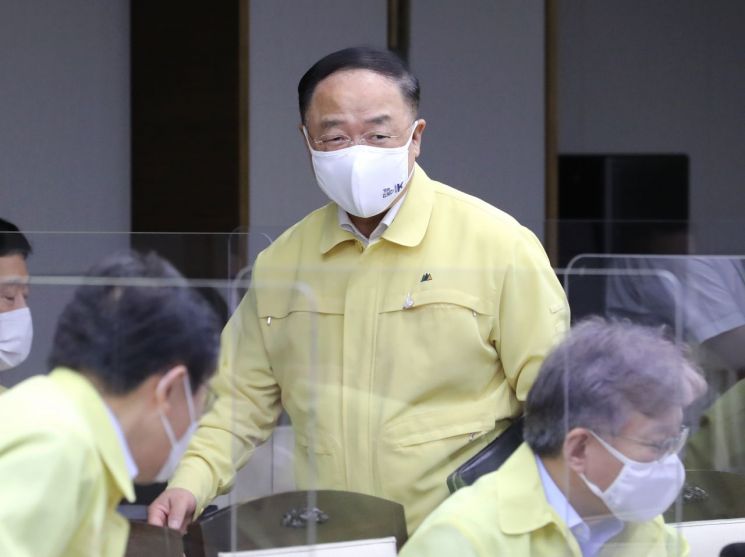
[Sejong=Asia Economy Reporter Kim Hyunjung] Hong Nam-ki, Deputy Prime Minister and Minister of Strategy and Finance, visited price-related sites and instructed relevant ministries and agencies to expand the supply of imported eggs and respond to the reduction of egg prices. In particular, he ordered that more than half of the imported eggs, which were mainly supplied to school meals and processing companies, be allocated to large supermarkets so that consumers can purchase them directly. Starting from the 5th, imported eggs will be distributed through the Korea Agro-Fisheries & Food Trade Corporation (aT) at a discounted price of around 3,000 won per tray (30 eggs).
On the afternoon of the 3rd, as part of his visit to price-related sites, Deputy Prime Minister Hong visited the Ojeong Agricultural and Marine Products Wholesale Market in Daedeok-gu, Daejeon, and the Emart Dunsan branch in Seo-gu consecutively, making these remarks. The visit was arranged to closely check the price and supply-demand trends of agricultural and livestock products and the consumer sales status of imported eggs. The consumer price inflation rate for July (2.6% year-on-year), announced on the same day, recorded the highest point within the year following May, especially due to the impact of heatwaves and avian influenza (AI), causing a sharp rise in agricultural, livestock, and marine product prices (9.6% year-on-year), continuing price instability.
Deputy Prime Minister Hong ordered the Ministry of Agriculture, Food and Rural Affairs and aT, who attended the site together, to take extraordinary measures to lower the egg prices, which have stagnated at around 7,000 won. In particular, he emphasized securing sufficient imported eggs, such as 100 million eggs in August and 100 million eggs in September, and carefully monitoring distribution to ensure that the supply of these imported eggs leads to a reduction in consumer egg prices.
He also stressed the need to increase the sales volume of imported eggs that consumers can purchase directly. To closely grasp the sales status of imported eggs and consumer egg purchasing situations, the Deputy Prime Minister moved to Emart Dunsan branch, where Emart explained that imported eggs sold since the 8th of last month have greatly helped ease consumer burdens (sold at 4,990 won per tray of 30 eggs), and that all purchased quantities in July were sold out, showing good consumer response.
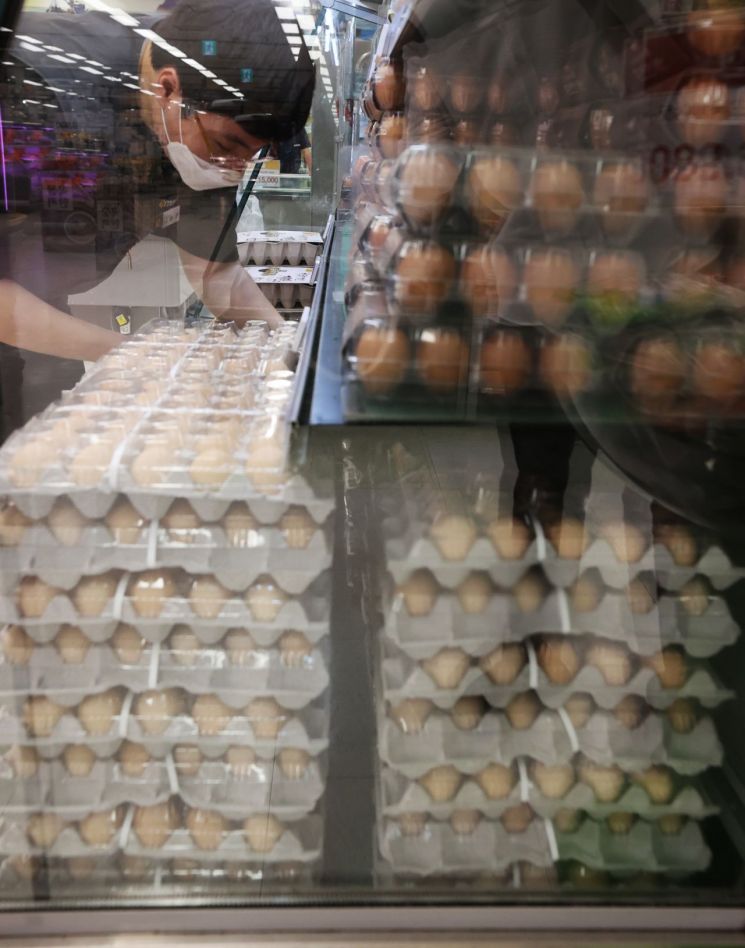
In response, Deputy Prime Minister Hong said, "For the prompt reduction of domestic egg prices, imported eggs must be supplied to consumers at lower prices and in larger quantities for the time being," adding, "To this end, the import volume should be significantly increased to 100 million eggs in August and 100 million eggs in September, and more than half of the imported eggs, which have mainly been supplied to school meals and processing companies, should be allocated to large supermarkets and others with the goal of supplying more to consumers." He also urged, "aT should reduce the supply price of imported eggs by 1,000 won starting August 5, supplying trays of 30 eggs at 3,000 won, so that consumer sales prices can be further lowered."
Additionally, Deputy Prime Minister Hong announced plans to adjust the shipment timing so that livestock product prices remain stable during the Chuseok holiday period, when demand for gifts increases. Beef will be supplied at 1.6 times the usual amount (1.2 times in 2020), and pork at 1.25 times (1.15 times in 2020). He also stated that import inspection procedures will be simplified to expand imports by 10% for beef and 5% for pork compared to the average year.
© The Asia Business Daily(www.asiae.co.kr). All rights reserved.


















