Seoul Lettuce 100g 2,000 Won, Broiler Chicken Nears 6,000 Won
Pear Prices Double Compared to Last Year, Meat Prices Also Stirring
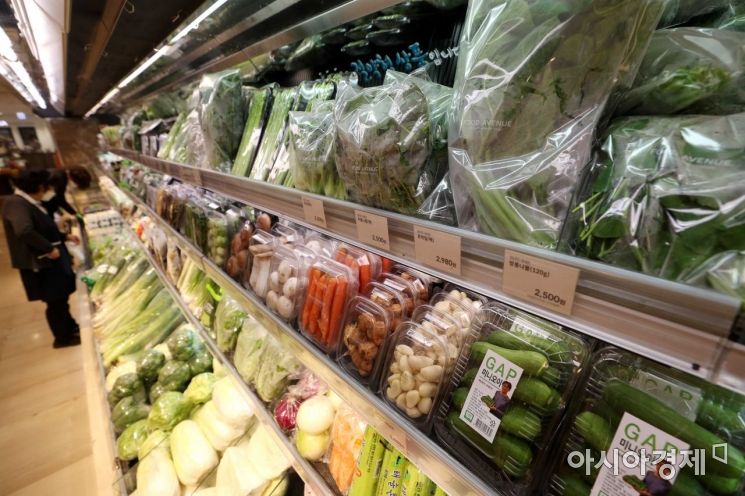 On the 28th, amid a heatwave continuing for two weeks causing vegetable prices to soar, a citizen is selecting vegetables at a large supermarket in Seoul. According to the agricultural product distribution information from the Korea Agro-Fisheries & Food Trade Corporation (aT) on the same day, prices of leafy vegetables such as lettuce, spinach, and perilla leaves have risen significantly. As of the previous day, the wholesale price of spinach was 39,360 KRW per 4 kg, double the price from a year ago (20,520 KRW). Photo by Moon Honam munonam@
[Asia Economy Reporter Lim Hye-seon] The scorching heat is driving up food prices. Prices of vegetables, meat, and fruits are soaring.
According to the Korea Agro-Fisheries & Food Trade Corporation (aT) Agricultural Products Distribution Information System (KAMIS) as of the previous day, the wholesale price of spinach (4kg) surged 121% to 42,980 KRW from 19,364 KRW the previous month. The retail price approached 2,000 KRW per 100g. The price of red leaf lettuce (4kg) rose 74.3% to 34,490 KRW from 19,760 KRW the previous month. In some areas of Seoul, it was traded at 2,190 KRW per 100g. Leafy vegetables vulnerable to sunlight suffer leaf tip burn and damage during prolonged heatwaves, reducing shipments. Watermelon prices also increased from 17,376 KRW to 23,640 KRW. The Korea Agro-Fisheries & Food Trade Corporation explained, "Despite decreased consumption due to reduced school meal demand during vacation periods, the ongoing heatwave causes leaves to soften and wilt, disrupting the supply of quality products and driving prices up." Typically, vegetable prices rise from mid-August due to the rainy season starting at the end of July and heatwaves. This year, the heatwave arrived about 20 days earlier than last year, accelerating the price increase. Additionally, the prolonged COVID-19 pandemic has reduced agricultural labor in production areas, contributing to the price hike.
Fruit prices are also on the rise. The price of pears (15kg) increased 17% to 108,200 KRW compared to a month ago, and surged 84.4% compared to a year ago.
Meat prices are also fluctuating. The price of Korean beef sirloin (100g) rose 1.7% to 13,126 KRW. Chicken (1kg) prices increased 12.7% to 5,991 KRW. Compared to a year ago, this is a 22.1% rise. Industry experts expect the price increase to continue due to rising feed costs and anticipated supply reductions caused by the heatwave. According to the National Hanwoo Association Central Committee, feed prices per bag rose by more than 1,000 KRW between February and March, and were increased again by 1,000 to 1,250 KRW per bag earlier this month. This is due to increased cost burdens on feed companies from rising international grain prices. From January to June this year, prices of the three major international grains?corn, wheat, and soybeans?surged up to 50%. Additionally, the heatwave has caused the deaths of approximately 220,000 livestock animals, resulting in further losses.
A distribution industry official said, "With the social distancing level raised, demand for home-cooked meals has increased, and the ongoing heatwave is expected to keep driving up grocery prices for the time being."
© The Asia Business Daily(www.asiae.co.kr). All rights reserved.

















