Strengthening Weekly Monitoring
Reports on High-Income Earners' Credit Loans and High DSR Ratios
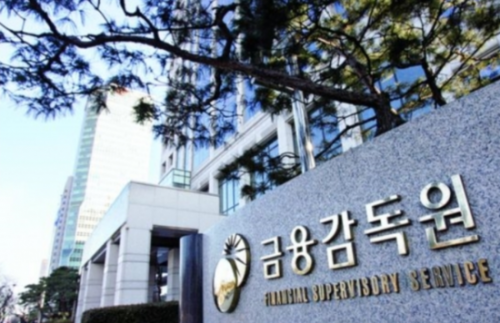
[Asia Economy Reporter Ki Ha-young] Financial authorities have strengthened monitoring to curb the increase in household loans in the secondary financial sector. The loan amount inspection cycle has been shortened to a weekly basis, and detailed reports on the status of household loans are now required.
According to the financial sector on the 1st, the Financial Supervisory Service recently requested savings banks to compile statistics related to household debt and submit them by the 5th. The requested information includes the amount and number of newly disbursed loans, the proportion of high-income borrowers in credit loans, and the proportion of high Debt Service Ratio (DSR).
Excluding jeonse loans, they were asked to submit data on the proportion of borrowers with credit loans exceeding 100 million KRW whose income is above or below 80 million KRW, the proportion of borrowers with DSR exceeding 70% or 90%, and the proportion of people who took out mortgage loans secured by houses in speculative overheated districts.
The industry has responded that this is unusual. This is because the request includes specific details beyond the usual scope. Since figures related to mortgage loans and high-income credit loans were requested, it is interpreted as an attempt to confirm the "balloon effect" caused by tightened loan regulations in the primary financial sector.
Along with this, the Financial Supervisory Service decided to shorten the inspection cycle for household loans in the secondary financial sector, which was previously checked quarterly or monthly, to a weekly basis. This is to closely monitor the situation and manage it promptly, as the increase in household loans must be significantly reduced in the second half of the year.
Financial Services Commission Chairman Eun Sung-soo stated on the 28th of last month that the household loan growth rate in the first half of this year was at an annualized rate of 8-9%, and to meet the original target growth rate of 5-6% annually, it must be managed at 3-4% annually in the second half.
The financial authorities particularly judged that the increase was large in savings banks and Nonghyup mutual finance, focusing on managing these institutions. The Financial Supervisory Service recently held meetings over two weeks with representatives of seven savings banks with excessively high household loan growth rates in the first half and seven large savings banks.
© The Asia Business Daily(www.asiae.co.kr). All rights reserved.
![Clutching a Stolen Dior Bag, Saying "I Hate Being Poor but Real"... The Grotesque Con of a "Human Knockoff" [Slate]](https://cwcontent.asiae.co.kr/asiaresize/183/2026021902243444107_1771435474.jpg)
















