Joint Korea-US Statement Adopted on the 29th... Additional Partial Return of Yongsan Base by Early Next Year... District Mayor Seonghyeon Growth Hopes for Faster Negotiations
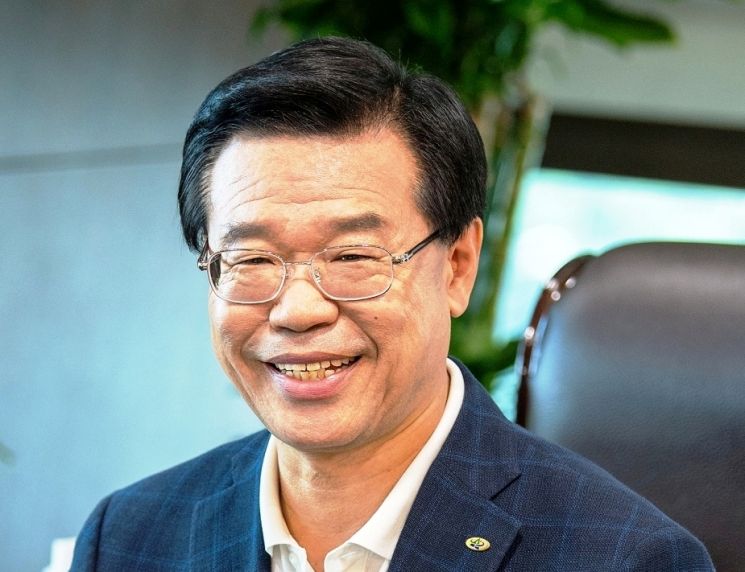
[Asia Economy Reporter Jong-il Park] Yongsan District Office (Mayor Seong Jang-hyun) has expressed a 'welcome' stance on the joint statement by the Korea-US Status of Forces Agreement (SOFA) Joint Committee co-chairs regarding the return of part of the US military base Yongsan Garrison (500,000㎡).
Seong Jang-hyun, Mayor of Yongsan District, said, “Following the return of two sports facility sites (53,418㎡) within Yongsan Garrison to the government at the end of last year, an additional site of about 500,000㎡ will be returned by early next year,” expressing expectations that “the creation of Yongsan National Park, the district’s top long-cherished project, will accelerate.”
He also stated, “We will mobilize all the capabilities the district has to create a complete ecological park,” and added, “We will reveal the actual state of environmental pollution through groundwater quality inspections around the US military base and will actively participate if a Korea-US joint investigation plan is proposed.”
The district plans to raise its voice to resume negotiations regarding the remaining US military sites.
Mayor Seong said, “The current Yongsan District Office site was once used by the US military, but during the second term of the civilian mayor, we directly requested its return, brought it up as a SOFA agenda, and successfully reclaimed the land,” adding, “We will pay close attention to minimizing remaining facilities, including the Dragon Hill Hotel.”
According to the Ministry of Foreign Affairs, on the 29th, Ko Yoon-joo, Director of the North American Affairs Bureau and co-chair of the SOFA Joint Committee, and Scott Ployce, Deputy Commander of US Forces Korea, agreed via teleconference to promote the return of approximately 500,000㎡ of the Yongsan US military base by early next year.
The return process of 80 US military bases in Korea, agreed upon by Korea and the US in 2002, has currently progressed to 68 sites. However, the Yongsan base, which holds the greatest symbolic significance, has seen delays in its return schedule due to the prolonged stationing of the Korea-US Combined Forces Command within Yongsan Garrison even after its relocation to Pyeongtaek in June 2018.
Even after the Combined Forces Command relocates, there remain issues to be negotiated such as the designation and construction of the liaison office area that will remain in Yongsan Garrison.
Mayor Seong Jang-hyun said, “Yongsan Garrison is a prism-like space reflecting world history surrounding the Korean Peninsula in the 19th and 20th centuries,” and added, “Besides environmental investigations, there is a great deal to be done including organizing historical records and materials, and preserving relics. I hope the overall land return negotiations will gain more momentum.”
In 2004, Korea and the US formally agreed on relocating the Yongsan US military base to Pyeongtaek. The Special Act on the Creation of Yongsan Park was enacted in 2007, and the relocation of US military bases to Pyeongtaek began in earnest starting with the US 8th Army Headquarters in 2017.
The district has been conducting various activities to incorporate residents’ demands into the park creation project, including forming and operating the ‘Yongsan Park Creation Cooperation Group’ in 2018, holding a photo exhibition of Yongsan Garrison from the US National Archives (2019), and conducting a public awareness survey related to Yongsan Park creation (2020).
Earlier this year, together with the Yongsan Cultural Center, the district completed a trilogy on the ‘History of Yongsan Garrison’ (Volume 1 - Searching for the History of Yongsan: AD 97~1953, Volume 2 - Searching for the History of the Lost Dunjimi Old Village within Yongsan Garrison, Volume 3 - The Korean War and Yongsan Garrison), attracting attention.
Mayor Seong said, “That US military base was once the living ground of our ancestors,” and added, “After the Japanese colonial period and US military land requisition, residents suffered greatly due to building height restrictions and development exclusions. The district will do its best to ensure that residents’ voices are prioritized in the creation of Yongsan Park.”
© The Asia Business Daily(www.asiae.co.kr). All rights reserved.

















