Oil Prices to Rise from August 1, Milk and Bread Prices to Increase Gradually
Ramen and Snacks Also Going Up, Agricultural Product Prices Soar Due to Heatwave
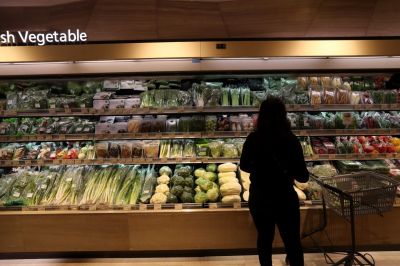 On the 28th, amid a heatwave continuing for two weeks that has caused vegetable prices to soar, a citizen is selecting vegetables at a large supermarket in Seoul. According to the agricultural product distribution information from the Korea Agro-Fisheries & Food Trade Corporation (aT) on that day, prices of leafy vegetables such as lettuce, spinach, and perilla leaves have risen significantly. As of the previous day, the wholesale price of spinach was 39,360 KRW per 4 kg, double the price from one year ago (20,520 KRW).
 Photo by Moon Honam munonam@
[Asia Economy Reporters Lim Hye-seon and Lee Seung-jin] Consumers are growing increasingly concerned about soaring 'shopping basket prices.' Food prices have surged due to rising production costs, and the heatwave has driven up prices of ingredients such as vegetables and meat. With the consumer price inflation rate remaining in the 2% range for three consecutive months, red flags have been raised not only for Chuseok prices but also for prices in the second half of the year.
Milk and Ramen Prices to Rise Starting August
According to the distribution industry on the 30th, the price of raw milk, which had its increase postponed by one year considering reduced consumption due to COVID-19 last year, will rise by 21 KRW per liter starting next month on the 1st. This is a 2.3% increase from the existing 926 KRW to 947 KRW per liter. The increase is five times the 4 KRW per liter rise seen three years ago in 2018.
When raw milk prices rise, a domino effect of price increases is expected for milk, bread, coffee, snacks, and ice cream. In fact, when raw milk prices rose by 4 KRW in 2018, Seoul Milk raised the price of its 1-liter white milk product by 3.6%. Additionally, Binggrae's flagship product, 'Banana Flavored Milk,' saw a 100 KRW increase in consumer price, leading to widespread price hikes across the food industry.
This raw milk price increase is expected to cause a greater inflation impact than three years ago. Since the increase is five times larger than that of three years ago and major raw material prices have already risen significantly, the food industry is expressing concerns about cost burdens. Given that milk prices have been adjusted promptly following raw milk price hikes in the past, milk prices are also expected to rise next month.
The baking industry is expected to be particularly hard hit. Egg prices have more than doubled compared to the same period last year due to the impact of Avian Influenza (AI), and flour prices have also risen sharply, making the raw milk price increase a trigger for further price hikes.
Ramen and snack prices will also increase. Nongshim announced that starting from the 16th of next month, the wholesale prices of major ramen products, including Shin Ramyun, will increase by an average of 6.8%. The price hikes for key products are 7.6% for Shin Ramyun, 6.1% for Ansungtangmyun, and 4.4% for Yukgaejang Bowl Noodles, based on wholesale prices. Currently, Shin Ramyun is sold at an average of 676 KRW per pack in large supermarkets, and the price will rise to about 736 KRW. Ottogi will also raise prices of major ramen products, including Jin Ramen, by an average of 11.9% starting from the 1st. Jin Ramen (mild and spicy flavors) will increase by 12.6%, and Snack Noodles by 11.6%. The price of Jin Ramen per pack at large supermarkets will change from 550 KRW to 620 KRW. Samyang Foods is also coordinating the timing of its ramen price increase.
A ramen industry official explained, "Due to the recent sharp rise in key raw material prices such as palm oil and flour, as well as labor, logistics, and sales management costs, we have inevitably decided to raise prices," adding, "Since ramen is closely related to the national diet, we have adjusted prices at the minimum necessary level."
Heatwave Worsens Food Prices... Leafy Vegetable Prices Surge
The heatwave is also causing distress in food prices. Prices of leafy vegetables and beef are soaring. According to the Korea Agro-Fisheries & Food Trade Corporation (aT) Agricultural Products Distribution Information System (KAMIS), the price of spinach (4kg) is 39,780 KRW, a 102% surge compared to 19,628 KRW last month. The price of red leaf lettuce (4kg) is 27,260 KRW, up 33.9% from 20,344 KRW last month. Leafy vegetables, vulnerable to sunlight, suffer leaf tip burns and damage during prolonged heatwaves, reducing shipments. Watermelon prices have also risen from 16,832 KRW a month ago to 22,960 KRW. Typically, vegetable prices rise from mid-August due to the rainy season and heatwave starting at the end of July. This year, the heatwave began about 20 days earlier than last year, accelerating the price increase. Additionally, the prolonged COVID-19 pandemic has reduced farm labor, contributing to the price hikes. If the heatwave continues, prices of other agricultural products like apples and pears, which are harvested in autumn, are also expected to be affected.
Meat prices are also concerning. According to the National Hanwoo Association Central Committee, feed prices per bag rose by more than 1,000 KRW between February and March, and were increased again by 1,000 to 1,250 KRW per bag earlier this month. This is due to rising costs borne by feed companies from increased international grain prices. From January to June this year, prices of the three major international grains?corn, wheat, and soybeans?have surged by up to 50%. Additionally, the heatwave has caused the death of approximately 220,000 livestock animals. Currently, pork prices are about 10% higher than usual, and egg prices remain around 7,500 KRW.
A distribution industry official said, "With the increase in social distancing levels, demand for home-cooked meals has risen, and the ongoing heatwave is expected to sustain the upward trend in shopping basket prices for the time being."
© The Asia Business Daily(www.asiae.co.kr). All rights reserved.

















