20.9% Increase Compared to the Same Period Last Year
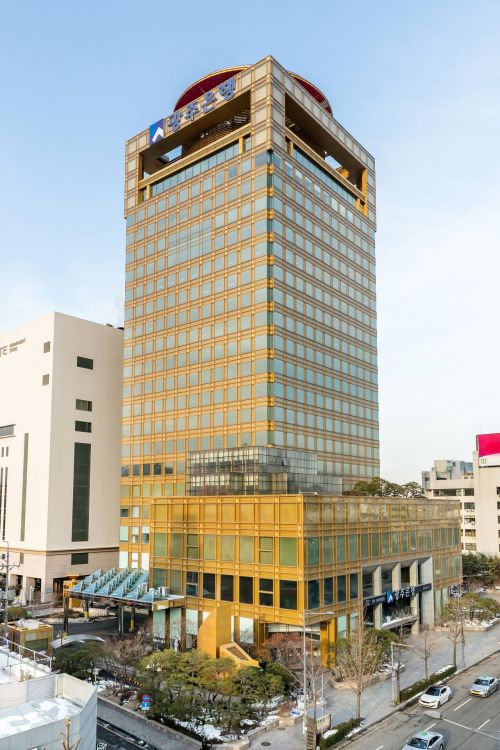
[Asia Economy Honam Reporting Headquarters Reporter Yoon Jamin] Gwangju Bank (President Song Jongwook) announced on the 28th that its net profit for the first half of 2021 reached a record high of 103.7 billion KRW (separate basis).
This represents a 20.9% increase compared to the net profit of 85.8 billion KRW in the first half of the previous year, and the operating profit for the first half was 137.9 billion KRW (compared to 116.9 billion KRW in the same period last year).
The bank maintains top-level asset soundness in the banking sector with a non-performing loan ratio and delinquency ratio of 0.38%, and other ratios such as the BIS capital adequacy ratio at 17.62% and common equity tier 1 capital ratio at 15.97% are also being managed stably.
Despite the difficult situation caused by the COVID-19 crisis, the good performance in the first half is analyzed to be based on President Song Jongwook’s usual emphasis on coexistence with the region and walking together with local residents.
President Song is seen to have strengthened the customer base and promoted substantial qualitative growth through regional community-based management that realizes ‘pursuit of value beyond profit,’ practicing inclusive finance, and customer-centered on-site management.
On the 16th, Gwangju Bank shared its second half strategy and business plan to achieve the annual goal at a management strategy meeting, presenting the key strategies for the second half as ▲ regional community-based management and practicing inclusive finance ▲ securing basic strength through sales force enhancement ▲ strengthening digital capabilities ▲ and solid internal management through securing future growth engines.
President Song of Gwangju Bank said, “With the sense of mission as the representative bank of Gwangju and Jeonnam, we will do our best to practice regional community-based management by realizing the management policy of ‘pursuit of value beyond profit’ based on customer value and social responsibility in the second half as well.” He added, “We will overcome the rapidly changing management environment with bold challenges armed with change and innovation, and since difficulties in the regional economy are expected, we will actively lead the practice of inclusive finance and social contribution activities by deepening win-win relationships with local small and medium enterprises and small business owners in the second half.”
He also stated, “In the second half, while focusing on strengthening sales power and practicing inclusive finance in the Gwangju and Jeonnam areas, which are our survival bases, we will also take the lead in responding to changes in the digital financial environment and make further efforts to improve customer service.”
Meanwhile, despite the prolonged COVID-19 pandemic and regional economic recession in the first half, Gwangju Bank showed favorable figures in profitability and soundness.
It solidified its status further through achievements such as winning first place for four consecutive years in the regional bank brand power category, strengthening financial support for small business owners affected by COVID-19, practicing inclusive finance for medium- and low-credit borrowers based on ESG management strategies, and social contribution activities for residents affected by heavy rain and COVID-19 medical staff.
In particular, the bank fulfills its corporate social role and responsibility by returning more than 10% of net profit to the local community through various social contribution activities.
Recently, to overcome the difficulties of flood victims in Jeonnam areas declared as special disaster zones including Haenam, Gangjin, Jangheung, and Jindo due to record-breaking heavy rain, the bank directly produced and delivered 1,000 emergency relief boxes called ‘Sarang Kkureomi’ consisting of 17 items such as instant food, bottled water, and hygiene products to the Jeonnam Provincial Office.
It also produced and delivered 1,000 ‘Cheering Kkureomi’ boxes consisting of 17 items including instant food, snacks, and health supplements to the Gwangju City Hall for medical staff in the Gwangju area exhausted by the fourth wave of COVID-19 and heatwaves.
Financial support provided by Gwangju Bank to self-employed and small business owners affected by COVID-19 reached 26,096 cases and 1.144 trillion KRW as of last month.
Based on its ESG management philosophy, Gwangju Bank established an ESG team in April to focus on inclusive and productive finance and officially started ESG management. It also established the ESG Promotion Committee, a specialized consultative body, to efficiently and systematically implement ESG management.
To implement ESG management strategies, the bank participates in various local economic, social, and cultural fields with interest and problem-solving efforts, including the ‘Coal Phase-out and Green New Deal Agreement,’ Gwangju Stream relay volunteer activities, environmental love, and sales of inclusive financial products for self-employed, small business owners, and medium- and low-credit borrowers.
Recently, by issuing 100 billion KRW worth of won-denominated ESG bonds that received the highest ESG certification grade, the bank plans to use the raised funds for eco-friendly projects to activate green finance and support local small and medium enterprises and small business owners struggling due to COVID-19.
It also launched the ‘ESG SUPPORT LOAN,’ a loan product that offers preferential interest rates to excellent ESG management companies.
Furthermore, as the first regional bank to obtain full permission for MyData, Gwangju Bank has devoted efforts to leading digital innovation, achieving automation of 100 tasks through RPA (Robotic Process Automation).
Through the establishment of a BPR (Business Process Reengineering) system, the bank is simplifying work processes to improve employee work efficiency while focusing on enhancing customer consultation quality.
Additionally, it has shared human exchange programs, working methods, and organizational culture with big tech companies such as Toss, and plans to continue various activities to promptly respond to changes in the digital financial environment, fulfilling its role in regional financial development as a local bank while fully committing to leading digital innovation.
© The Asia Business Daily(www.asiae.co.kr). All rights reserved.

















