28,000 Aged Permanent Rental Units Over 15 Years and 12,000 Purchased Rental Units to be Remodeled
Green Remodeling Standard Business Model and Civil Complaint Measures Established Through 2020 Pilot Project
Expected Improvements in Rental Housing Quality, Heating Cost Reduction for Vulnerable Groups, and Related Job Creation
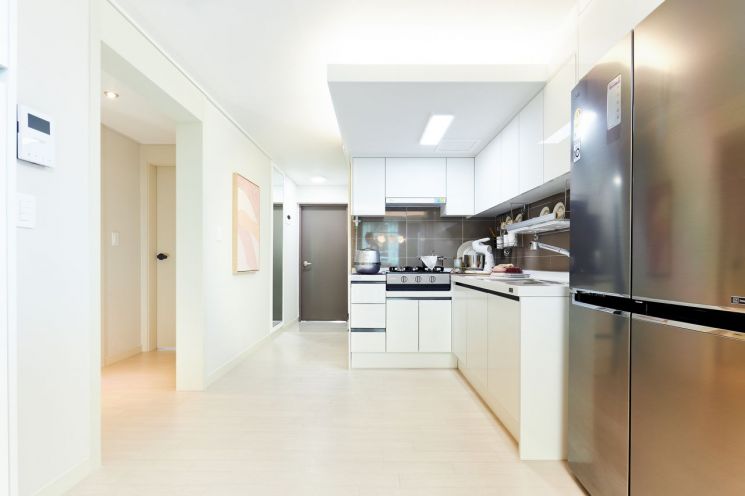
[Asia Economy Reporter Kangwook Cho] Korea Land and Housing Corporation (LH) announced on the 25th that it has established a green remodeling project plan investing approximately 590 billion KRW targeting 40,000 aging rental housing units this year.
LH is currently conducting a bidding process to select construction companies and plans to officially start green remodeling construction from September.
The aging rental housing green remodeling project aims to improve facilities to enhance energy efficiency, such as strengthening insulation and airtightness, targeting LH's aging permanent rental housing and purchased rental housing units that are over 15 years old.
LH's green remodeling project is a groundbreaking initiative to improve the living spaces of residents in aging housing. Last year, a pilot project was conducted on 10,300 units (300 newly constructed units and 10,000 purchased units), resulting in very high resident satisfaction.
Along with improving living spaces, LH plans to pilot the ‘Change Up’ project this year to enhance the complex environment by improving the exterior of aging rental housing and expanding community facilities for residents, continuing efforts to improve rental housing facilities.
Last year, LH invested 71.9 billion KRW to conduct a pilot project targeting 300 units in eight construction rental complexes including Daejeon Dunsan 3 and 10,000 purchased rental units.
As a result of installing high-performance insulation materials and replacing windows with high-efficiency ones during the pilot project, energy efficiency was dramatically improved, and housing quality was enhanced. After project completion, application results showed an overall increase in resident satisfaction.
Based on the pilot project results, LH developed a standard model for green remodeling and established countermeasures to address complaints such as noise and dust that were identified as issues.
They finalized the green remodeling technologies by project type, standardized designs, set material selection criteria to secure eco-friendly and energy performance requirements, and established energy performance improvement targets to create a standard project model.
Additionally, construction methods minimizing noise generation, such as non-removal tile replacement, were adopted, and various measures to minimize complaints were established, including providing outdoor resting areas for residents during construction periods.
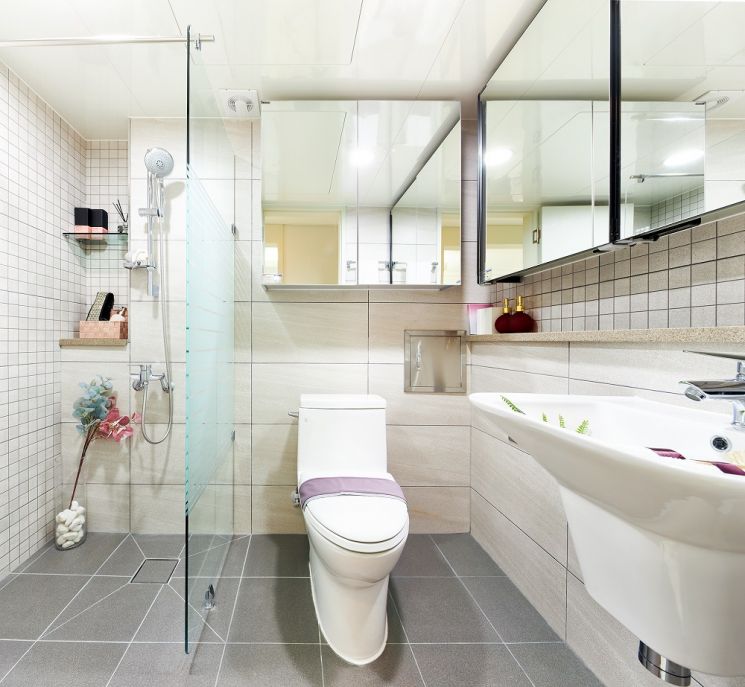
Based on the know-how accumulated through the pilot project, LH plans to significantly expand the project this year, conducting green remodeling on 28,135 aging construction rental units and 11,862 purchased rental units.
Green remodeling of construction rental housing will be promoted mainly through △unit integration remodeling and △single unit remodeling.
Unit integration remodeling involves remodeling two adjacent small units (26㎡) that are vacant into a larger unit (52㎡) to supply to multi-child families, etc. Through unit integration and balcony expansion construction, the unit size is increased, and energy performance is improved by replacing LED lighting, insulated windows, and airtight entrance doors. The living environment is enhanced by replacing with eco-friendly wallpaper and flooring.
Single unit remodeling targets vacant or re-rented units, applying built-in appliances, high-performance insulated windows, and eco-friendly materials, then reoccupying the remodeled units.
Starting this year, remodeling construction will also be conducted while residents are living in the units. Items that can be constructed without removal, such as non-removal entrance tile replacement, LED lighting installation, and bathroom fixture replacement, will be selected and remodeling will proceed according to each unit’s conditions.
Green remodeling of purchased rental housing will focus on improving living spaces to enhance residents’ safety and energy efficiency, as well as remodeling aging common areas.
LED lighting, water-saving fixtures, and aging kitchen furniture that can be replaced while residents are living in the units will be replaced. Common areas will be remodeled focusing on facilities that improve safety and convenience for all residents, such as rooftop waterproofing, solar power generation equipment installation, and automatic doors at shared entrances.
To promote efficient construction, LH plans to minimize complaints and expedite construction by implementing batch construction by floor and line for 2 to 3 buildings.
This involves remodeling vacant units to relocate residents, adopting construction methods that minimize noise and vibration, and then conducting batch construction by floor and line for the respective buildings.
To resolve noise complaints from adjacent units during construction, LH will provide vacant units, nearby lodging facilities, and resting areas within the complex as temporary housing facilities.
For noise-generating tasks such as bathroom wall demolition, demolition and cutting work will be concentrated within a specific period to minimize noise duration. Comprehensive noise reduction measures will also be implemented, including installing sound-absorbing panels and dust-proof nets, banning noisy work on weekends, and minimizing wall demolition.
Kim Hyun-jun, LH President, stated, “The LH rental housing green remodeling project is one of the ten representative tasks of the Korean New Deal. Through this, we can achieve various effects such as improving rental housing quality, reducing heating and cooling costs for vulnerable groups, realizing carbon neutrality, and creating jobs in related industries.”
© The Asia Business Daily(www.asiae.co.kr). All rights reserved.


















