Insufficient Explanation on Forced Labor of Joseon People... Request for Improvement to Japanese Government
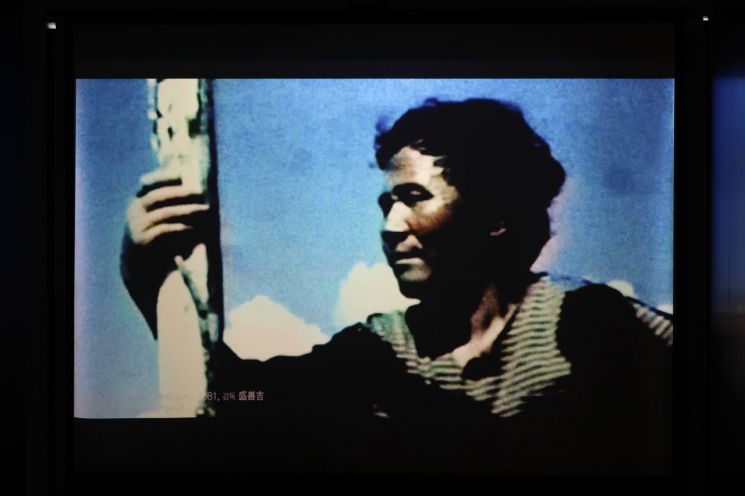 On the morning of the 16th, at the Colonial History Museum in Yongsan-gu, Seoul, videos of the late Seo Jeong-woo and others who were forcibly mobilized to the Hashima (Gunkanjima) coal mine were publicly shown for the first time during an exhibition titled "Remember the Voices of the Victims, Exhibit the History of Forced Mobilization." [Image source=Yonhap News]
[Asia Economy Reporter Minwoo Lee] UNESCO has adopted a resolution stating that the Japanese government's management of the 'Gunkanjima' related World Heritage site was inadequate. This judgment was based on the insufficient explanation regarding Koreans who were forcibly conscripted during the Japanese colonial period.
According to Kyodo News on the 22nd, the UNESCO World Heritage Committee adopted a resolution expressing strong regret over the inadequate explanation of Gunkanjima at the Tokyo Industrial Heritage Information Center.
The resolution officially criticized the exhibition at the Industrial Heritage Information Center, which opened officially in June last year, for being based on testimonies from Hashima residents denying discrimination or forced labor of Koreans, and demanded improvements from the Japanese government.
Earlier, a joint investigation team of three members from UNESCO and the International Council on Monuments and Sites (ICOMOS) visited the Industrial Heritage Information Center on-site from the 7th to the 9th of last month. Afterwards, they prepared a report stating that it was difficult to acknowledge the fact of forced labor of Korean workers. The World Heritage Committee also released a draft on the 12th expressing regret that Japan had not faithfully fulfilled its past promises. This stance was later confirmed in the current resolution.
Gunkanjima, located in Nagasaki Prefecture, Japan, was a site where Koreans conscripted from the Korean Peninsula during the Japanese colonial period suffered severe human rights violations and forced labor. In 2015, the Japanese government registered 23 sites of industrial revolution heritage, including Gunkanjima, as World Heritage sites. At that time, they promised to provide explanatory exhibitions that would remember the victims who were taken against their will and help understand the situation.
© The Asia Business Daily(www.asiae.co.kr). All rights reserved.
![Clutching a Stolen Dior Bag, Saying "I Hate Being Poor but Real"... The Grotesque Con of a "Human Knockoff" [Slate]](https://cwcontent.asiae.co.kr/asiaresize/183/2026021902243444107_1771435474.jpg)
















