KIST Leads Transfer of Advanced Prohibited Substance Detection Technologies Including Growth Hormones
Two Experts Dispatched to Tokyo Olympic Organizing Committee
Japan's Olympic Anti-Doping Research Institute, Lacking Advanced Technology, Made Initial Request
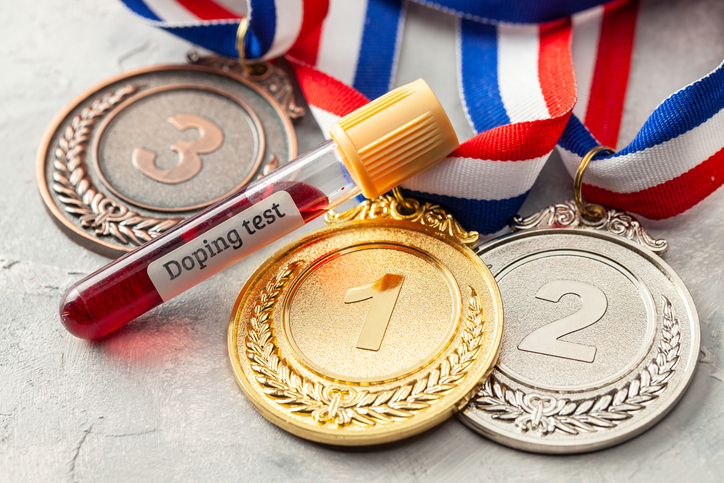
[Asia Economy Reporter Kim Bong-su] South Korea will transfer its expertise in doping control testing, accumulated through hosting major international events, to the Tokyo Olympic Organizing Committee in Japan.
The Korea Institute of Science and Technology (KIST) announced on the 22nd that Korean doping experts with world-class technology in doping control have been invited to the upcoming Tokyo Olympics. Accordingly, KIST will dispatch Center Director Son Jeong-hyun and Dr. Seong Chang-min from the Doping Control Center to Tokyo.
The KIST Doping Control Center was established in 1984 to support the Asian Games and the Olympics, conducting biological sample analysis for banned substances in athletes and research activities for developing the latest detection technologies. Over nearly 40 years, it has supported doping analysis for numerous international competitions, playing a crucial role in establishing South Korea as a sports powerhouse. Recently, the center has focused on research to equip the latest analysis systems such as brain doping, gene doping, dried blood spot (DBS), and athlete passport management unit (APMU).
Growth hormone, whose usage frequency has recently increased among elite athletes, is very difficult to detect and highly effective, making its effective detection a key issue at the Tokyo Olympics. According to the November 2020 report by the World Anti-Doping Agency (WADA) titled “Special Analysis Techniques for High-Risk Sports by Doping Centers Worldwide,” only three countries?South Korea, the United States, and Brazil?possess all analytical technologies for growth hormone and similar banned substances. The Tokyo Olympic Anti-Doping Laboratory invited KIST Doping Control Center Director Son Jeong-hyun and Dr. Seong Chang-min.
The two experts will transfer KIST’s analytical technologies for growth hormone and similar banned substances, as well as doping sample analysis know-how accumulated through the 2018 Pyeongchang Olympics, at the Tokyo 2020 Olympic Anti-Doping Laboratory. Additionally, they plan to share the latest analytical techniques for erythropoietin (EPO), a banned substance known for its use by cycling star Lance Armstrong.
Director Son said, “It is the role of anti-doping experts to develop the latest analytical technologies and thoroughly verify athlete samples so that the Olympic festival, where the world unites based on athletes’ efforts and determination, is not tainted by banned substances.” He added, “I am proud to have the opportunity to transfer our excellent analytical technologies and know-how to neighboring Japan, and I wish the best for the South Korean national athletes’ success.”
© The Asia Business Daily(www.asiae.co.kr). All rights reserved.
![Clutching a Stolen Dior Bag, Saying "I Hate Being Poor but Real"... The Grotesque Con of a "Human Knockoff" [Slate]](https://cwcontent.asiae.co.kr/asiaresize/183/2026021902243444107_1771435474.jpg)











