Ahead of US-China Vice Ministerial Talks on the 25th, China Reminds of Alaska Meeting
Warns No Cooperation on Climate Change if China Is Politically Exploited
[Asia Economy Beijing=Special Correspondent Jo Young-shin] The Chinese Ministry of Foreign Affairs confirmed the visit of Wendy Sherman, U.S. Deputy Secretary of State, to China, stating that it will "demand the cessation of interference in internal affairs and actions that harm core interests."
The Chinese Ministry of Foreign Affairs announced on the 22nd that Deputy Secretary Sherman will visit Tianjin from the 25th to the 26th and hold talks with Xie Feng, Vice Minister of Foreign Affairs of China. It added that Deputy Secretary Sherman will then meet with Wang Yi, State Councilor and Foreign Minister, to exchange views on bilateral issues.
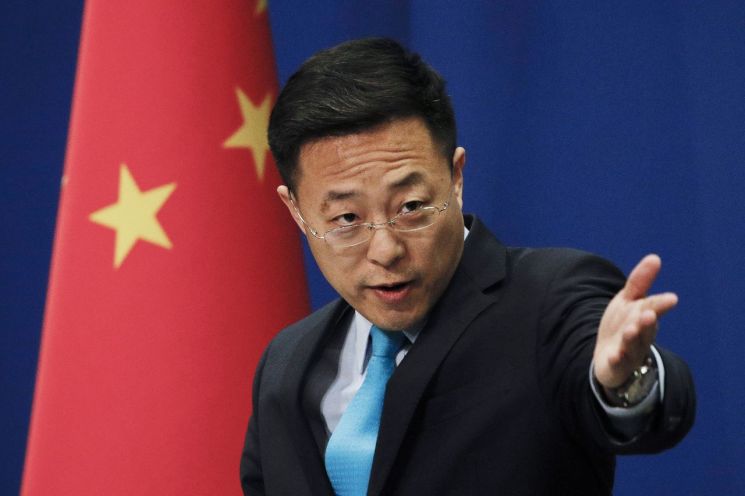
The Chinese Ministry of Foreign Affairs further emphasized that "China will clearly state its principled position on the development of China-U.S. relations and its firm stance on safeguarding sovereignty, security, and core interests," reiterating the demand to stop interference in China's internal affairs.
The state-run Global Times analyzed that regarding Deputy Secretary Sherman's visit to China, the Chinese Ministry of Foreign Affairs has presented guidelines for the agenda of the talks, indicating a determination not to repeat the same path as the China-U.S. high-level talks held in Alaska last March.
During the Alaska talks, U.S. Secretary of State Tony Blinken and White House National Security Advisor Jake Sullivan harshly criticized China on issues such as human rights in Xinjiang, Hong Kong, and Taiwan. Yang Jiechi, a member of the Political Bureau of the Chinese Communist Party responsible for foreign affairs, and Vice Minister Wang responded by saying, "The United States has many human rights issues (racial discrimination)" and "The U.S. irresponsibly makes remarks about China's human rights and democracy while failing to resolve its own problems." The Alaska talks ended without any significant outcomes, only confirming the differences in positions between the two sides.
The Global Times criticized President Joe Biden for adopting a confrontational policy toward China, deliberately creating multiple fronts including Xinjiang, Hong Kong, Taiwan, and the South China Sea.
Diao Daming, Associate Professor at the School of International Relations, Renmin University, said, "The Chinese Ministry of Foreign Affairs has already mentioned the main issues to be discussed in this meeting," adding, "If the U.S. side does not agree, there is no reason to continue the dialogue." He added that if the U.S. side accepts the issues of interference in internal affairs and core interests during this meeting, China-U.S. relations could improve.
Lu Xiang, a researcher at the Chinese Academy of Social Sciences, warned, "If the U.S. side raises issues such as Xinjiang and Hong Kong again, this meeting will be a waste of time like the Alaska talks," and "If the Biden administration continues to politically exploit China, it could negatively affect cooperative issues such as climate change."
In Beijing's diplomatic circles, there is a prospect that the U.S. side will avoid mentioning sensitive issues such as Xinjiang, Hong Kong, and Taiwan during this meeting, and only discuss areas where the two countries can cooperate, such as climate change, Iran, and denuclearization of the Korean Peninsula.
© The Asia Business Daily(www.asiae.co.kr). All rights reserved.

















