Formation of a Vital Population Structure and Strengthening Adaptability to Population Changes, 1st Population Policy Goals
109 Tasks in Six Key Areas: Jobs, Youth, Family, Shrinking Society, Super-Aged Society, Balanced Inclusion
3.56 Trill
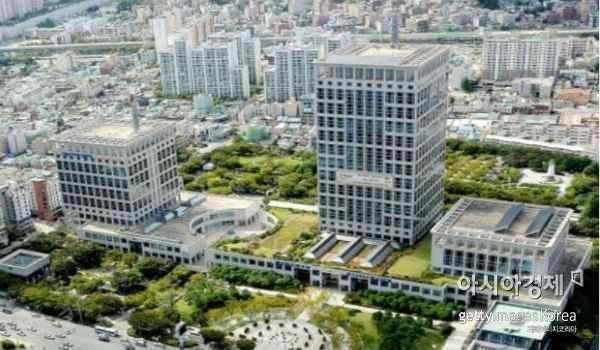
[Asia Economy Yeongnam Reporting Headquarters, Reporter Kim Yong-woo] The population policy of the type "Come to our hometown" is being discarded for the first time.
Busan City has abandoned the population policy goal of increasing the number of citizens. Instead, it has decided to innovatively promote a regionally tailored population strategy focused on quality of life.
This is based on the understanding that population policies that bring people from other cities are not a solution to overcome the current low birthrate era. Rather than using various incentives to attract people, the strategic choice is to make the city a better place to live so that population naturally flows in.
Busan City announced on the 22nd the "1st Basic Plan for Busan City Population Policy (2021?2025)," the first regionally tailored comprehensive population plan at the metropolitan city level.
Busan City stated that this basic plan was prepared through a deliberative process involving various sectors of society, including current issue research by the Busan Research Institute, expert forums, citizen forums, special team operations, discussions among related department heads, online public hearings, and review by the Population Policy Committee.
Currently, Busan shows negative trends in all major population indicators such as total population size, total fertility rate, aging rate, household structure, and local extinction risk index.
The basic plan identified the main causes as the one-way population outflow to the metropolitan area and the intensification of low birthrates.
Based on this, Busan City views the next 10 years as the last opportunity to overcome the population crisis.
Through the 1st Basic Population Policy Plan, Busan intends to comprehensively re-examine the existing population policy system and tasks and present new and innovative policies.
This plan does not set a target population number. Instead of resisting low growth and population decline trends, the policy focuses on creating a "vibrant population structure" and "strengthening adaptability to population changes" to make a city where all generations and groups?including youth, the elderly, single-person households, and foreigners?can be happy and want to live.
Furthermore, it will begin full discussions on the changing society and the new values and administrative demands that come with it.
The basic plan aims for "forming a vibrant population structure" and "strengthening adaptability to population changes," and under six major fields?job-friendly city, city where youth stay, city where families are happy, proactive response to shrinking society, vibrant super-aged society, and balanced and inclusive city?it presents 25 detailed tasks and 109 major projects in the areas of jobs, youth, family, shrinking society, super-aged society, and balance/inclusion.
The key detailed tasks by the six fields are ▲in the job sector, "activation of startups through industry-academia cooperation" ▲in the youth sector, "housing policy for youth homeownership" ▲in the family sector, "work-life balance and infrastructure development" ▲in the shrinking society sector, "smart & compact city management policy" ▲in the super-aged society sector, "expansion of labor market participation for the new middle-aged generation" ▲in the balance and inclusion sector, "balance and inclusion of generations and groups such as foreigners, multicultural families, and youth."
Busan City plans to invest 3.5736 trillion won over five years to implement the 109 major projects, securing 1.8358 trillion won in national funds and 1.7378 trillion won in city funds.
Mayor Park Hyung-joon said, "With the advent of an era of low growth and population decline, the 1st Basic Population Policy Plan focuses on policies that enhance citizens' happiness and quality of life rather than population increase. We will concentrate on creating 'Busan, a vibrant population city where all citizens are happy' through city administration that empowers citizens, leaping forward as a core of the super metropolitan economic zone, and regional innovation through industry-academia cooperation."
© The Asia Business Daily(www.asiae.co.kr). All rights reserved.
![User Who Sold Erroneously Deposited Bitcoins to Repay Debt and Fund Entertainment... What Did the Supreme Court Decide in 2021? [Legal Issue Check]](https://cwcontent.asiae.co.kr/asiaresize/183/2026020910431234020_1770601391.png)















