Lens Technology Supplying Apple Halts Contracts with Over 400 Uyghurs
Reflects Concerns of Market Exit Amid International Pressure
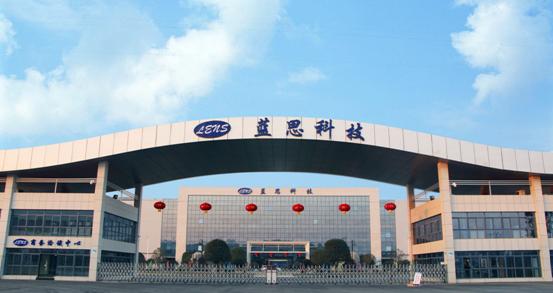
[Asia Economy Reporter Kim Suhwan] As the United States strengthens sanctions against companies linked to the Xinjiang region over the forced labor issue involving the Uyghur ethnic group, it has been revealed that more Chinese companies are ceasing to use Uyghur labor.
The Wall Street Journal (WSJ) reported on the 20th (local time) that an increasing number of Chinese companies are withdrawing from the Uyghur employment program operated by the Chinese government.
The Uyghur employment program involves providing collective job training to Uyghurs in the Xinjiang region and then relocating them en masse to factories in various parts of China to work there. The Chinese government implements this program under the pretext of poverty alleviation in the Xinjiang region.
From the perspective of Chinese companies, employing Uyghurs through the employment program not only secures a stable workforce but also grants them government subsidies.
However, the international community has criticized this 'employment program' as a forced labor scheme that effectively displaces Uyghurs from their homes.
A representative example of a Chinese company that stopped employing Uyghurs is Lens Technology, which supplies touchscreens to Apple in the United States.
According to current and former officials and residents near the factory, the company is gradually reducing the number of workers it employed through the Chinese government's Uyghur employment program, cutting about 2,200 workers.
By last summer alone, over 400 workers had their contracts terminated.
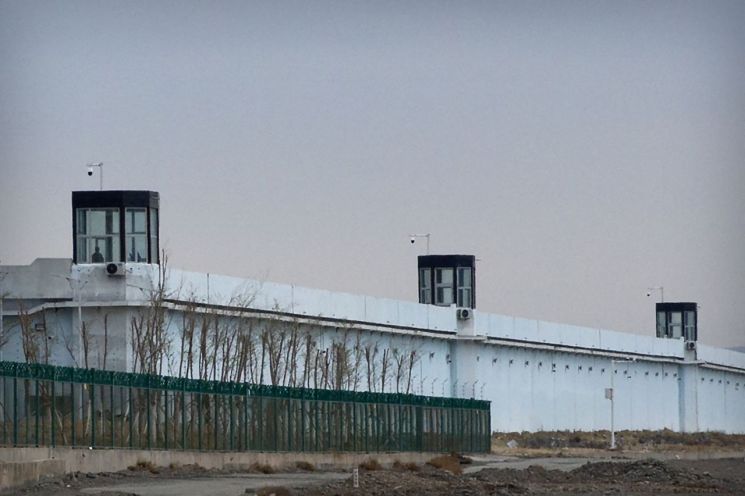
The company is also reported to have paid penalties ranging from $1,500 (about 1.7 million KRW) to $2,900 (about 3.3 million KRW) per worker who did not complete their contract period.
Sources say the company has no plans to hire new Uyghur workers within this year.
Earlier, Apple announced that it conducted over 1,100 investigations and interviewed more than 57,000 workers last year to verify labor rights conditions at companies supplying its products.
Hebei Haixin Group, which sells sanitary masks in the United States, also stopped employing workers from Xinjiang.
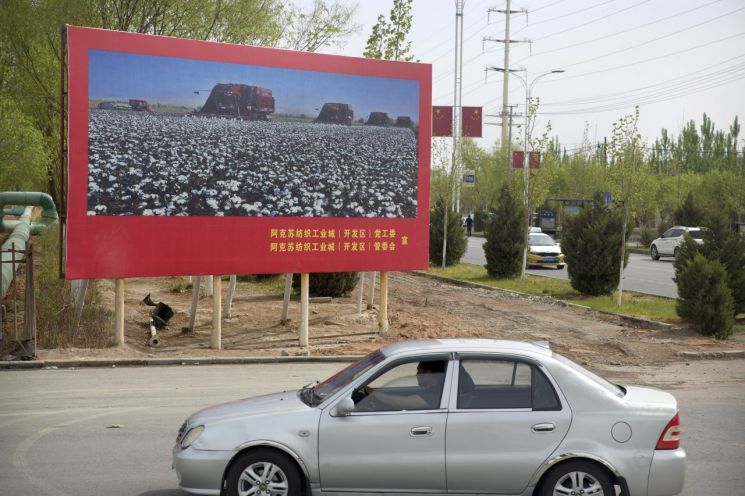 An advertisement board promoting cotton produced by the Uyghur people is installed on a street in China. [Image source=AP Yonhap News]
According to officials, the company decided not to renew contracts with workers from Xinjiang in September last year.
Taekwang Industrial's Chinese factory, which manufactures Nike products under contract, also sent Uyghur workers back to Xinjiang in the second quarter of last year.
WSJ explained that despite the subsidy benefits these companies receive from the Uyghur employment program, they stopped employing Uyghurs due to concerns that they might become targets of international sanctions.
Recently, the international community has been taking the Uyghur forced labor issue seriously and is applying comprehensive pressure on Chinese companies linked to the Xinjiang region.
Western companies have recently been conducting supply chain inspections within China, and some companies have formed separate investigation teams to examine whether forced Uyghur labor is involved in their supply chains.
Additionally, the U.S. Senate unanimously passed the 'Uyghur Forced Labor Prevention Act' last week, which completely bans imports of products made in the Xinjiang region.
Accordingly, imports of goods not approved by U.S. authorities will be blocked, and the burden of proof that the products were not made with forced labor will fall on the importers.
Especially since the Chinese government strictly controls access to the Xinjiang region, making it difficult to verify whether forced labor is involved in products made there, U.S. companies may cease cooperation with all companies linked to the Xinjiang region.
As a result, Chinese companies using Uyghur labor may face the possibility of being excluded from the U.S. market.
However, there are concerns that Chinese companies might also dismiss Uyghur workers who obtained jobs voluntarily, independent of the employment program.
Maya Wong, Senior China Researcher at the international human rights organization Human Rights Watch, said, "Chinese companies seem to be only concerned with avoiding scandals," adding, "Uyghur workers are in a situation where they cannot protect their rights."
© The Asia Business Daily(www.asiae.co.kr). All rights reserved.
![Clutching a Stolen Dior Bag, Saying "I Hate Being Poor but Real"... The Grotesque Con of a "Human Knockoff" [Slate]](https://cwcontent.asiae.co.kr/asiaresize/183/2026021902243444107_1771435474.jpg)


















