Preliminary work for 2 years for conceptual design... Final implementation expected to take 4 years
Intended to secure a safe payment method to replace cryptocurrency
China and India have decided to adopt digitalization... US, Japan, and UK are conducting research
[Asia Economy Reporter Kim Suhwan] The European Central Bank (ECB) has officially begun preparations for the introduction of a digital euro. This move is interpreted as an intention to establish a secure payment method to replace cryptocurrencies.
Following China, which has already decided to introduce digital currency, the United States and the United Kingdom are also reportedly conducting related discussions, indicating that the movement toward digital currency adoption is spreading comprehensively.
According to CNBC, the ECB Governing Council announced on the 14th (local time) that it will carry out preliminary work related to the concept of the digital euro over the next two years.
The digital euro is expected to take the form of a digital wallet where citizens of the Eurozone (19 countries using the euro) can store digital currency equivalent to banknotes and coins directly with the ECB, rather than with commercial banks.
Intention to Establish a Secure Payment Method to Replace Cryptocurrencies
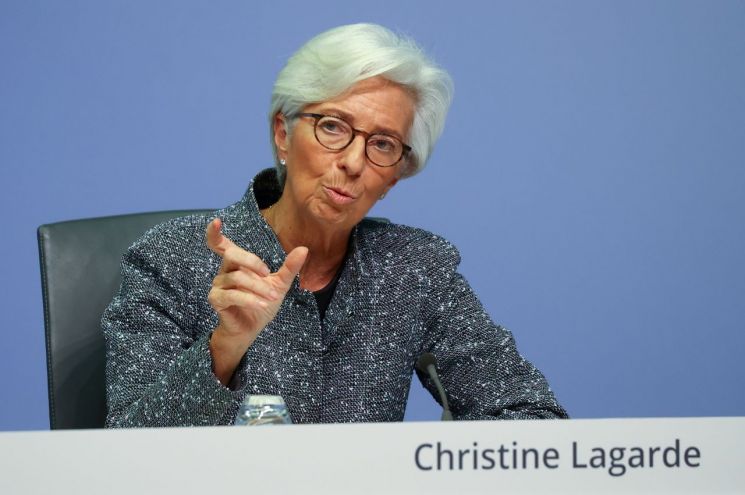
Christine Lagarde, President of the ECB, said, "It has been nine months since we published the report on the digital euro," adding, "During that time, we conducted research on digitalization in collaboration with citizens and experts. As a result, we decided to launch the digital euro project."
She continued, "Our goal is to ensure that citizens and businesses can continue to access central bank money, the safest form of currency, in the digital age."
Previously, President Lagarde had warned about the potential use of cryptocurrencies for illegal transactions and expressed a negative stance on Bitcoin. Analysts interpret this as formalizing the introduction of the digital euro as a safe and centrally supervised payment method to replace cryptocurrencies.
Furthermore, the ECB's emphasis on designing the digital euro infrastructure to be environmentally friendly is also seen as reflecting the intention to replace cryptocurrencies, which have been criticized for power wastage issues.

Bitcoin and others have been criticized for significant power consumption during mining operations, which has raised various environmental concerns.
The ECB expects that it will take at least four years to complete the introduction of the digital euro.
The ECB plans to first engage in discussions among stakeholders, including banks and consumers, to conceptualize the project.
Subsequently, it will discuss necessary legislative work with related institutions such as the European Parliament, the European Union (EU) Commission, and the Eurogroup.
The ECB will also define the roles of banks and fintech companies that will provide digital wallet services instead of the ECB.
Fabio Panetta, an ECB board member, wrote in a blog post that "the COVID-19 pandemic has shown how quickly digitalization can progress."
He added, "Digitalization is affecting payment methods. We are increasingly purchasing more things digitally and online," diagnosing that "the role of cash as a means of payment is declining."
He also emphasized, "Central banks cannot ignore this progress," stating, "As a public good, the supply of currency is a central bank's primary mission, and central banks must be bold to keep pace with the speed of change."
Bloomberg reported that with the introduction of the digital euro, the ECB could directly distribute cash to consumers, making various subsidy payments easier. The media also noted that since the digital euro cannot be easily withdrawn, the ECB would gain additional capacity to lower interest rates into negative territory.
However, the ECB stated that the introduction of the digital euro would not completely replace the cash system but serve as a complementary mechanism.
Panetta warned about the risks of digital currency replacing cash, saying, "(Digital payments) carry risks in terms of security, privacy, and accessibility. This will come at a great cost to some."
China and India Have Decided to Introduce Digitalization... US, Japan, and UK Are Conducting Research
The ECB's discussions on digitalization come amid ongoing related discussions worldwide.
According to Bloomberg, China, India, Pakistan, and South Africa have officially announced the introduction of digitalization.
Additionally, the United States, Australia, Norway, and Japan are reportedly conducting research on digitalization adoption.

In the United States, Federal Reserve Chairman Jerome Powell appeared before the House of Representatives on the same day and announced that a report on the digital dollar (CBDC) is scheduled to be released in September.
Bloomberg also reported that the United Kingdom, France, Spain, Portugal, Russia, Germany, and Canada are at the stage of exploring the possibility of digitalization adoption.
© The Asia Business Daily(www.asiae.co.kr). All rights reserved.



















