Court Administration Office Recommends Postponement of Hearing Dates
Long-Term Gaps Expected When Overlapping with Summer Recess
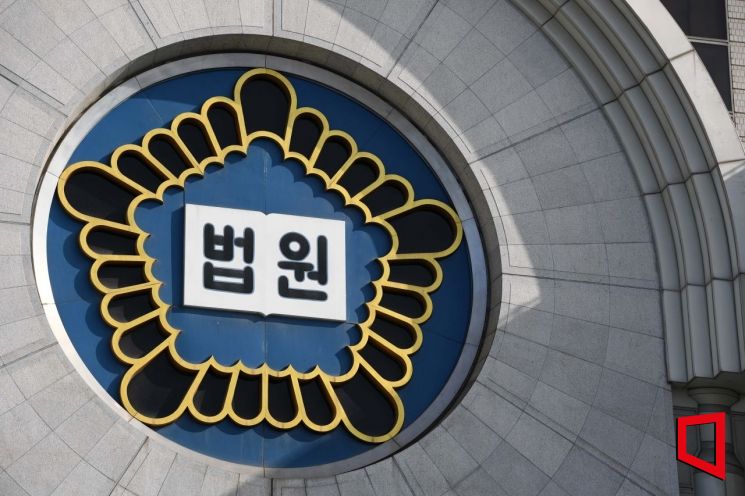
[Asia Economy Reporter Seongpil Cho] Seoul Central District Court and Seoul High Court, the largest courts in the country, will begin flexible trial operations equivalent to a recess period for two weeks starting from the 12th. This measure follows the Supreme Court’s Judicial Administration Office’s recommendation on the 9th to postpone or change trial schedules in metropolitan area courts.
According to the courts, Seoul Central District Court recommended each trial division to consider postponing or changing trials in accordance with the Judicial Administration Office’s advice. It also ordered trial members (judges) to consider working from home once a week. For cases where non-face-to-face trials are possible, video trials are being considered, and for other cases, trials will proceed with a limited number of attorneys and audience members.
However, the authority to decide on this recommendation lies with the presiding judge of each trial. The Judicial Administration Office and heads of courts at all levels can only make recommendations, not orders, to the trial divisions in accordance with the principle of judicial independence. This means there is no binding force or compulsion. In fact, the Seoul High Court reportedly notified that trial postponements or changes would be at the discretion of each trial division without separate meetings between the court chief and the senior presiding judge.
Accordingly, it remains unclear whether criminal trials, which attract significant public interest, will be postponed. For example, the appellate trial closing arguments for Professor Kyungshim Jeong of Dongyang University, scheduled for the afternoon of the same day, will proceed with a limited number of audience members. The first trial closing arguments for DL Chairman Lee Hae-wook, scheduled for the following day, have not been reported as postponed as of the morning of the same day. The trial for Samsung Electronics Vice Chairman Jae-yong Lee’s alleged illegal merger on the 15th and the first trial sentencing for former Channel A reporter Dong-jae Lee’s attempted coercion case on the 16th are also proceeding similarly.
Legal circles expect that cases with high public interest or urgent matters will likely continue without schedule changes. If trials are postponed, combined with the summer recess, trials could be delayed by more than a month. A lawyer in Seocho-dong said, "Although schedule changes are an unavoidable measure to prevent the spread of COVID-19, if the courts shut down again just before the recess period, it will cause significant disruption in case processing."
The Judicial Administration Office recommended recesses nationwide in February, September, and December last year due to the impact of COVID-19. Even then, most urgent cases where the statute of limitations was expiring or detention decisions were being made proceeded without recess. However, postponed cases experienced delays, with hearings transferred to successor trial divisions after regular personnel changes, causing disruptions such as restarting the review of materials from the beginning.
© The Asia Business Daily(www.asiae.co.kr). All rights reserved.
![Clutching a Stolen Dior Bag, Saying "I Hate Being Poor but Real"... The Grotesque Con of a "Human Knockoff" [Slate]](https://cwcontent.asiae.co.kr/asiaresize/183/2026021902243444107_1771435474.jpg)
















