Hyundai Motor Company Publishes 2021 Sustainability Report
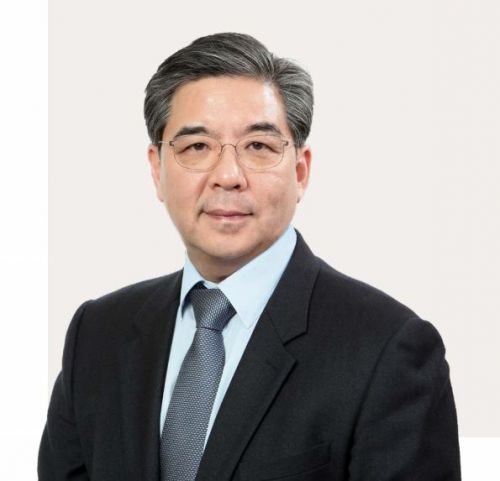
[Asia Economy Reporter Changhwan Lee] Jang Jae-hoon, CEO of Hyundai Motor Company, stated that the company will further strengthen its competitiveness in future businesses such as electric vehicles and hydrogen fuel cells.
Hyundai Motor announced on the 6th that it has published the "2021 Sustainability Report," which contains various sustainability management achievements and ESG-related data from the past year.
In his message in the report, CEO Jang emphasized, "To secure leadership and future business competitiveness in the increasingly competitive global electrification market, we will strengthen our lineup of electrified vehicles."
He explained, "In March, we successfully launched the first electric vehicle ‘Ioniq 5’ based on the dedicated platform (E-GMP), and we will enhance competitiveness in future growth businesses by securing core technologies in the hydrogen sector and expanding the fuel cell system business."
He also stated, "We will expand global sales of high-profit models such as Genesis and SUVs (Sports Utility Vehicles), strive to reduce costs through fixed cost reduction and increased standardization, and continuously promote digital-based value chain innovation," emphasizing that this will establish a solid growth foundation.
CEO Jang added, "Based on Hyundai Motor’s firm management philosophy that always prioritizes humans, we will take the lead in creating a sustainable future where all humanity enjoys free mobility and special daily lives while living safely and healthily."

ESG, a recent hot topic in management, emphasized in a separate section
This sustainability report has a separate ‘ESG Factbook’ section to make Hyundai Motor’s ESG (Environment, Social, Governance) information more accessible to key stakeholders including investors and customers.
In particular, it actively reflects global ESG disclosure guidelines such as TCFD (Task Force on Climate-related Financial Disclosures), SASB (Sustainability Accounting Standards Board), and WEF IBC (World Economic Forum International Business Council) to enhance the transparency and authenticity of non-financial information disclosure.
To emphasize ESG management, which has emerged as a key to corporate survival and sustainability, and to improve readability and convenience of information collection for users, the main text is largely divided into ‘Environment,’ ‘Social,’ and ‘Governance’ sections.
The Environment section covers Hyundai Motor’s various eco-friendly management activities aimed at responding to the global climate change crisis and minimizing environmental impact, including reducing greenhouse gas emissions, building a hydrogen ecosystem, and establishing a circular economy through product recycling.
The Social section includes efforts in human rights management such as due diligence and improvement regarding human rights risks, a flexible organizational culture encompassing diverse welfare and talent development, and efforts to build a sustainable supply chain through mutual growth with partners and ESG risk management.
It also covers efforts to enhance product quality and safety, high-level customer service and rights protection, and various CSV (Creating Shared Value) activities for global local communities.
The Governance section contains efforts to maximize shareholder rights and corporate value based on a board-centered responsible management system, ethics and compliance management emphasizing corporate transparency and fairness, and potential risks and response systems.
A Hyundai Motor official said, “In line with the increasingly diverse and emphasized global ESG disclosure trends, we focused on more active and sincere communication during the sustainability report production process,” adding, “We will continue to prepare steadily to strengthen internal substance from an ESG perspective as well as communication with external stakeholders in the future.”
© The Asia Business Daily(www.asiae.co.kr). All rights reserved.
![Clutching a Stolen Dior Bag, Saying "I Hate Being Poor but Real"... The Grotesque Con of a "Human Knockoff" [Slate]](https://cwcontent.asiae.co.kr/asiaresize/183/2026021902243444107_1771435474.jpg)












