IBS Achieves Targeted Base Editing of Chloroplast and Mitochondrial DNA Using Cytosine Base Editor
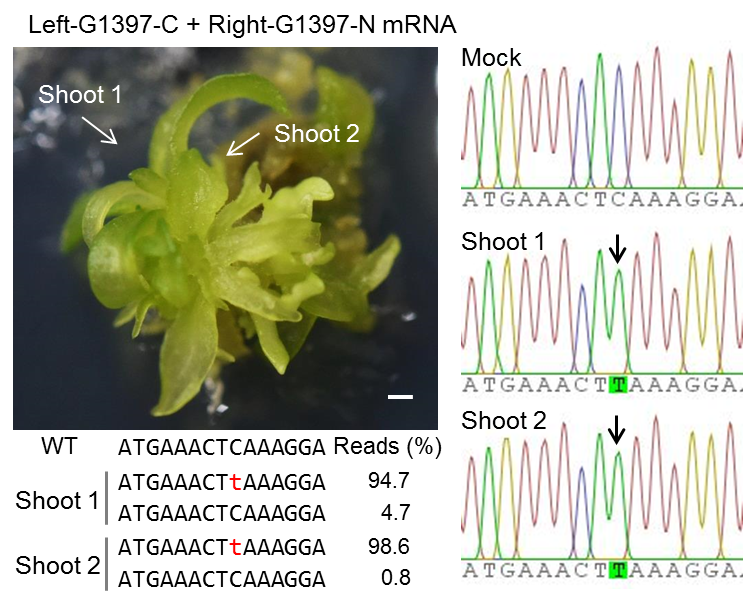 Production of chloroplast DNA-edited plants using DdCBE. Image courtesy of the Institute for Basic Science (IBS)
[Asia Economy Reporter Kim Bong-su] Domestic researchers have succeeded for the first time in the world in custom-editing the DNA of plant organelles to breed high-quality premium crops.
The Institute for Basic Science (IBS) announced on the 2nd that the Genome Editing Research Group succeeded in changing specific bases of chloroplast DNA and mitochondrial DNA in plants using the cytosine base editor (DdCBE). This is the world's first case of custom editing DNA of plant organelles and is expected to greatly contribute to crop breeding.
Chloroplasts and mitochondria are organelles within plant cells responsible for photosynthesis and energy production, respectively. Editing their DNA can regulate photosynthetic efficiency, antibiotic resistance, and develop plants with high agricultural and genetic value. For example, editing mitochondrial DNA to induce male sterility can improve yield (harvest per unit area) and disease resistance.
However, the widely used genome editing technology CRISPR-Cas9 could not edit DNA of plant organelles. Last year, a new base editor DdCBE using the Ddda deaminase enzyme was developed, enabling mitochondrial DNA editing. The Genome Editing Research Group previously succeeded in mitochondrial DNA editing by applying DdCBE to animals for the first time. In this study, they modified DdCBE to edit plant chloroplast DNA and mitochondrial DNA with up to 99% efficiency.
The researchers first injected various combinations of DdCBE into lettuce and rapeseed cells to select the most efficient DdCBE. They introduced this into plant protoplasts and substituted cytosine bases in chloroplast DNA with thymine, producing plants with antibiotic resistance. This is the world's first editing of DNA in plant cell organelles using DdCBE.
The team also improved editing accuracy by directly introducing DdCBE mRNA into cells instead of DdCBE DNA. Since mRNA degrades within days inside cells, using DdCBE mRNA can suppress unnecessary off-target base mutations (off-target effects). They established a precise base editing method for plant organelle DNA minimizing malfunctions.
Senior Researcher Kang Beom-chang stated, “Being able to precisely edit chloroplast and mitochondrial DNA in plants is expected to open a new path to solving food problems by contributing to crop breeding research and trait improvement,” adding, “Mutations in chloroplast genes can increase photosynthetic efficiency, which will help not only increase agricultural productivity but also reduce carbon dioxide, contributing to resolving the climate crisis.”
The research results were published on the 2nd in the international journal Nature Plants (IF 13.256).
© The Asia Business Daily(www.asiae.co.kr). All rights reserved.

















