[Asia Economy Reporter Kwon Jae-hee] France and Germany proposed an EU-Russia summit to other European Union (EU) member states, but it failed due to opposition from some Eastern European countries.
According to the Associated Press on the 25th (local time), Germany and France raised the need to resume dialogue between the EU and Russian President Vladimir Putin the day before the EU summit held in Brussels, Belgium.
French President Emmanuel Macron emphasized at the EU summit the previous day, "Dialogue is necessary to defend our interests," adding, "The EU needs to take a proactive approach in diplomacy with Russia."
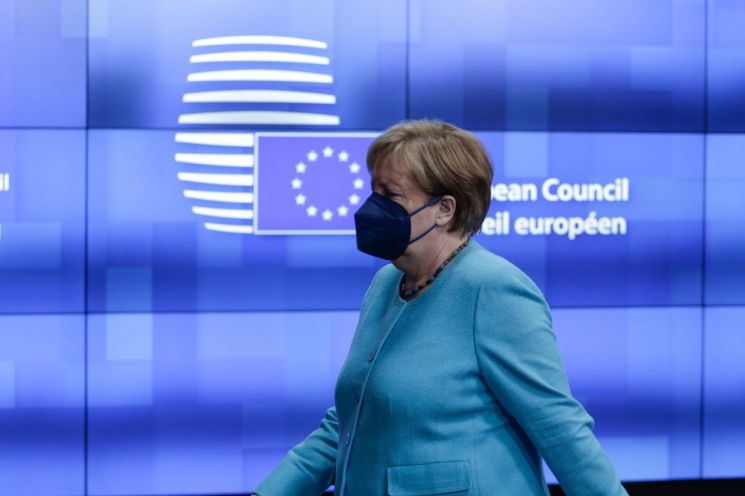
German Chancellor Angela Merkel also proposed an EU-Russia summit at the German parliament ahead of the EU summit, stating, "It is not enough for the U.S. President to talk with the Russian President."
The EU-Russia summit has not been held since Russia annexed Ukraine's Crimean Peninsula in 2014.
The EU has imposed economic sanctions in response to Russia's annexation of Crimea.
The summit proposal by Germany and France gained support from Austria but was blocked by strong opposition from Poland and the three Baltic states.
Lithuanian President Gitanas Naus?da said after the EU summit that many leaders shared the common position of not changing their stance toward Russia.
President Naus?da also criticized the proposal by Germany and France before the summit, saying it was "like entrusting a bear with the safe keeping of a honey pot."
Instead, EU leaders demanded in a joint statement that the European Commission propose additional sanctions against Russia, including economic sanctions.
However, the EU leaders stated in the declaration that they would "explore the formats and conditions for dialogue with Russia."
The EU has been in conflict with Russia over issues such as the annexation of Crimea, cyberattacks attributed to Russia, and the suspected poisoning of Russian opposition figure Alexei Navalny.
Nevertheless, Russia is the EU's largest natural gas supplier, and both sides are deeply connected on international issues such as the Iran nuclear deal, and conflicts in Syria and Libya.
In particular, Germany has cooperated on projects such as the Nord Stream 2, an undersea natural gas pipeline connecting Russia through the Baltic Sea.
© The Asia Business Daily(www.asiae.co.kr). All rights reserved.

















