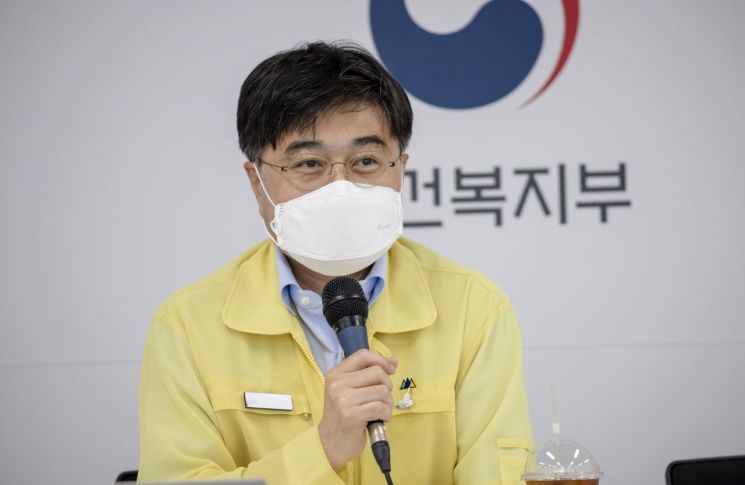
 Yoon Tae-ho, Director of Public Health Policy at the Ministry of Health and Welfare and Head of the COVID-19 Central Accident Response Headquarters' Quarantine General Team (Photo by Ministry of Health and Welfare)
[Asia Economy Reporter Lee Chun-hee] "(It is difficult to assign a score to the quarantine situation. However, we have responded in a way that we can talk about without embarrassment even when going abroad." (Yoon Tae-ho, Director of Public Health Policy at the Ministry of Health and Welfare and Head of the COVID-19 Central Disaster and Safety Countermeasures Headquarters Quarantine General Team)
Yoon Tae-ho, Director of Public Health Policy at the Ministry of Health and Welfare and Head of the COVID-19 Central Disaster and Safety Countermeasures Headquarters Quarantine General Team, who has been in charge of the overall response to COVID-19 quarantine, will conclude his 3 years and 3 months term on the 30th of this month.
On the morning of the 24th, Yoon held a press conference at the Government Complex Sejong before his retirement and shared his reflections on his term. Yoon was appointed as Director of Public Health Policy at the Ministry of Health and Welfare in March 2018 as a high-ranking public official after working as a professor in the Department of Preventive Medicine at Pusan National University College of Medicine.
Yoon was immediately deployed to respond to COVID-19 from January 20 last year, the day the first confirmed case was reported in Korea. From January 27, when the Central Disaster and Safety Countermeasures Headquarters was established following the fourth confirmed case, he has served ex officio as the head of the Quarantine General Team. He is a living witness to Korea's COVID-19 response from the very beginning of the domestic outbreak.
The term for the Director of Public Health Policy at the Ministry of Health and Welfare is three years. Yoon was originally supposed to finish his term and step down on March 18 this year. However, Minister Kwon Deok-cheol, who took office in December last year, asked him to stay. After consulting with his wife, Yoon decided to extend his term until the end of this month. The reason for this decision was that "around the end of June, it felt like things would be somewhat settled."
However, COVID-19 has not yet ended. As of this day, new confirmed cases have recorded over 600 for two consecutive days, and the first-dose vaccination rate has not yet exceeded 30%.
While expressing regret about this, Yoon recalled, "Thanks to the cooperation of the public, the hard work of medical and quarantine personnel, and the dedication of public officials, our country was able to catch two rabbits at once: daily life and quarantine."
When asked to rate the current quarantine management situation with a "score," he waved his hand saying, "If I give a score as the head of the quarantine team, it might be reported as a news story," but he expressed pride in saying, "We have responded in a way that we can talk about without embarrassment even when going abroad."
Regarding future COVID-19 response, Yoon advised, "As vaccination continues, the easing of entry and exit restrictions will accelerate," and added, "Since there is a possibility of mutations, related improvements will be necessary." He also emphasized that preparations for reaching the vaccination target of 70% should begin now.
He said, "If non-pharmaceutical interventions such as social distancing are minimized, COVID-19 could become like seasonal flu, for which annual vaccinations are given," and added, "If there is one more reform of the social distancing system, I am not sure whether we should use the term 'social distancing' or 'daily recovery'." This indicates the need for deep consideration of long-term perspectives and policies regarding COVID-19 response.
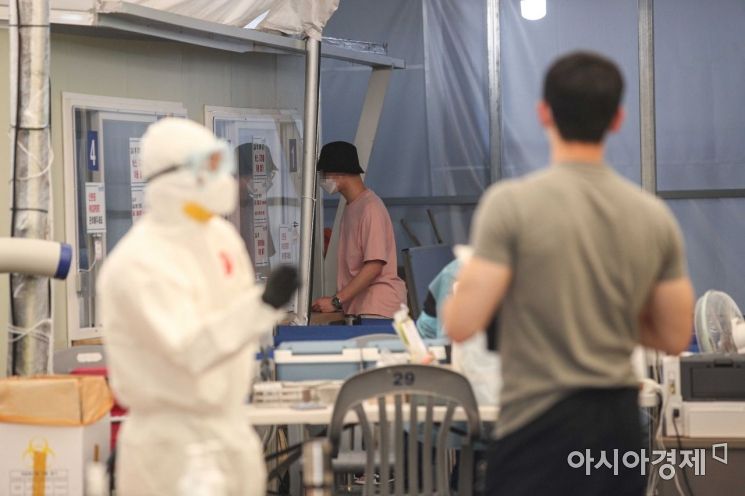 Citizens visiting the screening clinic set up at Songpa-gu Office in Seoul on the 23rd are undergoing tests. Photo by Jinhyung Kang aymsdream@
Yoon cited the occurrence of the first confirmed case as the most memorable moment during his approximately 500 days of COVID-19 response. He recalled, "We had heard news about an unknown pneumonia spreading centered in Wuhan, China, and were preparing for it."
He also mentioned the first and third waves of the pandemic as other memorable moments. Both were times when situations exceeded expectations, causing great confusion in securing hospital beds.
In particular, he expressed regret that during the third wave, despite thorough preparation of hospital beds after two previous waves, they failed to realize that the situation on the ground was different. At that time, the authorities secured a large number of intensive care unit beds that could be used for COVID-19 patients from various hospitals. However, when the actual wave occurred, those beds were shared with general ICU patients, resulting in a severe shortage of ICU beds for COVID-19 patients.
Yoon said, "We really worked as if grinding our bones," and recalled, "It was not the power of the system but the power of people that worked hard for two weeks to prepare the beds."
In fact, this COVID-19 pandemic is the second infectious disease crisis he has faced during his tenure. In September 2018, following the 2015 outbreak, a Middle East Respiratory Syndrome (MERS) confirmed case occurred again in Korea. Yoon was recognized for his significant contribution to early containment by leading the response as the head of the MERS Response Support Team, drawing on his experience as a member of the Korean Society of Preventive Medicine's 'Epidemiological Investigation and Quarantine Activity Team for MERS Response' during the 2015 MERS outbreak.
He reflected, "At that time, I thought it was like getting vaccinated and having a mild illness, and I did not expect a huge crisis like COVID-19," adding, "MERS seemed like a trial response."
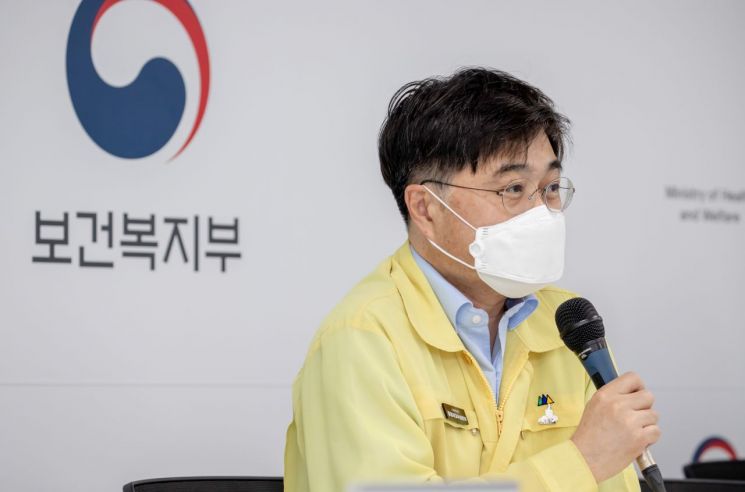
He also expressed regret about his primary role as Director of Public Health Policy. He said, "There was no time to work on public healthcare," and added, "While the importance of public healthcare was reemphasized through COVID-19 and some difficult issues were resolved, it is regrettable that public healthcare was not expanded as much as external expectations."
On the other hand, he cited his achievements during his tenure as head of the Quarantine General Team at the Central Disaster and Safety Countermeasures Headquarters and the relocation of the National Medical Center. Yoon said, "Taking the position of head of the Quarantine General Team was a chance to mature further despite many shortcomings," and added, "It was meaningful to have an opportunity to play a role in the national crisis." He also expressed pride in finalizing the site and relocation plan for the National Medical Center, which had been drifting for 18 years since 2003.
After finishing his term, Yoon plans to take a short break and then return to academia. From the second semester, he will resume his position as a professor in the Department of Preventive Medicine at Pusan National University College of Medicine. When asked about his future role in COVID-19 response, he said, "I may not contribute specially, but if there is a need, I should not hesitate."
© The Asia Business Daily(www.asiae.co.kr). All rights reserved.
![Clutching a Stolen Dior Bag, Saying "I Hate Being Poor but Real"... The Grotesque Con of a "Human Knockoff" [Slate]](https://cwcontent.asiae.co.kr/asiaresize/183/2026021902243444107_1771435474.jpg)













