Number of infections over 15 days at half the 5-month cumulative level
Concerns rise over quarantine exemption for UK and India arrivals
Calls to delay "mask removal" increase
As the Delta variant originating from India rapidly spreads worldwide, South Korea's COVID-19 prevention efforts have been put on high alert. With a new, more relaxed form of social distancing set to be implemented in a week, there are calls to strengthen management of overseas arrivals and other measures.
According to the Korea Disease Control and Prevention Agency (KDCA) on the 24th, a total of 190 Delta variant cases have been confirmed domestically from December last year through the 19th of this month. Until the end of last month, the number of infections was 131, ranking third among variant viruses after the Alpha and Beta variants. However, in just over two weeks, nearly half of the cumulative infections over the past five months were newly identified. Additionally, 66 cases epidemiologically linked to these have been confirmed, bringing the total number of Delta variant cases to 256. So far, there have been 2,225 cumulative cases of the four major variants: Alpha, Beta, Gamma, and Delta.
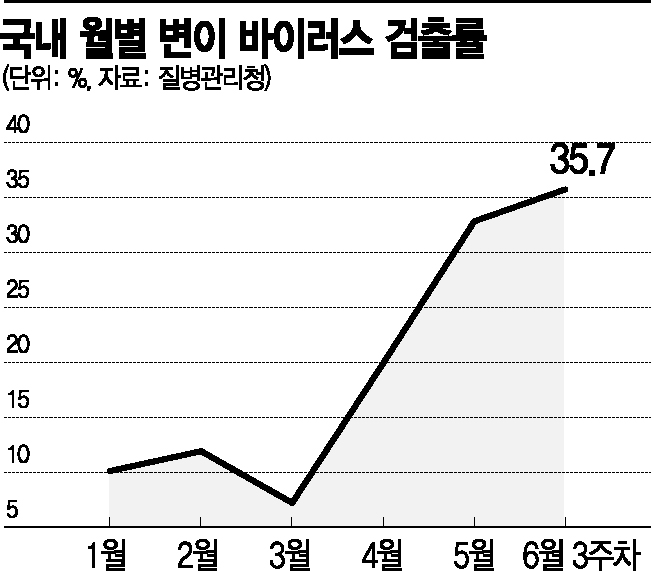
Leading the increase in Delta variant cases, the detection rate of variant viruses is also rising rapidly. The proportion of major variants detected through random genetic testing was 10.1% in January, rising to 19.9% in April and 32.8% in May. In the most recent week (June 13?19), this detection rate surged to 35.7%.
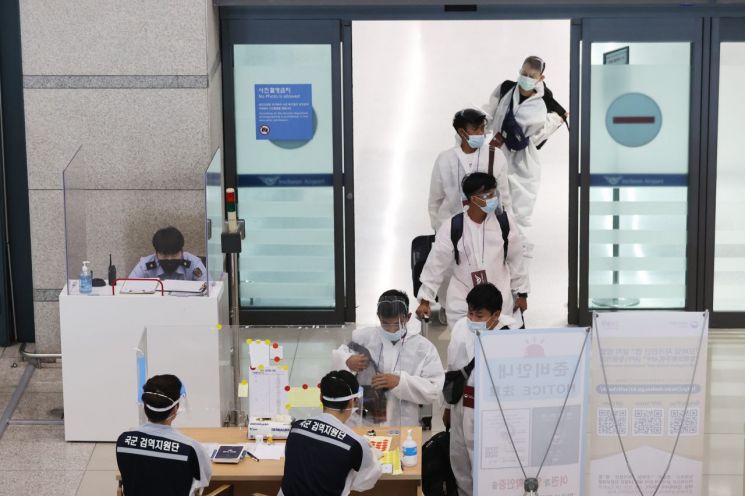
◆Highly Transmissible ‘Delta Plus’ Emerges... "Must Block Overseas Influx"= Concerns over the spread of the Delta variant have already materialized overseas. In the UK, 90% of new confirmed cases are estimated to be Delta variant infections, and in the US, the number of Delta variant infections doubled in two weeks, raising its share to 20%. Meanwhile, India has reported the even more virulent Delta Plus variant. The Delta Plus variant combines the characteristics of the existing Delta variant with mutations found in the Beta variant, resulting in higher transmissibility. Although the Delta variant is not yet dominant in South Korea, the pattern of overseas spread suggests that Korea cannot be exempt from its impact.
For now, health authorities are focusing on blocking the influx of variant viruses from abroad. Currently, overseas arrivals must submit a negative PCR test certificate issued within 72 hours before departure and undergo a mandatory 14-day self-quarantine. Three PCR tests are conducted during the quarantine period. However, starting next month, those who have completed COVID-19 vaccination overseas will also be exempt from self-quarantine for limited reasons such as visiting immediate family, in addition to those vaccinated domestically. Quarantine exemptions do not apply to arrivals from 13 countries where variant viruses are prevalent, including South Africa and Brazil, but the UK and India are not included in this list.
Authorities believe that the domestic Delta variant situation is not yet uncontrollable. Park Young-jun, head of the adverse reaction investigation team at the COVID-19 Vaccination Response Task Force, stated, "So far, the fatality rate of the Delta variant is not higher than other major variants," but added, "Considering the influence of the Delta variant, we need to monitor closely and assess the risk."
◆‘New Social Distancing’ One Week Away, Is It Safe to Remove Masks?= As variant viruses emerge as a new threat, concerns about achieving herd immunity by November are growing. There are worries that the new social distancing system, set to be implemented from the 1st of next month with eased restrictions on private gatherings and operating hours, could fuel the spread of variants.
Experts do not rule out the possibility that the Delta variant will become dominant domestically. Professor Chun Eun-mi of the Respiratory Medicine Department at Ewha Mokdong Hospital said, "Based on overseas cases, the transmission speed of the Delta variant is over 60% faster than the Alpha variant, and it is expected to become dominant in South Korea as early as August." She emphasized, "Since variant viruses enter from abroad, blocking overseas influx is essential to prevent domestic spread." Regarding the easing of outdoor mask mandates for vaccinated individuals starting next month, she pointed out, "The Delta variant’s transmissibility is so strong that it can spread over 2 meters outdoors carried by the wind. Especially since vaccination rates are not yet high, removing masks is inherently risky."
Professor Jung Jae-hoon of the Department of Preventive Medicine at Gachon University Gil Medical Center said, "Regarding blocking overseas influx, three PCR tests are already conducted, which is relatively sufficient, and the only additional measure possible is entry bans." He added, "To minimize variant spread, the fundamental approach is to accelerate vaccination and strictly adhere to prevention guidelines."
© The Asia Business Daily(www.asiae.co.kr). All rights reserved.


















