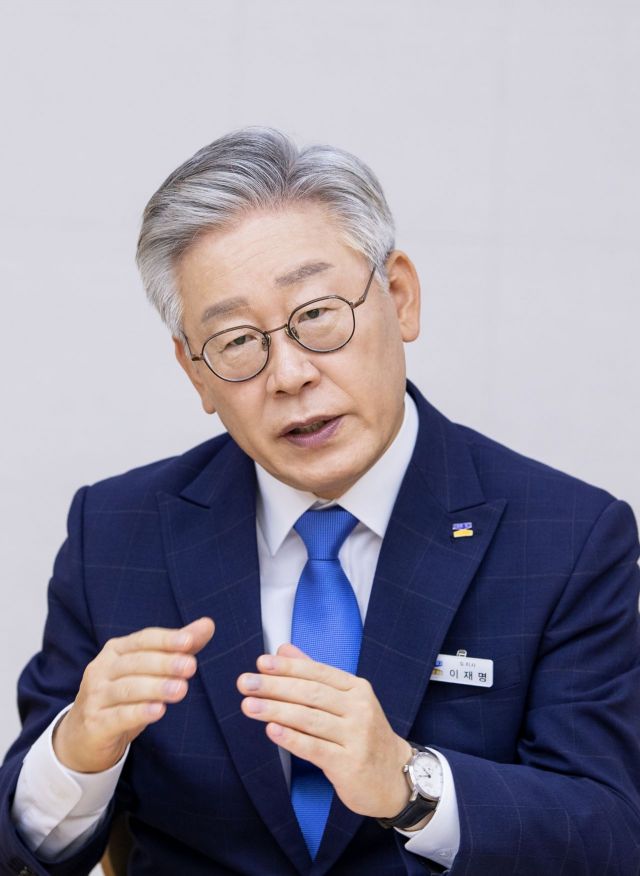
[Asia Economy (Suwon) = Reporter Lee Young-gyu] The possibility of realizing the 'Introduction of Competitive System in Local Government Procurement Market,' which Gyeonggi Province Governor Lee Jae-myung selected and promoted as the first fair policy in the second half of the 7th term of the local government last July, is increasing. This is because the seriousness of the monopoly damage in the procurement market by the Public Procurement Service (PPS) has been continuously raised.
Kim Seung-won, a member of the Democratic Party of Korea (Suwon-si Gap), pointed out the preferential treatment of retired PPS officials and the monopoly problems of the PPS procurement market during the National Assembly’s government inquiry on the 22nd, and proposed the Gyeonggi Province-type fair procurement as an alternative.
In his inquiry that day, Rep. Kim said, "The Government Procurement Excellent Products Association, which receives commissions by outsourcing the selection of excellent products from the PPS, has employed 26 retired PPS officials in the past 10 years, and four full-time executives are allocated as the PPS quota," adding, "The problem is that the association can make direct contracts regardless of scale or amount when selecting excellent products, enabling (direct and indirect) exercise of authority."
He continued, "The Government Procurement MAS Association is entrusted by the PPS to handle tasks such as eligibility evaluation, item registration, and interim inspections for small and medium enterprises supplying products to the Nara Market (operated by the PPS)," and "The association has three former local PPS heads as current full-time vice president, managing director, and business director," he revealed.
Governor Lee Jae-myung previously argued that the PPS is causing serious problems by using its monopoly position in the domestic central and local procurement markets, and that it is necessary to convert the local procurement market, excluding the central procurement market, into a competitive system.
In particular, last July, he announced the 'Fair Policy for the Second Half of the 7th Term,' which focuses on decentralization, local fiscal independence, and the establishment of a competitive system in the local procurement market, selecting the 'Local Procurement Self-Development Operation Plan' as the first policy.
The results of price surveys conducted twice in 2019 and 2020 by the province on the PPS Nara Market and general shopping malls were shocking. The survey confirmed that the prices of procurement items in the Nara Market were relatively higher than those in general shopping malls, raising concerns that the 'obligation to maintain preferential prices' was violated.
Since then, as the monopoly problem of the PPS procurement market was confirmed through expert meetings and National Assembly policy forums involving the Nara Budget Research Institute, the Citizens' Coalition for Economic Justice, small and medium enterprise representatives, and the Gyeonggi Province Mayors and Governors Council, the need for introducing fair procurement has been growing.
Meanwhile, Dr. Park Kyung-chul of the Gyeonggi Research Institute emphasized on the 23rd at an academic conference jointly held by the Local Administration Association and the Local Contract Association, "Central procurement has reached its limits," and stressed, "The introduction of the Gyeonggi Province-type fair procurement policy is necessary."
Also, Kim Jin-hyo, head of the accounting department of the province, who attended the roundtable, explained, "The Gyeonggi Province decentralized fair procurement system is an open system that allows not only Gyeonggi Province but also other local governments to participate in operation and use," adding, "The Nara Market will continue to handle central procurement as it is, and the local procurement market will be opened up through competition, which is the purpose of the Gyeonggi Province decentralized fair procurement system."
© The Asia Business Daily(www.asiae.co.kr). All rights reserved.
![Clutching a Stolen Dior Bag, Saying "I Hate Being Poor but Real"... The Grotesque Con of a "Human Knockoff" [Slate]](https://cwcontent.asiae.co.kr/asiaresize/183/2026021902243444107_1771435474.jpg)
















