'Return-to-Farming Households' Decline for 2 Years Since 2017, Rebound After 3 Years
'Return-to-Fishing Households' Down 0.8% YoY... Increase in 50s, 60s, and 70s+ Age Groups
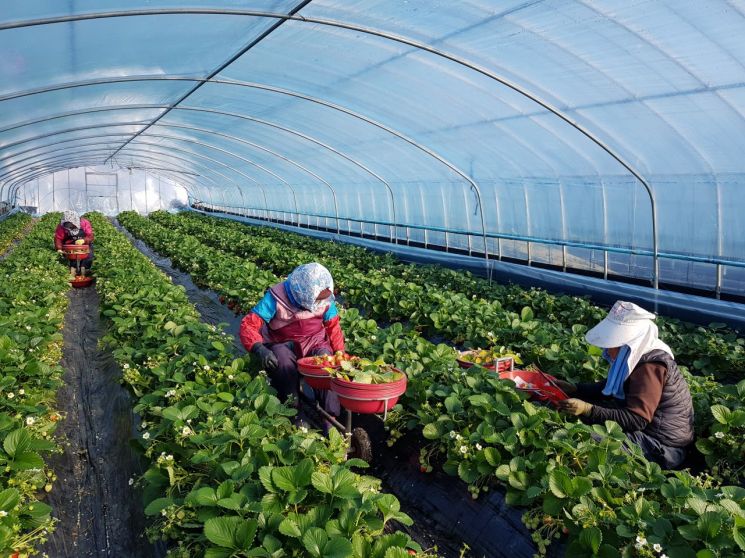
[Asia Economy Reporter Jang Sehee] Last year, the number of households returning to farming increased by 9.3% compared to the previous year. After two consecutive years of decline since 2017, this marks a rebound after three years. Additionally, households returning to farming aged 30 and under increased by 10.9% compared to the previous year, reaching an all-time high.
According to the "2020 Statistics on Return-to-Farming, Fishing, and Rural Migration" released by Statistics Korea on the 23rd, the number of households returning to farming was 12,489, an increase of 1,067 households (9.3%) from the previous year.
Statistics Korea reported that the number of households returning to fishing was 12,630 in 2017, 11,961 in 2018, and 11,422 in 2019, showing a decline. The average household size was 1.40 persons, 0.02 persons lower than the previous year.
An official from the Ministry of Agriculture, Food and Rural Affairs stated, "Since the number of return-to-farming households had been decreasing year-on-year since 2017, this rebound is an unusual situation," adding, "COVID-19 seems to have had some influence."
Return-to-Farming by 2030 Age Group Hits Record High Since 2013 Statistics... Trend Toward Cautious Farming
In particular, households returning to farming aged 30 and under numbered 1,362, marking the highest since statistics began in 2013. This represents a 12.7% increase compared to the previous year. Additionally, households aged in their 60s and 70s or older increased by 17.3% and 21.6%, respectively.
By region, Jeonnam had the highest number with 2,347 households (18.8%), followed by Gyeongbuk (2,234 households), Jeonbuk (1,503 households), Chungnam (1,492 households), Gyeongnam (1,341 households), Gyeonggi (1,117 households), and Gangwon (933 households).
Regarding household types, single-person households accounted for the largest share at 74.1% (9,255 households), a 12% increase from 2019 (8,264 households).
Household composition showed that single households consisting only of return-to-farming members accounted for 87.2%, while mixed households composed of residents and return-to-farming members made up 12.8%.
In this regard, an official from the Ministry of Agriculture, Food and Rural Affairs explained, "The number of single-person return-to-farming households is increasing," and added, "Unlike in the past when full-time farming was the norm, a trend toward cautious return-to-farming is continuing." Furthermore, pure self-cultivating households that grow crops only on their own land accounted for 60.1%, while pure leased households that cultivate crops on leased land accounted for 32.1%.
Return-to-Fishing Households Decreased by 0.8% Year-on-Year... Increase in 50s, 60s, and 70s or Older
Last year, the number of households returning to fishing was 897, a decrease of 7 households (0.8%) from the previous year. The average number of household members returning to fishing per household was 1.33, down 0.04 from 1.37 the previous year.
By region, Jeonnam had the highest number of return-to-fishing households with 302 (33.7%), followed by Chungnam (281 households), Jeonbuk (94 households), and Incheon (81 households).
The gender distribution of heads of return-to-fishing households was 68.8% male and 31.2% female, unchanged from the previous year. The average age of heads of return-to-fishing households was 52.8 years, 1.8 years older than the previous year.
Compared to the previous year, the proportion increased in the 50s (4 households), 60s (18 households), and 70s or older (20 households), while it decreased in other age groups.
Regarding household types, single-person households accounted for the largest share at 77.6% (696 households), and single households composed only of return-to-fishing members accounted for 75.1%.
© The Asia Business Daily(www.asiae.co.kr). All rights reserved.

















