Over Decades, Eastern Temperatures Decrease While Western Regions Rise
Institute for Basic Science (IBS), "Due to Increased Precipitation Activity in the Tropical Western Pacific"
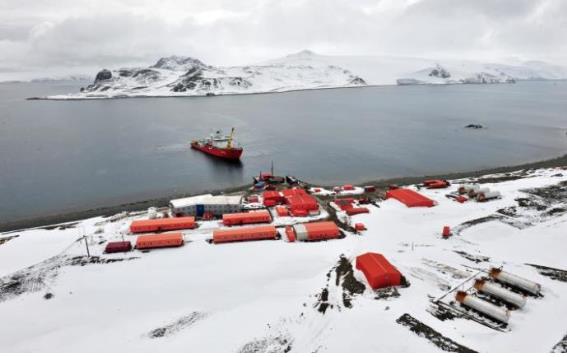
[Asia Economy Reporter Kim Bong-su] A Korean research team has uncovered the cause of the regional differences in temperature changes occurring on the Antarctic continent. While the western part of Antarctica has experienced a rapid rise in temperature over recent decades, a distinct cooling trend has appeared in the eastern region. The team identified that this phenomenon is due to increased precipitation activity in the tropical western Pacific region.
The Institute for Basic Science (IBS) announced on the 24th that a research team led by Research Fellow Lee Jun-yi of the Climate Physics Research Division revealed through international collaborative research that increased precipitation activity in the tropical western Pacific causes a decrease in surface temperature in East Antarctica.
The Antarctic continent is known as the place with the greatest regional differences in surface temperature despite the global warming trend. While West Antarctica is one of the regions experiencing extreme surface temperature increases worldwide, East Antarctica has shown a clear cooling trend in summer surface temperatures since 1979. Researchers worldwide have analyzed various causes for the cooling in East Antarctica. Natural variability in high-latitude atmospheric circulation, stratospheric ozone changes, and tropical sea surface temperature changes have been suggested as causes, but these explanations have limitations in accounting for the decades-long cooling trend.
The research team confirmed through climate observation data analysis and climate model simulations that the Madden-Julian Oscillation (MJO) can also affect surface temperatures on the Antarctic continent. This oscillation is a phenomenon where precipitation zones in tropical regions fluctuate significantly with a period of 20 to 70 days. It features precipitation activity starting in the Indian Ocean near the equator and moving toward the Pacific Ocean. It was already known that changes in precipitation location due to the MJO influence abnormal weather in various regions worldwide. However, this is the first time it has been revealed that it specifically affects surface temperature changes in East Antarctica.
When tropical precipitation activity occurs due to the MJO, a large amount of heat is generated during water vapor condensation, heating the atmosphere. Consequently, the atmosphere rises in the precipitation area, forming low pressure at the surface. Conversely, in regions far from the precipitation area, the atmosphere descends, creating high pressure at the surface.
Atmospheric heating and pressure differences in tropical regions generate atmospheric waves that influence surface pressure and temperature in high-latitude regions. For example, when precipitation activity occurs in the western Pacific, low pressure forms on the surface of East Antarctica about 3 to 11 days later, causing temperatures to drop. However, precipitation activity in the Indian Ocean leads to a rise in surface temperature in East Antarctica.
The research team analyzed precipitation activity caused by the MJO and surface temperature changes in East Antarctica from 1979 to 2014. The results showed that precipitation activity sharply increased in the western Pacific while sharply decreasing in the Indian Ocean, confirming a statistical correlation with the cooling of East Antarctica's surface temperature. Furthermore, climate model experiments demonstrated that long-term changes in the MJO could produce the long-term cooling trend in East Antarctica's surface temperature.
Research Fellow Lee Jun-yi, who led the study, said, "We confirmed that natural variability in tropical regions can cause climate changes in the Antarctic region," adding, "In future climate change projections and policy formulation, the role of various natural variabilities should be considered alongside anthropogenic warming."
The research results were published online on the 24th in the international academic journal Science Advances (IF 13.116).
© The Asia Business Daily(www.asiae.co.kr). All rights reserved.



















