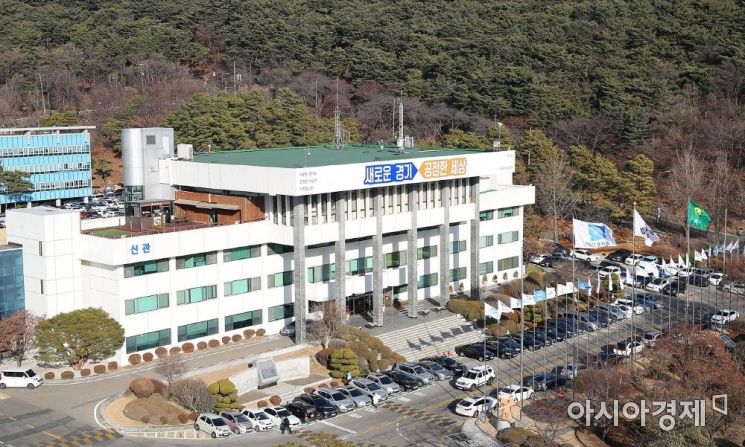
[Asia Economy (Suwon) = Reporter Lee Young-gyu] Gyeonggi Province is promoting customized projects for specialized zones, such as creating technovalleys in Goyang, Yangju, Seongnam, Gwangmyeong, and Siheung, to achieve balanced development and innovative growth in the Seoul metropolitan area.
For the urban overconcentration control zone, the province plans to induce "regeneration-centered urban development" and prepare a sophisticated compressed land use plan focused on metropolitan hubs and station areas. Additionally, to establish a convenient and safe transportation system, 39 road construction projects totaling 185.91 km, including 16 national local roads and 23 provincial roads, will be carried out.
On the 22nd, Gyeonggi Province announced the promotion plan for the "4th Seoul Metropolitan Area Readjustment Plan," which divides Gyeonggi Province into five specialized zones for balanced development and innovative growth in the metropolitan area: ▲Global Innovation Hub ▲Peace Economy Belt ▲International Logistics and Advanced Industry Belt ▲Smart Semiconductor Belt ▲Ecotourism and Recreation Belt.
The province will first focus on building the Global Innovation Hub. To this end, technovalleys will be established in Ilsan, Yangju, the 3rd Pangyo, and Gwangmyeong-Siheung. A platform city will be developed in Yongin, and the KINTEX 3rd Exhibition Hall and Baekhyeon MICE Industrial Complex will be constructed in Goyang and Seongnam.
For the Peace Economy Belt in northern Gyeonggi, the province plans to continuously promote projects that build a self-sustaining economic base, such as fostering existing textile and furniture industries and supporting border area development, rather than launching new projects.
The core axis of the International Logistics and Advanced Industry Belt, Pyeongtaek Port, will undergo projects including the opening of a new international passenger terminal and expansion of berths in the Poseung district. The province will invest 2.3 trillion KRW by 2030 for these developments.
The province will also devote great effort to the creation of the Yongin semiconductor cluster, which involves a total project cost of 122 trillion KRW.
Once the cluster is established, it is expected to form the Southern Gyeonggi Smart Semiconductor Belt, connecting Suwon, Hwaseong, Pyeongtaek, Icheon, and Yongin. The designation of an ecotourism and recreation belt to prevent indiscriminate development in eastern Gyeonggi, including Yongin, and to preserve the natural environment is also under consideration.
The province will also implement regional development projects for "balanced development." To this end, the current three zones regulating the metropolitan area?overconcentration control zone, growth management zone, and natural conservation zone?will be maintained, but differentiated management will be applied within the same zone considering balanced development and regional characteristics.
For the overconcentration control zone, "regeneration-centered urban development" will be induced to diversify industrial structures and improve residents' quality of life. Additionally, a sophisticated compressed land use system will be prepared focusing on metropolitan hubs and station areas.
In the growth management zone, to reduce the north-south disparity, the allocation of industrial areas will be limited to within 70% in the southern part, while the northern allocation will be gradually increased.
The province will also focus on building a convenient and safe transportation network.
High-speed rail projects such as direct connections between Suwon-origin KTX and Incheon-origin KTX, double-tracking between Pyeongtaek and Osong, and the Susaek-Gwangmyeong high-speed railway will be pursued.
Additionally, the plan includes metropolitan express railroads (GTX), metropolitan railroads (extensions of the Shinbundang Line, Sinansan Line, etc.), conventional railroads (Wolgok-Pangyo, Indeokwon-Dongtan, etc.), and urban railroads (Dongtan tram).
In particular, 39 construction projects totaling 185.91 km in length will be promoted, including 16 national local roads and 23 provincial roads.
© The Asia Business Daily(www.asiae.co.kr). All rights reserved.
![Clutching a Stolen Dior Bag, Saying "I Hate Being Poor but Real"... The Grotesque Con of a "Human Knockoff" [Slate]](https://cwcontent.asiae.co.kr/asiaresize/183/2026021902243444107_1771435474.jpg)
















