Monero with Enhanced Anonymity, Transaction Tracking Virtually Impossible
But Not Widely Used Due to Government Regulatory Pressure
Experts Say "Monero Will Struggle to Replace Bitcoin"
[Asia Economy Reporter Kim Suhwan] Recently, when the U.S. Federal Bureau of Investigation (FBI) announced that it had hacked into the Bitcoin account of the organization that launched a ransomware attack on the largest oil pipeline company in the U.S. and recovered the Bitcoins, cybercriminals worldwide were literally shocked. This was because it was revealed that even Bitcoin, which was considered the safest repository for criminal proceeds due to its untraceability, can be tracked and recovered.
The reason this was possible lies in one of Bitcoin's key features: the public ledger. All transactions occurring within the Bitcoin system are recorded in a single public ledger and stored in a distributed manner. It is precisely because of this characteristic that Bitcoin transactions cannot be completely hidden.
As a result, there is a growing observation that cybercriminals are abandoning Bitcoin and moving to altcoins (cryptocurrencies other than Bitcoin) with enhanced anonymity.
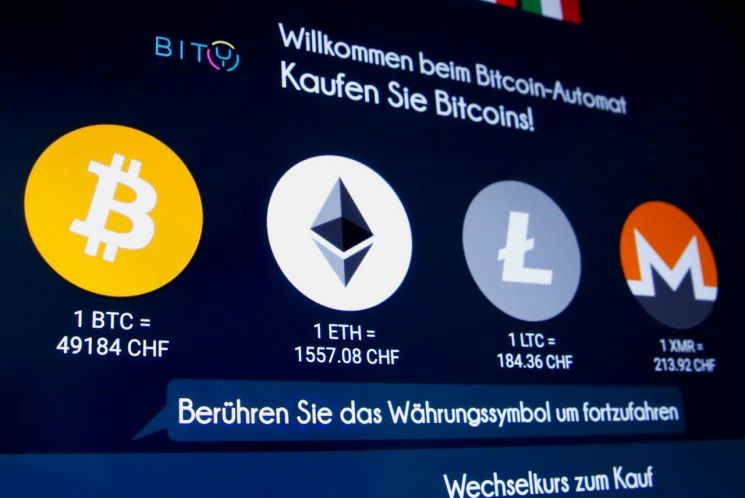
U.S. CNBC reported, "Cybercriminals are switching from Bitcoin to Monero."
Monero was created in 2014 by a small group of anonymous developers. As introduced in the Monero whitepaper, the core purpose and feature of this coin is “privacy protection and anonymity.”
 Last month, Colonial Pipeline, the largest oil pipeline company in the U.S., suffered a ransomware attack.
 [Image source=Yonhap News]
Monero has its own blockchain, which is characterized by the ability to hide virtually all transaction details. The identities of all parties involved in the transaction, as well as the transaction amounts, are kept confidential.
Fred Thiel, a cryptocurrency expert who has collaborated with Microsoft and Google, said, “With the Bitcoin blockchain, you can know the wallet addresses used in transactions as well as the origin and destination of Bitcoins. However, Monero hides the wallet addresses themselves, enabling the complete anonymous transactions that criminals desire.”
Rick Holland, Chief Information Security Officer at cybersecurity firm Digital Shadows, also said, “Truly smart cybercriminals are already using Monero.”
However, Monero is not without its limitations.

First, there are very few cryptocurrency exchanges that list Monero, making it difficult to commercialize. Portfolio manager Marty Greenspan said, “It is true that Monero has not benefited from the recent cryptocurrency boom.”
In other words, even if criminals want to use Monero, it is hard to convert it into cash because exchanges that handle it are rare.
In particular, due to the possibility of illegal transactions enabled by Monero’s anonymity, there is a risk of facing stronger regulatory pressure from government authorities. Thiel said, “Major governments, including the U.S., may use all means to eliminate Monero.” He added that regulatory measures could include revoking the business licenses of exchanges that handle Monero.
Additionally, most cyber insurance companies are reluctant to cover losses related to Monero, which is another factor hindering Monero’s commercialization.
When insurance companies compensate corporations that have suffered cybercrime damages, if the crime is linked to Monero, insurers may hesitate to provide compensation. This is because if the insurance payout is made, there is a risk that the money could end up in the hands of criminal organizations using Monero.
CNBC predicted, “Due to these limitations, it will be difficult for Monero to completely replace Bitcoin as a means of crime.”
© The Asia Business Daily(www.asiae.co.kr). All rights reserved.



















