Cho Dae-sik, Chairman of SK Supex Council, Denies Charges in First Trial Today
[Asia Economy Reporter Kim Hyung-min] Is a paid-in capital increase that benefits the company also subject to punishment?
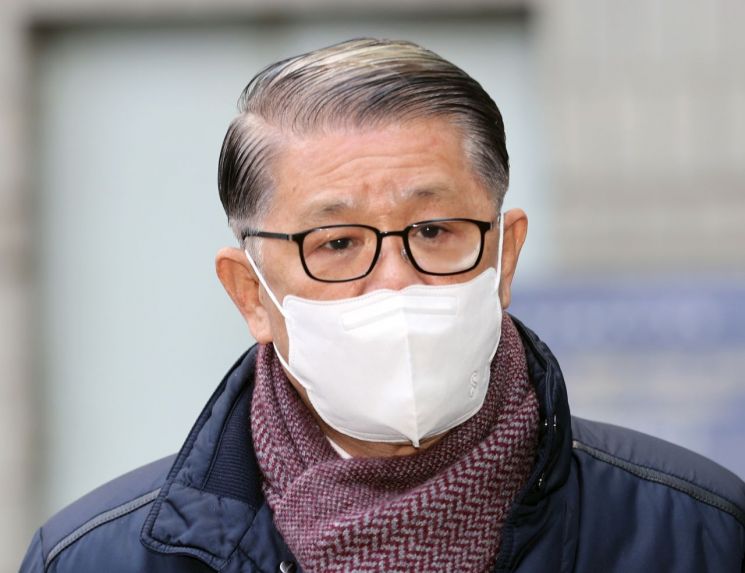
The answer to this question, which has drawn attention from the business and legal communities, will come from the court trial of Choi Sae-won, Chairman of SK Networks, and Cho Dae-sik, Chairman of the SK Supex Council. On the morning of the 17th, the Criminal Division 23 of the Seoul Central District Court (Presiding Judge Yoo Young-geun) held the first preparatory hearing for Cho and others. The court decided to consolidate the cases of the two individuals and hold the trial on August 12.
At the hearing, Cho’s side denied the charges. The defense attorney stated, "As far as the defendants know, many factual aspects of the indictment are incorrect," and added, "We cannot accept that participation in the paid-in capital increase is evaluated as breach of trust." Furthermore, the attorney said, "Since many factual inaccuracies exist, these will be gradually clarified." However, the defense also noted, "We have not reviewed the evidence records as we have not obtained them," indicating that a more detailed position will likely be presented in future proceedings.
Chairman Choi and Chairman Cho were indicted on charges of causing damage by having SKC invest 70 billion KRW in a paid-in capital increase of SK Telesys, which was in a state of capital erosion in 2015. The prosecution alleges that the two conspired to exaggerate reports necessary for the paid-in capital increase to induce board resolutions, thereby systematically committing breach of trust. Choi’s side argues that although SK Telesys funds were used as paid-in capital, it was an unavoidable decision to save the company, and that all borrowed funds were repaid within three months, denying any embezzlement. The business community has particularly criticized the breach of trust allegations as being ambiguous and contradictory. In fact, SKC recorded its highest-ever operating profit (218.1 billion KRW) in the year the paid-in capital increase took place. At that time, both inside and outside the business community evaluated that the subsidiary SK Telesys had improved its structure well through the paid-in capital increase and restructuring. This differs from the prosecution’s claims.
The fact that paid-in capital increases are common in the business world is why the court’s judgment on Chairman Choi and Chairman Cho is being closely watched. There is still no definitive answer as to whether company losses caused by a paid-in capital increase can hold the corporate head accountable. Opinions are divided in the legal community. Some argue that paid-in capital increases are ultimately voluntary corporate decisions and should be recognized as part of management’s freedom.
In October 2019, Lotte Group Chairman Shin Dong-bin was sentenced by the Supreme Court to 2 years and 6 months in prison with a 4-year probation for the state affairs manipulation and management corruption case, but was acquitted of charges related to causing losses by having affiliates participate in the paid-in capital increase of Lotte Episnet.
© The Asia Business Daily(www.asiae.co.kr). All rights reserved.

















