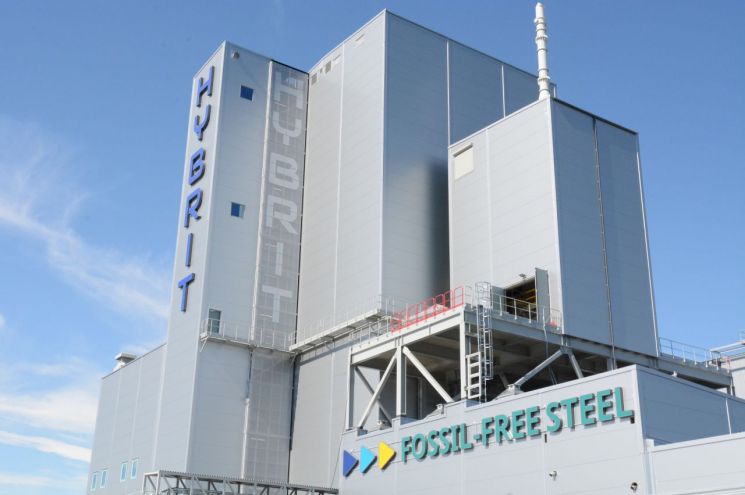
 Volvo Cars plans to use SSAB steel made from hydrogen-reduced iron at its hybrid pilot plant located in Lule?, Sweden, for concept cars and testing purposes.
Photo by Volvo Cars Korea
[Asia Economy Reporter Ki-min Lee] Volvo Cars announced on the 17th that it will jointly develop eco-friendly high-quality steel that does not use any fossil fuels together with Swedish steel company SSAB.
Volvo explained that this joint development aims to replace coke used in steel production with electricity and hydrogen instead of fossil fuels. SSAB, collaborating with Volvo, has established a joint venture called HYBRIT with Swedish iron ore producer LKAB and energy company Vattenfall, leading proactive research on eco-friendly steel production.
Volvo plans to use SSAB steel made from hydrogen-reduced iron at the HYBRIT pilot plant located in Lule?, Sweden, for concept cars and testing purposes in the future.
H?kan Samuelsson, CEO of Volvo Cars, said, "Steel is an important area in continuously reducing the overall carbon footprint," adding, "Collaboration with SSAB to develop fossil fuel-free steel will significantly contribute to reducing carbon emissions."
Martin Lindqvist, Chairman and CEO of SSAB, emphasized, "We are building a completely fossil-free value chain up to the end customer," and added, "This groundbreaking technology not only virtually eliminates carbon emissions but also helps enhance our customers' competitiveness."
Meanwhile, the global steel industry currently accounts for about 7% of the world's direct carbon emissions. In the case of Volvo Cars, about 35% of carbon dioxide emissions are related to steel and iron production for existing internal combustion engine models, and about 20% come from materials and production of parts used in pure electric vehicles.
Volvo Cars, which aims to become a carbon-neutral company by 2040, plans to address carbon emissions through company operations, supply chains, and material recycling and reuse. In the short term, it also plans to reduce the carbon footprint per vehicle lifecycle by 40% by 2025.
© The Asia Business Daily(www.asiae.co.kr). All rights reserved.

















