Commercial Banks Facing Digital Transformation Increase STEM Hiring
Prioritizing IT and Development Roles in Retail Marketing... Liberal Arts Graduates Left Out
"No One Hires Pure Liberal Arts Graduates," Complains Liberal Arts Job Seeker

[Asia Economy Reporter Lim Juhyung] #Shin Mo (26), a job seeker, found herself in deep thought after seeing the recent recruitment announcement from commercial banks. The new bank recruitments, once considered the "last employment gateway for liberal arts students," were all in IT and data sectors. As a pure liberal arts student with no programming background, Shin could only apply for experienced positions, which required certifications such as CPA or lawyer licenses. Shin said, "I truly feel that the employment opportunities for liberal arts students are narrowing. No one wants to hire pure liberal arts graduates anymore," adding, "I can't change my major now, and I don't know what to do."
Not only traditional manufacturing companies but also banks, retail, and advertising industries are experiencing a surge in demand for STEM fields, rapidly reducing job opportunities for liberal arts students. Since the spread of COVID-19, the importance of non-face-to-face and digital transformation across society has increased, spotlighting personnel with IT-related skills. Some have responded with self-deprecating remarks that the once-popular phrase "Munsonghamnida" (a pun meaning "Sorry, I'm a liberal arts student") has become a reality.
KB Kookmin Bank announced plans to hire about 200 new and experienced employees in the first half of this year. The recruitment sectors include IT, data, management (business planning/management support) experts, disabled persons, and veterans. Except for experienced management positions and special hires for disabled and veterans, new hires are practically limited to IT and data sectors.
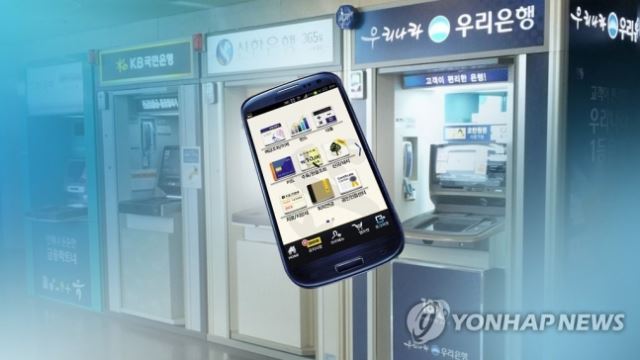 Domestic commercial banks are accelerating their digital transformation, including the development of banking applications (apps).
 Photo by Yonhap News
The situation is similar at other commercial banks. Woori Bank plans to more than double its IT digital workforce recruitment compared to last year, and Shinhan Bank is also conducting hiring limited to the digital ICT field.
With internet-only banks like KakaoBank, K Bank, and Toss Bank gaining popularity, commercial banks are accelerating their digital transformation. Consequently, new hires are inevitably concentrated on IT talents with skills in building bank applications and data management rather than general positions.
The relative "cold shoulder" faced by liberal arts job seekers is not limited to the banking sector. The emphasis on non-face-to-face and digital trends due to COVID-19 has strengthened STEM dominance in most service industries such as retail and marketing.
The underperformance of liberal arts graduates in the job market is not new. According to the 2019 report "Monthly Labor Review, Employment Status of Higher Education Graduates" published by the Korea Labor Institute, the employment rate of job seekers majoring in humanities was 56.0%, the lowest among all fields. Their average monthly starting salary was 2.2 million KRW, significantly lower than the overall average of 2.5 million KRW.
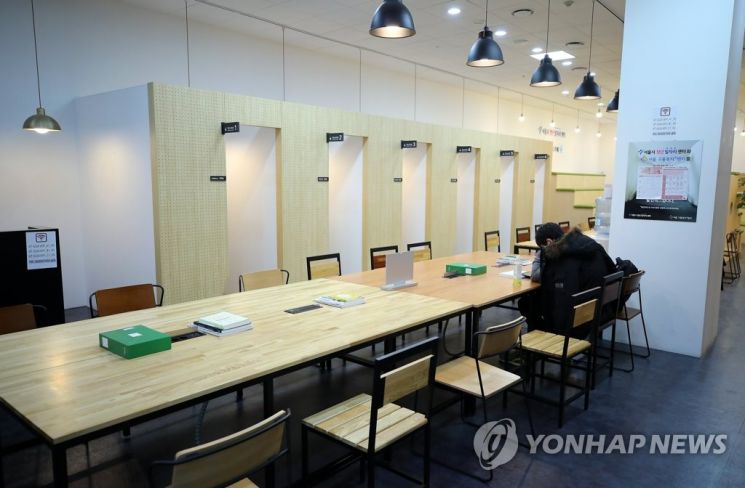
Meanwhile, since last year, as IT skills have become increasingly emphasized across most industries due to COVID-19, the position of so-called "Munsacheol" (literature, history, philosophy) majors has further narrowed.
Liberal arts job seekers are expressing concerns about not knowing how to prepare for employment immediately.
A university student A (26), graduating this year, said, "I need to start preparing for a job soon, but I hear a lot that it's hard for liberal arts students to find jobs, so I'm scared," adding, "I'm anxious whether I should just give up on private companies and study for civil service exams or attend a coding academy."
Another job seeker B in their 20s said, "Even if you graduate from a prestigious university, if you're a liberal arts student, you can't get a job and end up preparing for civil service exams early. I didn't graduate from a prestigious university, and my grades are average, so I'm worried if I can properly pursue employment," adding, "I'm even regretting whether I should switch to a science major now. I understand the phrase 'Munsonghamnida'."
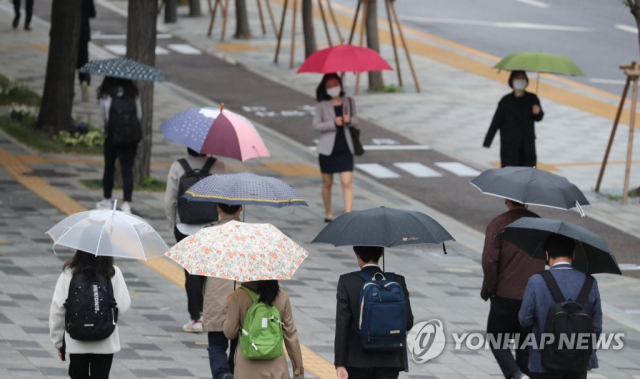
Some have taken intensive programming courses to prepare for employment smoothly. University student C (24) said, "Besides my classes, I attend a short-term coding academy," emphasizing, "Nowadays, liberal arts students must either double major or at least take basic coding courses. A diploma alone won't get you past the employment threshold."
Experts suggest cultivating convergence talents who combine humanities education with IT education, transcending the division between liberal arts and sciences.
Professor Lee Taekgwang of Kyung Hee University's Department of Global Communication said in an interview with CBS Radio's "Sisa Jaki Jung Gwanyong Imnida," "Although humanities universities are said to be in crisis, recently even STEM departments are changing into applied fields," emphasizing, "We need to abandon the obsession with the liberal arts vs. sciences divide and build consensus that both IT skills and humanities knowledge are necessary."
He added, "Although software is gaining attention recently, software is essentially a content-driven business. As content becomes important in IT businesses, humanities education is sometimes emphasized. It's important to create collaborative processes, such as teaching IT skills to humanities students and cultural education to engineering students," he advised.
© The Asia Business Daily(www.asiae.co.kr). All rights reserved.
![Clutching a Stolen Dior Bag, Saying "I Hate Being Poor but Real"... The Grotesque Con of a "Human Knockoff" [Slate]](https://cwcontent.asiae.co.kr/asiaresize/183/2026021902243444107_1771435474.jpg)


















