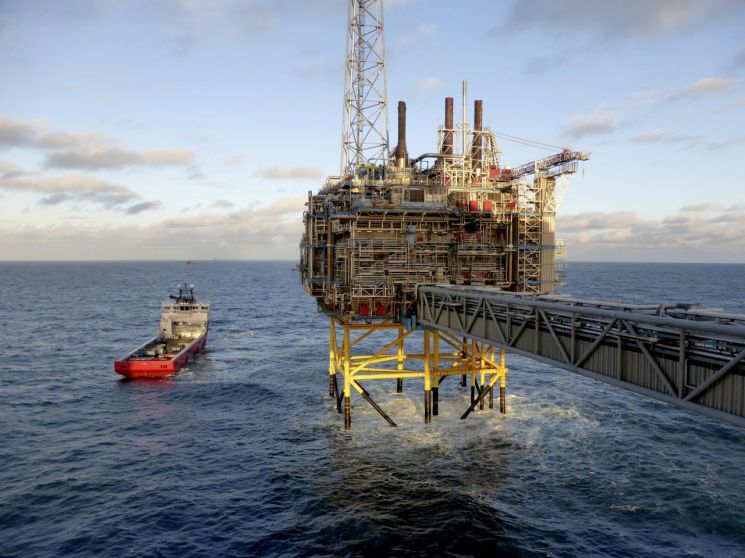
[Asia Economy Reporter Park Byung-hee] The debate over Norway's North Sea oil and gas extraction has escalated into a lawsuit at the European Court of Human Rights (ECtHR).
On the 15th (local time), major foreign media reported that six young environmental activists and two environmental organizations filed a lawsuit with the ECtHR, demanding a halt to Norway's North Sea oil field development. The plaintiffs are challenging the Norwegian government's 2016 decision to allow oil exploration in the Arctic Barents Sea. They claim that the Norwegian government did not consider climate change in the decision-making process for Barents Sea exploration and that this infringes on their rights to life and private life.
Norway is the largest oil producer in Western Europe, thanks to abundant reserves in the North Sea and the Norwegian Sea. Nevertheless, the Norwegian government decided in 2016 to permit oil exploration in the Arctic Barents Sea. This was the first time in nearly 20 years that the government allowed new exploration.
This year, Norwegian courts ruled three times that the government’s decision does not violate the constitution nor infringe on the right to a healthy environment.
After consecutive defeats in domestic lawsuits, environmentalists have expanded the discussion to the Western European level by filing a lawsuit with the ECtHR. The ECtHR handles cases related to human rights and fundamental rights in Western Europe and is located in Strasbourg, France.
Mia Chamberlain, a Norwegian environmental activist who filed the lawsuit, emphasized, "We must do everything we can to stop climate change," adding, "This issue is especially important because Norway’s economy is based on oil." She criticized Norwegian politicians, saying they "do not try to stop oil drilling and just sit idly by."
Attention is focused on what ruling the ECtHR will make amid recent victories by environmental groups in lawsuits demanding the cessation of fossil fuel development projects.
On April 29, the German Constitutional Court ruled that the greenhouse gas reduction plan reflected in the 2019 German Climate Change Act was insufficient and placed a burden on future generations, ordering the government to prepare countermeasures. Following the ruling, the German government announced it would advance the target year for achieving carbon neutrality from 2050 to 2045 by five years.
On the 26th of last month, the District Court of The Hague in the Netherlands ruled that oil company Royal Dutch Shell must reduce its greenhouse gas emissions by 45% by 2030 compared to 2019 levels. The court sided with environmental groups that filed the lawsuit holding Shell responsible for climate change. Shell had planned to reduce emissions by 20% by 2030 compared to 2019 levels.
Shell CEO Ben van Beurden stated on his social media on the 9th that he disagreed with the court’s ruling and plans to appeal but also pledged to make greater efforts to reduce greenhouse gas emissions.
© The Asia Business Daily(www.asiae.co.kr). All rights reserved.

















