Passed 7 Amendments in Subcommittee for 2·4 Measures
Priority Supply Rights Postponed to National Assembly Approval Date
Ministry of Land, Infrastructure and Transport: "Speculative Influx Will Be Limited"

[Asia Economy Reporter Moon Jiwon] The timing for not granting priority housing supply rights (pre-sale rights) in urban public housing complex project areas is delayed from the original 'after February 5' to as late as the end of this month.
On the 16th, according to the Ministry of Land, Infrastructure and Transport (MOLIT), the National Assembly Land, Infrastructure and Transport Committee's bill subcommittee amended and approved the Public Housing Special Act revision bill, which was originally proposed by Kim Gyoheum, a member of the Democratic Party, accordingly.
Initially, the government announced that those who signed sales contracts after February 5, the day following the announcement of the 2·4 measures, would have their priority supply rights restricted and receive only cash settlement. However, during the bill review process, the cutoff date was changed from 'February 5' to 'the date of the National Assembly plenary session resolution.' The criterion was also changed from 'signing the sales contract' to 'completion of transfer registration.'
This measure considers the criticism that not granting pre-sale rights just because someone bought a house after the announcement date, without even knowing where the public housing project sites are, is an excessive infringement on property rights. However, since 46 candidate project sites have already been selected and there will be a few weeks' gap until the bill is passed, concerns about speculative demand surging have also been raised.
Regarding this, MOLIT explained, "Even if the cutoff date is delayed to the plenary session resolution date, considering that it usually takes some time from signing the sales contract to completing the registration, the influx of speculative forces is expected to be limited."
Along with this, MOLIT announced that other amendment bills for implementing the 2·4 measures also passed the bill subcommittee with bipartisan agreement. The passed bills include the Public Housing Special Act, Urban Regeneration Act, Small-scale Maintenance Act, Housing and Urban Fund Act, Housing Act, Land Compensation Act, and Reconstruction Profit Recovery Act.
MOLIT stated, "With the passage of three project bills that enable full-scale housing projects and four support bills through the bill subcommittee, housing supply projects are expected to gain significant momentum."
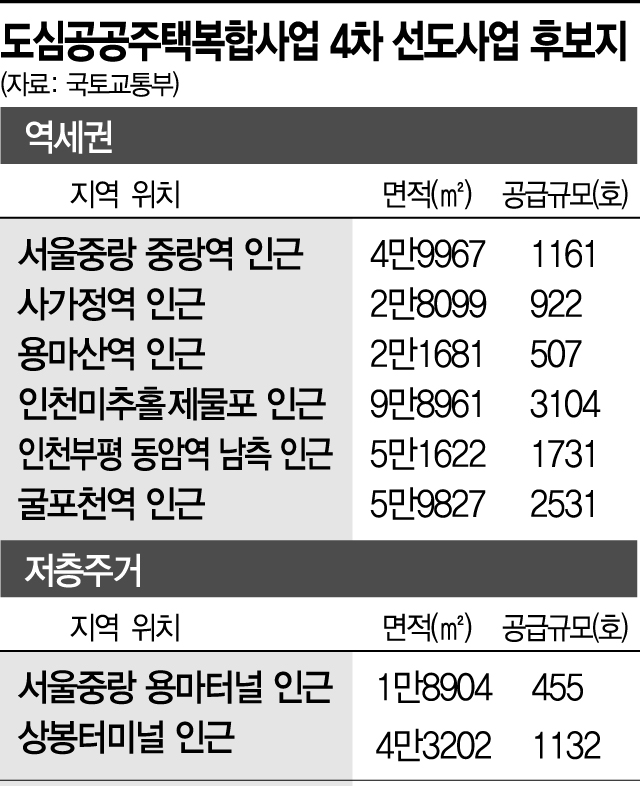
First, according to the Public Housing Special Act amendment, the 'Urban Public Housing Complex Project' was formally introduced as a three-year temporary measure to rapidly redevelop station areas, semi-industrial zones, and low-rise residential areas within the city.
During the bill subcommittee review, the requirement for 10% consent from landowners for designating planned districts was removed, but a new provision was added allowing the cancellation of district designation if more than half of the landowners request cancellation after three years have passed since the district designation.
MOLIT said, "Usually, public institutions do not legally require residents' consent at the initial stage when proposing a project. However, the status of residents' consent will be considered when designating planned districts."
Additionally, legal grounds for residents' councils were established to ensure residents' opinions are sufficiently reflected during the project process, and clear regulations were set regarding exemption from residence obligations and resale restrictions for houses preferentially supplied to landowners.
Through amendments to the Special Act on Urban Regeneration Activation and Support, a Residential Regeneration Innovation District was introduced. This aims to create small-scale local hubs with mixed functions such as housing, welfare, and convenience in declining areas densely packed with old and poor-quality buildings. During the review, the designation criteria for Residential Regeneration Innovation Districts were made more specific, and the entity responsible for collecting consent forms for land acquisition was changed from the project implementer to the mayor or county governor.
The amendment to the Special Act on Vacant Houses and Small-scale Housing Maintenance newly introduced the 'Small-scale Redevelopment Project' to rapidly improve residential and urban environments on a small scale in station areas and semi-industrial zones. During the review, a provision was added requiring mayors or county governors to conduct resident opinion collection procedures when designating project implementation zones.

Furthermore, to systematically redevelop low-rise residential areas where new and old houses are mixed and large-scale development is difficult, a 'Small-scale Housing Maintenance Management Area' was introduced.
For cases where apartment construction permits were obtained before February 4 and sales are made, exceptions were recognized to grant priority supply rights if certain conditions are met to protect trust. The conditions are limited to cases where sales contracts were signed before the announcement date of candidate sites by the MOLIT minister and ownership was transferred before district designation.
The amendment to the Urban Maintenance Act, which regulates public direct implementation maintenance projects, will be reviewed at the next bill subcommittee. This is to discuss it together with another amendment that advances the timing of restrictions on the transfer of association member status.
Although concerns have been raised that public direct implementation maintenance projects may be delayed, MOLIT explained, "Currently, 61 districts have been proposed through various channels such as private sectors and maintenance associations, and pre-legal procedures such as feasibility analysis and resident consultations are proceeding as planned, so no setbacks are expected."
The bills passed by the National Assembly Land, Infrastructure and Transport Committee's bill subcommittee are expected to be promulgated and enforced two months after approval by the National Assembly.
Kim Susang, Director of the Housing and Land Office at MOLIT, said, "We will promptly complete the revision of subordinate statutes to ensure that project procedures such as planned district designation can proceed quickly immediately after the law is enforced," adding, "To block any possible influx of speculative capital, we will conduct thorough real transaction investigations and exclude overheated areas from planned district designation."
© The Asia Business Daily(www.asiae.co.kr). All rights reserved.
![Clutching a Stolen Dior Bag, Saying "I Hate Being Poor but Real"... The Grotesque Con of a "Human Knockoff" [Slate]](https://cwcontent.asiae.co.kr/asiaresize/183/2026021902243444107_1771435474.jpg)


















