Momentum Gained in Securing Supply and Restoring Trust
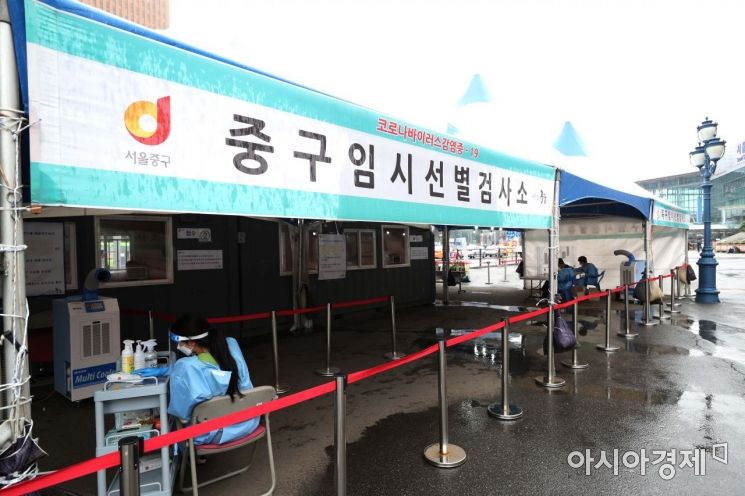 The number of new COVID-19 cases in South Korea remained in the 300s for the second consecutive day. On the 15th, the temporary COVID-19 screening site set up at Seoul Station Plaza was less crowded than usual. The consecutive days of 300-level cases mark the first time in three months since March 15-16 (379 and 363 cases), before the start of the fourth wave. Photo by Moon Honam munonam@
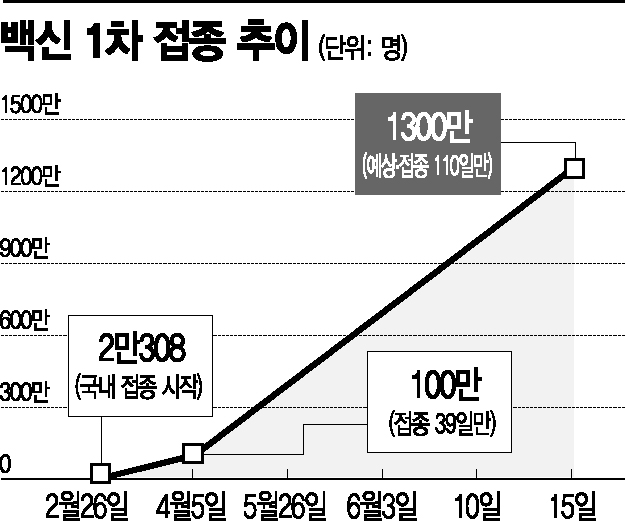
The number of people receiving their first dose of the COVID-19 vaccine in South Korea is expected to surpass 13 million as early as the 15th. This achievement comes about two weeks ahead of the mid-year target of vaccinating 25% of the population. After a sluggish start due to vaccine shortages and safety concerns causing hesitancy, the vaccination campaign gained momentum with secured vaccine supplies and restored public trust, reaching the interim goal in just 110 days.
According to the COVID-19 Vaccination Response Promotion Team, as of midnight on this day, 731,735 new first-dose vaccinations were administered. This brings the total number of first-dose recipients to 12,565,269. With 565,000 people having made advance reservations for the first dose on the same day, including vaccinations from leftover doses, surpassing 13 million cumulative vaccinations is highly likely. If the current trend continues, reaching 14 million within this week is also possible. Additionally, 1,632,000 people have made advance reservations for vaccinations scheduled between the 16th and 19th.
The pace of COVID-19 vaccinations is accelerating over time. It took a full 39 days for the first 1 million people to be vaccinated after the domestic vaccination campaign began on February 26. It then took about 50 more days to vaccinate an additional 3 million people. However, reaching 13 million vaccinations this time is a feat achieved just 5 days after surpassing 10 million on the 10th.
The success of the vaccination plan hinged on a steady vaccine supply during the first half of the year, which led to the early achievement of the target. Previously, approximately 15.13 million doses were introduced, combining 10.08 million doses of AstraZeneca (AZ) vaccine and 5.05 million doses of Pfizer vaccine. In addition, 55,000 doses of Moderna vaccine and 1,012,800 doses of Janssen vaccine were supplied this month. With the government securing more vaccines than the mid-year vaccination target, vaccinations proceeded as scheduled except for some delays due to the timing of vaccine arrivals.
The domestic healthcare system also supported smooth vaccinations. For reservations among the elderly aged 60 and above, online booking, call centers, and proxy reservations were utilized to assist their advance bookings. Furthermore, vaccinations were conducted at over 12,800 designated medical institutions nationwide, enabling convenient access. The use of ‘LDS syringes,’ known for extracting extra doses, also contributed to increasing the number of vaccinated individuals. Vaccinations using leftover doses through Naver and KakaoTalk platforms were helpful as well. As of the 14th, a total of 900,146 people have been vaccinated using leftover doses.
The ‘vaccine distrust,’ considered the biggest obstacle to herd immunity, has recently subsided. The final reservation rate for the elderly aged 60 to 74, who were the focus of second-quarter vaccinations, closed at 80.7%. Although the reservation rate struggled around 50% during the mid-to-late reservation period, it rose sharply at the end, exceeding the target range of 70-80%. Young adults aged 20 to 40, who are scheduled for third-quarter vaccinations, are also showing strong willingness to get vaccinated. Earlier, Janssen vaccine advance reservations for reservists and civil defense personnel ended early within 18 hours on the first day.
Kwon Deok-cheol, the 1st Deputy Head of the Central Disaster and Safety Countermeasures Headquarters (Minister of Health and Welfare), stated on the day, "The number of people receiving their first dose is expected to exceed 13 million as early as today. This goal was originally set for the end of June, but it is being achieved about two weeks earlier. This meaningful result reflects the strong desire of the people to quickly restore daily life."
The increase in new confirmed cases has also slowed. According to the Central Disease Control Headquarters, as of midnight on this day, there were 374 new COVID-19 cases, marking the second consecutive day with daily new cases in the 300s following 399 cases the previous day. This is the first time in three months since March 15-16, when the third wave was subsiding, that daily new cases have remained in the 300s for two consecutive days. Although the so-called ‘weekend effect,’ where testing numbers decrease, played a role, the continuous decline in cases is attributed to about 25% of the population having completed their first vaccine dose.
© The Asia Business Daily(www.asiae.co.kr). All rights reserved.


















