DGIST Dr. Younghoon Kim Joint Research Team
[Asia Economy Reporter Kim Bong-su] Daegu Gyeongbuk Institute of Science and Technology (DGIST) announced on the 15th that it has developed a core technology that can improve the performance of quantum dot solar cells by obtaining perovskite quantum dots with very uniform particle sizes.
The perovskite quantum dots with uniform particle sizes developed by the joint research team of Dr. Kim Young-hoon from the Energy Convergence Research Division and Professor Choi Jong-min from the Department of Energy Engineering at DGIST require no heat treatment during the thin film and device fabrication process. It is expected to be widely applied in the future, including flexible-wearable solar cell devices and high color purity and high luminance light-emitting diode devices.
Recently, as interest in solar cells has increased, research on solar cells using quantum dots with excellent light absorption capabilities over a wide area has been active. In particular, quantum dots are a key material for next-generation solar cells, as the 'optical bandgap' that determines the material's light absorption rate and luminescence ability can be freely adjusted according to the particle size.
Among them, the synthesis of high-quality perovskite quantum dots is essential for manufacturing perovskite quantum dot solar cells with the highest efficiency. At this time, a purification process that selectively removes only the perovskite quantum dots by eliminating residual precursors and ligands used in the synthesis process is essential. However, the antisolvent used in purification causes dissolution and aggregation of perovskite quantum dots, hindering the uniformity of the size and distribution of the perovskite quantum dots and further limiting the performance of solar cells.
The research team developed a technology that can selectively isolate particles of uniform size by applying gel-permeation chromatography to perovskite quantum dots of different sizes. They also identified that monodisperse perovskite quantum dots with very uniform particle sizes possess excellent optical, photophysical, and photoelectric properties.
The team also conducted research on the relationship between the uniform particle size of perovskite quantum dots and solar cell performance, and for the first time proved that uniform particles of perovskite quantum dots positively affect solar cell performance. They additionally succeeded in developing a high-performance perovskite quantum dot solar cell with an open-circuit voltage of 1.27 V and a photoelectric conversion efficiency of 15.3%.
Dr. Kim Young-hoon of DGIST’s Energy Convergence Research Division said, “Quantum dots have optical properties that vary according to their particle size, so when quantum dots of various sizes are mixed, the intrinsic optical and photophysical properties of the quantum dots can be weakened. This research addresses the fundamental cause of such weakening of perovskite quantum dot properties, and it is expected to have very high applicability in solar power generation, light-emitting diodes, and zero-power displays in the future.”
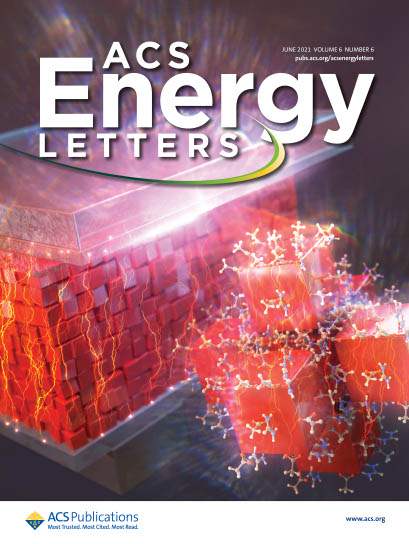
The results of this study were published as the cover paper of the online edition of the international journal in the field of energy science, ACS Energy Letters, on the 11th.
© The Asia Business Daily(www.asiae.co.kr). All rights reserved.

















