Economic 5 Organizations Announce Position Ahead of 52-Hour Workweek Expansion
Chronic Labor Shortage and Foreign Entry Suspension Cause 'Double Hardship'
27.5% of Foundry and Shipbuilding Firms Struggle to Comply After July
"Additional Extensions and Flexible Work Systems Like Flexible Hours Must Be Improved"
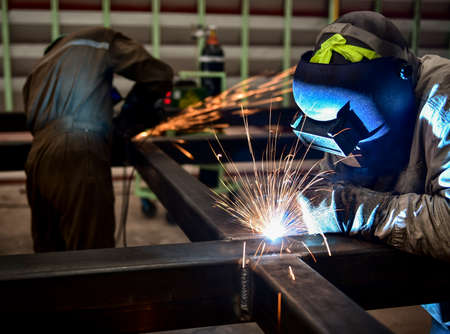
[Asia Economy Reporter Kim Bo-kyung] A survey found that 4 out of 10 root industry and shipbuilding companies with fewer than 50 employees are not prepared for the implementation of the 52-hour workweek system. The business community appealed for a reduction in the guidance period, considering the impact of COVID-19 and labor shortages.
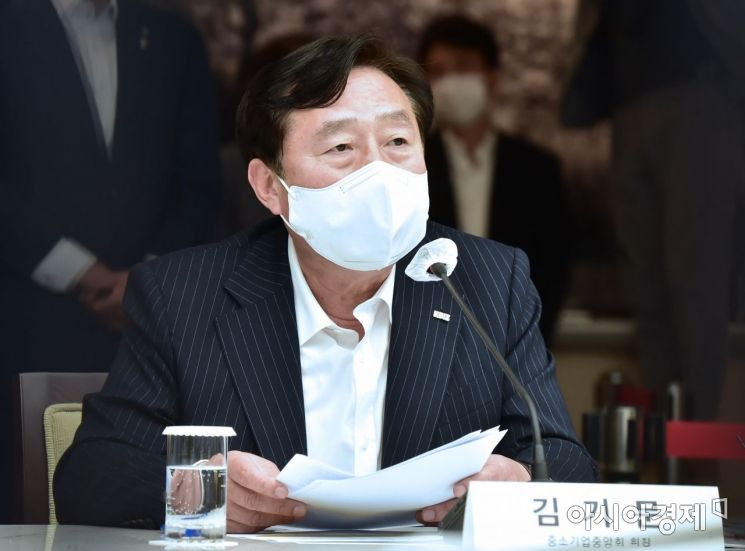
On the 14th, five economic organizations, including the Korea Federation of SMEs, announced a joint statement titled "Joint Position of Economic Organizations Urging Measures for the 52-Hour Workweek System" at the Korea Federation of SMEs in Yeouido, Seoul. They reported the results of a survey on the actual conditions of the 52-hour workweek system, which is scheduled to be implemented next month for workplaces with 5 to 49 employees, and emphasized the need to grant a guidance period due to difficulties faced on the ground.
The economic organizations stated, "If the 52-hour workweek system is implemented for companies with fewer than 50 employees without special supplementary measures, it will cause a significant shock," and argued, "Additional preparation time should be given to companies with fewer than 50 employees, just like large corporations and companies with 50 or more employees." Previously, the government granted a 9-month guidance period for large corporations and a 1-year guidance period for companies with 50 or more employees during the phased expansion of the 52-hour workweek system.
They added, "At the very least, additional preparation time should be provided for industries where adjusting working hours is difficult, such as shipbuilding, root industries, and construction, or for startup companies where concentrated work is inevitable due to chronic labor shortages."
The employment shock caused by COVID-19 has been concentrated in small and medium-sized enterprises (SMEs). Last year, the number of employees in SMEs decreased by 297,000 compared to the previous year, marking the first decline in 11 years since the 2009 global financial crisis. In particular, the root and shipbuilding industries are facing chronic labor shortages, and even the supply of foreign workers is disrupted. Based on manufacturing, only 2,437 (6.4%) of the planned 37,700 foreign workers entered the country last year, and as of May this year, only 1,021 (2.5%) of the planned 40,700 have entered. Recently, rising raw material prices have reduced production volume, making it difficult to hire new employees for occasional bulk orders.
According to a survey conducted by the Korea Federation of SMEs targeting 207 root and shipbuilding companies, 44% of them are not yet prepared for the introduction of the 52-hour workweek system, and 27.5% find it difficult to comply even after July. The reasons for lack of preparation were labor shortages (42.9%), difficulty in forecasting orders (35.2%), and labor cost burdens (31.9%). The opinion that a guidance period should be granted reached 54.6%, and 36.3% responded that a guidance period of more than one year is necessary.
Additionally, a joint survey last month by the Korea Federation of SMEs, Ministry of Employment and Labor, and Ministry of SMEs and Startups found that 38.8% of manufacturing companies with fewer than 50 employees are not prepared for the implementation of the 52-hour workweek system, and 17.6% find it difficult to comply after July. Notably, more than half (50.2%) of companies exceeding the 52-hour limit are completely unprepared, and nearly half (44.3%) of overtime work occurs irregularly, making it difficult to respond with flexible work systems such as flexible working hours. A recent survey by the Korea Employers Federation showed an even higher figure, with 21.9% of companies with 5 to 49 employees responding that they will have difficulty preparing for the 52-hour workweek system after July this year.
The business community also raised concerns about wage reductions for workers. In their statement, they said, "In the shipbuilding industry, where overtime pay is significant, reducing working hours would revert the average industry wage to that of 10 years ago, causing many workers to take on second jobs to compensate for lost income," calling it "a case that undermines the purpose of reducing working hours to protect workers' health."
Finally, they emphasized the need to improve various systems, stating, "The fundamental solution to the 52-hour workweek system lies in increasing flexibility in working hours management." They requested measures to cope with sudden surges in workload, including ▲ extending the special extended work approval period to 180 days per year ▲ expanding the 8-hour additional extended work system to workplaces with fewer than 50 employees until the end of the COVID-19 pandemic ▲ easing procedures for the flexible working hours system ▲ allowing additional extended work on a monthly or yearly basis upon labor-management agreement.
© The Asia Business Daily(www.asiae.co.kr). All rights reserved.
![Clutching a Stolen Dior Bag, Saying "I Hate Being Poor but Real"... The Grotesque Con of a "Human Knockoff" [Slate]](https://cwcontent.asiae.co.kr/asiaresize/183/2026021902243444107_1771435474.jpg)

















