Impact of International Grain Prices on Cost Burden
CJ Meat Processing, Average 9.5% Price Increase
Chicken Industry "Review After Summer"
[Asia Economy Reporter Seungjin Lee] Food price increases that have continued since the beginning of the year are expected to persist into the second half. This time, ramen and major processed meat products are signaling price hikes.
Feed and Cooking Oil Prices Up... Red Light for Processed Meat
According to the food industry on the 14th, ramen companies and major processed meat manufacturers are weighing product price increases. The food industry states that the cost burden has reached its limit as international grain prices such as wheat, corn, and soybeans have risen more than 30% in the past year.
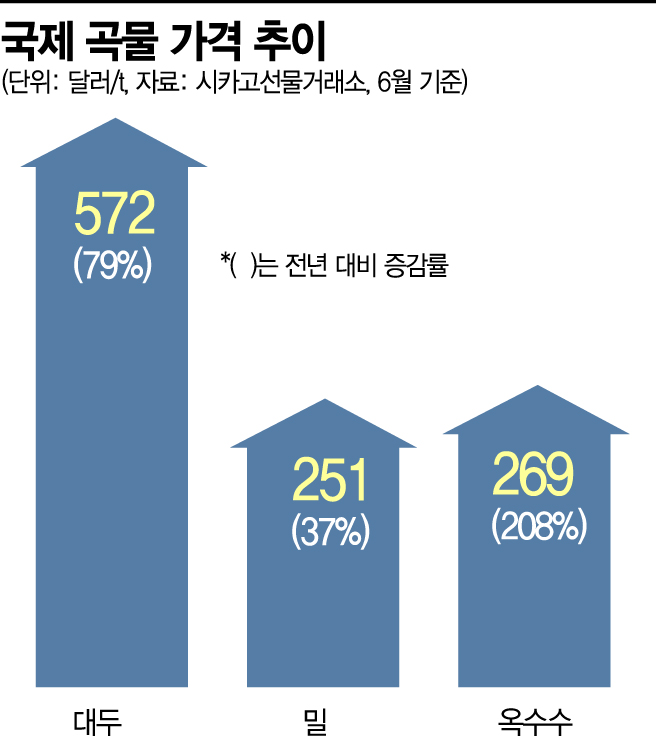
According to the Chicago Mercantile Exchange, the price of soybeans per ton in June was $571, approaching the all-time high of $623 in August 2012. Prices have surged more than 80% in the past year. Wheat and corn prices have also risen about 30% over the past year, reaching their highest levels in seven years.
CJ CheilJedang has decided to raise prices of processed meat products such as Spam, ham, and sausages by an average of 9.5% starting next month, with the increase in grain prices used for feed being decisive. The chicken industry has also been affected. Chicken prices have risen due to increased feed costs, coupled with rising cooking oil prices. A chicken industry official said, "There is no plan to raise prices yet, but after the summer peak season, if cost burdens increase, we may consider raising chicken prices."
Ramen Industry: "Cost Burden at Breaking Point"
The pressure to raise prices is also growing in the ramen industry, where raw material costs account for 50-60% of the product price. Raw material prices have risen more than 30% in the past year alone, creating a factor for at least a 10% increase in ramen prices.
Pulmuone, which mainly produces refrigerated noodles, has already raised prices of major products by an average of 8%. The ramen industry has many reasons to raise prices but is closely watching due to potential public backlash. Nongshim’s “Shin Ramyun” has frozen prices since 2016, and Samyang Foods has kept “Samyang Ramen” prices unchanged since 2017. A ramen industry official explained, "There has been a 10% price increase factor this year alone, but if a company announces a price hike first, it may face criticism, so everyone is waiting for someone else to take the lead."
Consumers’ grocery price burdens are expected to increase further in the second half. The fresh food index of consumer prices in the first quarter (January to March) was 135.07, up 14.8% compared to the same period last year. The fresh food index is based on 50 items such as seafood, vegetables, and fruits, which have large price fluctuations depending on weather conditions and seasons. Last month, the fresh food index also rose 13%, indicating that price burdens will continue in the second half.
© The Asia Business Daily(www.asiae.co.kr). All rights reserved.
![Clutching a Stolen Dior Bag, Saying "I Hate Being Poor but Real"... The Grotesque Con of a "Human Knockoff" [Slate]](https://cwcontent.asiae.co.kr/asiaresize/183/2026021902243444107_1771435474.jpg)
















