Survey Results of 1,971 Locations in Seoul
84% Charge Elevator Usage Fees
Concerns Over Double Charging in Maintenance Fees
"Local Governments Should Establish Standard Guidelines"
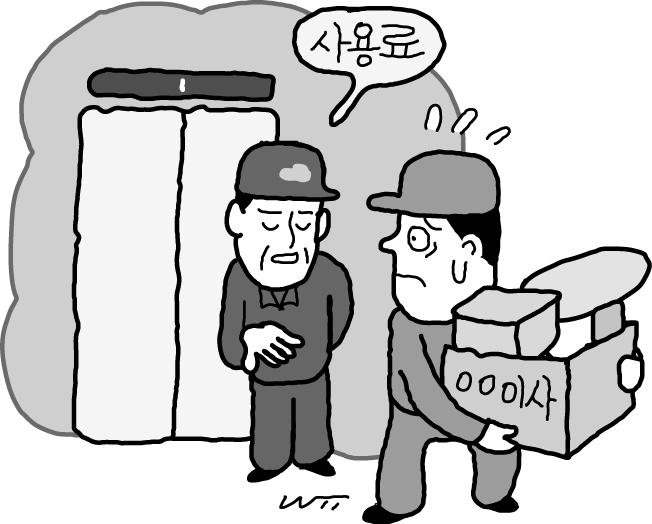
[Asia Economy Reporter Donghoon Jung] "Are you going to use the elevator? Then you have to pay a usage fee of 200,000 won. It's our apartment rule."
On the first day of moving into Apartment A located in Seongbuk-gu, Seoul on the 9th, Shim Hye-in (30, pseudonym) did not feel pleased. Because she moved during rush hour, she used a ladder truck to avoid disturbing the residents, but was told she had to pay an elevator usage fee. Shim said, "Even though I only moved simple items like books and clothes that were not packed in boxes using the elevator, paying as much as 200,000 won is excessive." She added, "Having to pay a flat fee of 200,000 won and not clearly understanding what the money is used for is hard to accept. It feels like I am encountering ‘apartment selfishness’ for the first time."
As moving season arrives, complaints about inconsistent elevator usage fees across apartment complexes and officetels are emerging. Many new residents cannot accept having to pay tens of thousands of won at once for several hours of elevator use because the criteria are unclear and vary widely depending on the type of residence.
According to a 2019 survey conducted by Seoul City on elevator usage fees for moving in 1,971 out of 4,106 apartment complexes in the city, 83.9% (1,652 complexes) charged usage fees. Among them, more than half (965 complexes) demanded a fixed amount from new residents, while 687 complexes charged different amounts based on factors such as floor, area, number of days the elevator was used, ladder truck usage, and moving load weight. The average fee was 104,000 won, with the highest fee reaching 550,000 won. However, 16.2% (319 complexes) of the surveyed complexes did not charge separate elevator usage fees, showing significant variation.
There are criticisms of double charging since elevator maintenance and electricity costs are already included in the management fees of apartments and officetels, yet separate fees are imposed. Lee Hyun-min (33), who moved to Apartment B in Seodaemun-gu, Seoul last month, said, "Even though I moved to the third floor, I had to pay 100,000 won for elevator use during the move," adding, "They say it’s for elevator maintenance and management, but I still have doubts since it’s included in the management fees."
The reason conflicts and complaints about elevator usage fees recur is that the fees are often arbitrarily set by resident representative meetings or building owners. According to the Apartment Management Act, elevator usage fees are autonomously decided by the apartment itself. The Act states that "matters resolved by the resident representative meeting include management regulations, management fees, and facility operation," allowing the meeting to autonomously decide whether to impose usage fees and set the criteria. A resident representative of an apartment in Seongbuk-gu said, "During moving, excessive weight is applied, increasing maintenance costs such as elevator inspection and repair," adding, "Minor scratches inevitably occur, and residents bear the repair costs, so we charge usage fees to new residents."
Many believe that fees should be calculated based on the floor and area of the new resident, the number of days or times the elevator is used, and the weight of the moving load. A district office official said, "Local governments need to step in and create standards and guidelines."
© The Asia Business Daily(www.asiae.co.kr). All rights reserved.
![Clutching a Stolen Dior Bag, Saying "I Hate Being Poor but Real"... The Grotesque Con of a "Human Knockoff" [Slate]](https://cwcontent.asiae.co.kr/asiaresize/183/2026021902243444107_1771435474.jpg)
















