Playing Two Roles Raises Fairness and Neutrality Controversy... Losing 1 in 4 Administrative Lawsuits
9 Attend Fair Trade Commission Plenary Meeting... Experts Agree on Strengthening Independence of FTC Members or Chairperson with Personnel Authority... US Administrative Law Judges Also Appointed Separately
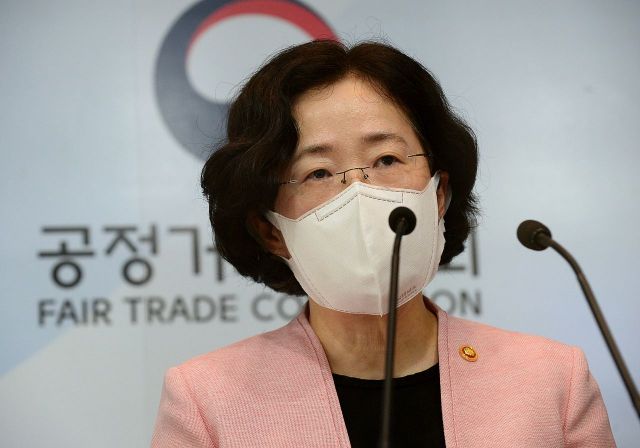
[Sejong=Asia Economy Reporter Kwon Haeyoung] Regarding the Fair Trade Commission's (FTC) excessive "corporate crackdown," revealed by heavy fines and a high rate of administrative litigation losses, the business community and some experts point out that it stems from a judgment system where "fairness" is difficult to guarantee. Since judges and prosecutors perform "dual roles" simultaneously, the independence of the adjudication function has not been established. Ultimately, the FTC focuses solely on sanctions based on internal investigations, leading to cases where FTC decisions, which have the effect of first-instance judgments, are overturned in courts. Experts suggest that it is time to discuss reforming the FTC by strengthening the independence of its adjudication body and separating the adjudication function in cases of serious violations of the Fair Trade Act.
◆ Judges and prosecutors under one roof performing dual roles... a tilted playing field = According to the FTC on the 8th, regarding the allegations of unfair support by four affiliated companies' catering providers (Samsung Welstory) including Samsung Electronics, the FTC is responsible for investigating these companies and deciding on sanctions and their severity. The FTC's Corporate Group Bureau investigated Samsung's unfair support allegations, and based on this, a plenary meeting composed of internal and external FTC members determines the level of sanctions. In other words, although the responsible organizations differ, the FTC simultaneously plays the roles of judge and prosecutor within a broad framework.
The FTC's position is clear: the investigation and adjudication functions are separated. They claim that the plenary meeting adopts a court-style appellate system to guarantee the company's right to defense and that it makes independent and neutral decisions as the highest decision-making body. However, since more than half of the plenary meeting members belong to the FTC and the FTC chairman holds personnel authority over most members, it is difficult to avoid criticism of a "tilted playing field."
The plenary meeting consists of nine standing and non-standing members. Among them, all five standing members belong to the FTC (including the FTC chairman, vice chairman, and three standing members who previously served as heads of the Competition Policy Bureau, Corporate Transaction Policy Bureau, and Corporate Group Bureau). The four non-standing members are external experts, but like the other three standing members excluding the chairman and vice chairman, they are appointed by the president upon the chairman's recommendation. The appointment process is opaque, effectively giving the FTC chairman personnel authority, making it impossible for members to be free from the chairman's influence during adjudication.
A business community official said, "From the perspective of the party under sanction, both the investigators and the plenary members deciding the sanctions are all FTC colleagues," adding, "The fact that the FTC's corrective measures are repeatedly overturned in court rulings means that the FTC is taking excessive measures."
◆ Sanctions first... the consent decree system rendered ineffective = Since the FTC's investigation and adjudication functions are not practically separated, there is criticism that a vicious cycle of "excessive sanctions → administrative litigation due to objection → loss and refund of fines" continues. Especially, conscious of controversies over "light punishments" and "favoring companies," the FTC, based on a precautionary principle, takes excessive measures, resulting in losing about one in four administrative lawsuits, thereby narrowing its own standing.
As the FTC falls into a sanction-only approach rather than inducing voluntary correction, the use of the consent decree system is also insufficient. The consent decree aims to quickly resolve competition-restricting conditions and compensate victims without determining legal violations. According to the National Assembly Legislative Research Office, since the FTC introduced the consent decree system in 2011, a total of 12 applications for consent decree initiation have been submitted, but only six were accepted (excluding the Samsung Welstory unfair support case). The FTC's recent rejection of Samsung's consent decree application regarding allegations of unfair in-house catering support and decision to proceed with sanctions is interpreted as a decision influenced by opposition from some civic groups.
Professor Lee Kyungmook of Seoul National University's Business School pointed out, "The FTC should actively utilize voluntary correction measures like the consent decree system to quickly resolve corporate uncertainties, but it is only taking 'face-saving' excessive sanctions due to concerns about criticism of favoring companies."
There have even been cases where the FTC rejected a company's consent decree application citing serious legal violations but lost in administrative litigation. Previously, the FTC imposed a fine of 500 million KRW on Hyundai Mobis for forcing dealerships to purchase parts and filed criminal charges against the corporate representative and head of parts sales. The FTC rejected Hyundai Mobis's consent decree application and imposed sanctions, but the court ruled against the FTC in 2019.
◆ "Need to strengthen the independence of the FTC's adjudication function" = Experts agree that to enhance the fairness of FTC decisions, the independence of the adjudication function must be strengthened.
The U.S. Federal Trade Commission (FTC), which the Korean FTC benchmarks, has a separate "administrative law judge" who makes the first judgment based on investigators' reports. The U.S. FTC makes final decisions based on the administrative law judge's report. Although the administrative law judge belongs to the FTC internally, they are recruited by a central agency and appointed after congressional approval, which is evaluated as significantly enhancing fairness compared to the current operation of the Korean FTC's adjudication body. There are also calls to revise the plenary meeting structure, where the FTC chairman effectively holds personnel authority.
Professor Lee Hwang of Korea University's Law School said, "The FTC has steadily pursued institutional improvements based on opinions that separation of adjudication and prosecution functions is necessary, but it is still insufficient compared to the relationship between courts and prosecutors. Like the U.S. FTC operating administrative law judges, the Korean FTC should continuously seek ways to strengthen independence."
© The Asia Business Daily(www.asiae.co.kr). All rights reserved.

















