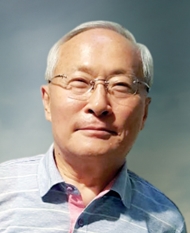
 Isun Byung
 Senior Member, National Academy of Engineering of Korea
The first prime minister of the current administration said in his inaugural speech, “Civil servants must become instruments that heed the orders of the Candlelight Revolution.” The ruling party’s floor leader threatened the opposition, asking if they deny the legitimate president. There was likely sincerity behind their words at the time. President Moon visited several countries early in his term, stating that the Candlelight Revolution revived democracy in Korea. However, the counterparts probably found it uncomfortable to hear. After all, those in power fear revolutions or coups the most.
In his message on the 7th anniversary of the Sewol ferry disaster last April, President Moon said, “We are approaching the truth.” It appears to be a conviction and determination to uncover the truth to the end in order to build a just society. If successful, it is called determination; if it fails, it is called stubbornness. Steve Jobs is remembered as a major contributor to the Fourth Industrial Revolution, but opinions differ on whether he was a competent manager. Even if the results are just, the rightness or wrongness of the process must be examined. Yet now, we see both the process and the results unfolding differently from the original promises.
People are accustomed to the notion that truth is good and lies are evil. However, experiencing the use of such ethical standards as tools for propaganda and agitation leads to skepticism about the concepts of truth and lies, good and evil. The belief that conservatives are corrupt and progressives are pure is also beginning to change. It was only that the bowl was empty due to lack of food. It is not a matter of conservatism or progressivism; when food is available, organizations become corrupt.
We hold those in power to higher moral standards. Conversely, those who consider themselves victims of the powerful claim their deviant behavior is merely a means of survival. They gather, form political groups, and ultimately seize state power. Even after gaining power, they continue to play the victim despite needing to hold themselves to higher moral standards.
The so-called “Daekkaemun” (hardcore Moon supporters)’s enthusiasm can vanish like fog. When they realize their faith was a mirage of incompetence and hypocrisy, their belief begins to waver. When discomfort and suffering approach them, they start to feel existential harm. People in a state of fervor act without hesitation, but once belief disappears, they try to erase their actions from memory. After the Cultural Revolution, it is said that in China, even those who beat and those who were beaten pretended not to know each other on the street. They simply did not want to revisit the past. The country regressed, leaving only bitterness in the hearts of the people.
Even drinking the same water, if a snake drinks it, it becomes poison; if a cow drinks it, it becomes milk. Even if taught from the same books at school, perspectives on the world can diverge to an irreconcilable degree.
Legal philosopher Friedrich Hayek was 23 years old when the Soviet Union, the world’s first socialist state, was established, and he died the year after it collapsed. He witnessed the rise and fall of the socialist system throughout his life. In his final book, The Fatal Conceit, he wrote that socialism, which dreams of utopia, leads people down the path of slavery while indulging in intellectual arrogance and moral hypocrisy. Watching the moral hypocrisy unfolding in the current government, I can only admire and lament Hayek’s insight.
“Power, money, or fame are not forcibly chosen. A greedy person can have them in any system. They create their surrounding environment accordingly. Intelligence, morality, genuine honor, compassion, love?these are not created by systems. They are frameworks humans, as social animals, create themselves while living together.” Hayek called this a spontaneous order.
There is much discourse about what conservatism (保守) means, but a single phrase from Onkoji-shin (?故而知新, “learning from the past to understand the new”) suffices. The world changes and progresses. Calmly accepting this great current is the way to live in this world. There is something called “seed soy sauce.” It is made by continuously adding newly brewed soy sauce to aged soy sauce to maintain the flavor. It is less salty and has a deeper taste than freshly brewed soy sauce. We call this harmony (調和).
The polarization of COVID-19 vaccine distribution will ease in some way. The argument to lower vaccine prices and distribute them to poor countries is very persuasive. However, there is also a threatening yet realistic claim that pharmaceutical companies will not develop more essential drugs if that happens. What is clear is that as supply increases and technology becomes widespread, prices naturally fall. Distribution to poor countries is just delayed. Still, it will be faster and cheaper than under socialist or totalitarian regimes. The history of capitalism proves this. Capitalists cunningly know that capital without demand fails.
Currently, the people are undergoing a very expensive but precious learning experience not encountered during conservative governments. They are physically experiencing what freedom and democracy mean through a risky socialist experiment once admired. Now, Korea will be reborn as a national state that respects common sense and freedom, rather than ideological divisions of left and right.
The April 19 Revolution and the June Democratic Uprising were completed on the sacrifices of youth. But now is not an era that advances by bloodshed; it is a world where comradeship connected through social media changes history. A great wind of change is blowing in our politics. If the leftward shift of the 386 generation was a product of resistance against conservative reactionaries, today’s 20s are rejecting the 386’s dreamy ideology and reactionary corruption. Some say the 20s have conservative tendencies similar to those in their 60s, but I think that is an anachronistic view. If the 60s are the thesis (正), the 40s are the antithesis (反), and the 20s are the synthesis (合). The role of those in their 60s is to help the 20s fully establish themselves as the new thesis (正).
During our Candlelight protests, foreigners witnessed scenes they had never seen in their own countries. Despite the large crowds, there was no violence or riots, and traffic was normal the next day. There was no atmosphere to punish people for littering with petty crimes, yet people cleaned up after themselves. It was a mature civic consciousness that desired a just country while obeying the law.
The joking question, “How many days left for the Moon Jae-in administration?” carries a very important democratic implication. Incitement to simply overturn everything is now unlikely to succeed in this country. We have matured as a people who know how to endure and follow the law.
Many worry that politics, economy, and social ethics have all collapsed over the past four years. But South Korea is not a small sailboat navigating coastal waters. It is at least a 100,000-ton large cargo ship. It is not a country that can easily collapse under a single five-year presidential term. Ray Dalio, founder of the world’s largest hedge fund, said in an interview last year that Korea has three crucial assets to navigate difficult times: education level, civic consciousness, and the ability to create and utilize new technologies. Germany and Japan, which caused World War II and were reduced to ashes, now stand as leading countries in the world. South Korea’s future will be the same.
President Biden declared “America is back” in a tweet on November 25 last year. The U.S. replaced its populist president after four years. Korea is coming back. “Korea is back.”
© The Asia Business Daily(www.asiae.co.kr). All rights reserved.
















