'GTX-C Yangju Extension', 'Attracting Gyeonggi Transportation Corporation', 'Construction of 2nd Ring Expressway', etc.
'Yangju Station Area', 'Okjeong·Hoecheon New Towns', 'Eunnam Industrial Complex' Development
'Construction of Local Route 39', 'Resumption of Gyooeseon Line' Operation
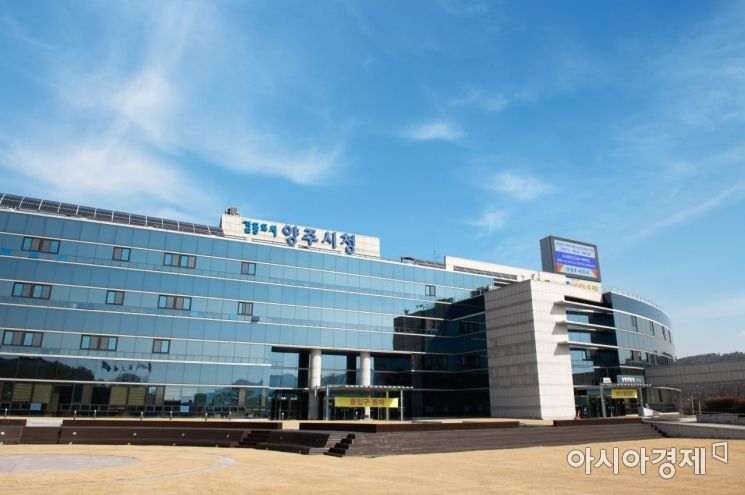
[Asia Economy Reporter Ra Young-cheol] Yangju City in Gyeonggi Province is seeing tangible results from its mega projects as it marks the third anniversary of the 7th elected administration.
According to the city on the 7th, it has been promoting projects such as the extension of the metropolitan express railway GTX-C to Yangju, attracting the Gyeonggi Transportation Corporation, construction of the Metropolitan Area 2nd Ring Expressway, Yangju Employment Welfare Plus Center, Gyeonggi Provincial Office of Education Safety Education Center, and the Yangju Art Center.
In particular, projects that faced difficulties due to administrative procedures and securing feasibility, such as the Seoul Subway Line 7 metropolitan railway, Yangju Okjeong and Hoecheon new towns, Yangju station area, National Road No. 39, Eunnam General Industrial Complex, and the Gyoeoseon railway line, are now regarded as having reached a new turning point.
■ Construction of 'Metropolitan Railway Network' including Subway Line 7
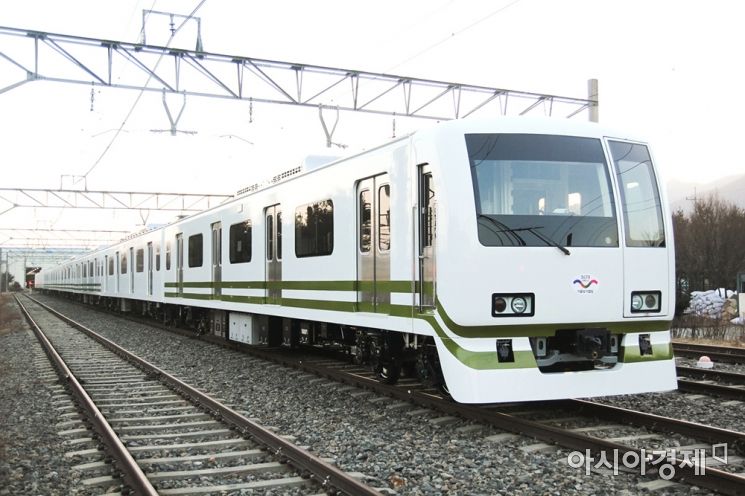
The metropolitan railway for Subway Line 7, which began construction in December 2019, involves a total project cost of 756.2 billion KRW to build a 15.1 km section from Dobongsan Station to Jangam Station, Tapseok Station, and Yangju Goeup District, scheduled for completion in 2025.
Following the commencement of Section 2 (connecting Songsan-dong and Jagum-dong in Uijeongbu City), construction of Section 1 (Dobong-dong, Seoul to Songsan-dong, Uijeongbu) and Section 3 (Jagum-dong, Uijeongbu to Goeup-dong, Yangju) began at the end of last year.
Additionally, the extension of the Okjeong-Pocheon metropolitan railway is a project with a total budget of 1.1762 trillion KRW, aiming to open in 2028, constructing a 17.45 km section passing through Yangju Okjeong New Town to Gunnae-myeon, Pocheon.
A residents' public hearing and briefing session, which was canceled in December last year due to opposition from Pocheon citizens regarding the operation method of a single-track 4-car train, resumed and concluded in February this year.
Once administrative procedures such as total project cost negotiations are completed, construction for each section is expected to be ordered in the second half of the year.
When the Dobongsan-Okjeong metropolitan railway opens, passengers will be able to use the subway from Yangju Goeup to Gangnam without transfers via Uijeongbu.
At the transfer hub Tapseok Station, passengers can transfer to the Uijeongbu Light Rail Transit, and commuting times from Yangju and Uijeongbu to eastern and northern Seoul are expected to be reduced by up to 30 minutes.
■ Construction of 'National Road No. 39' between Jangheung and Gwangjeok
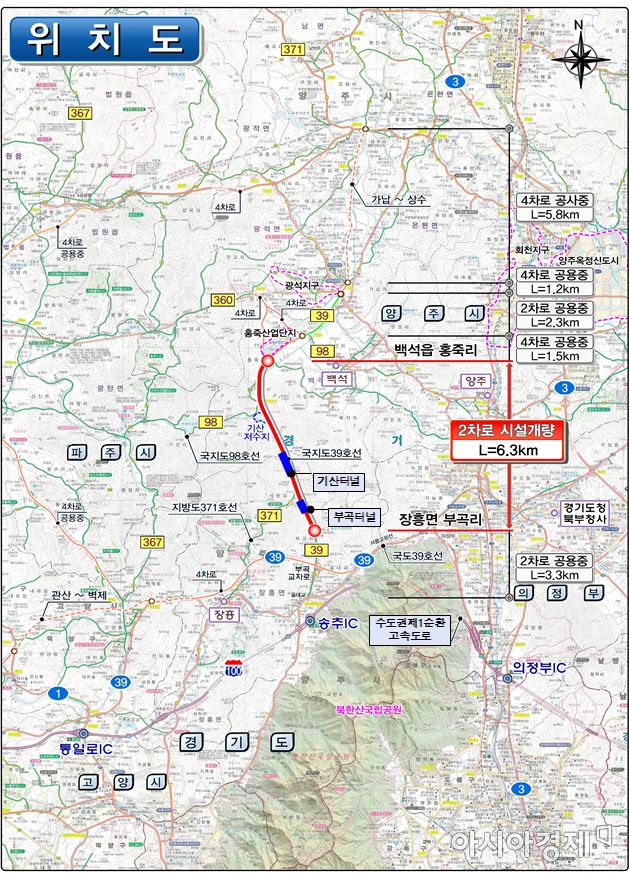
The construction of National Road No. 39 involves a total project cost of 80.2 billion KRW to upgrade a 6.3 km section from Bugok-ri, Jangheung-myeon, Yangju to Hongjuk-ri, Baekseok-eup into a two-lane road in both directions.
After completing basic and detailed designs in 2018, the total project cost was negotiated with the Ministry of Economy and Finance in 2019. Compensation amounts were finalized through appraisal, land compensation began, and after selecting a contractor, construction started in May last year.
Scheduled for completion in 2025, the project will straighten the curved alignment by installing two tunnels and connect nearby industrial complexes such as Hongjuk General Industrial Complex to the Metropolitan Area 2nd Ring Expressway.
Originally promoted as a private investment project, it was designated as a national fiscal project in 2013, included in the preliminary feasibility study in 2015, and ranked first in the 4th National Road Construction 5-Year Plan in 2016.
■ Development of 'Yangju Station Area' as a Converged Self-Sufficient City
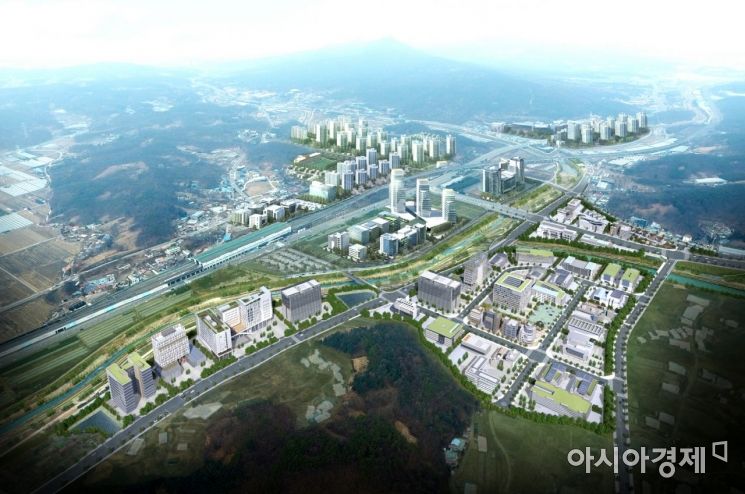
The Yangju Station area, the first gateway to Yangju, covers 643,762㎡ and is a project to build a converged city with enhanced self-sufficiency by adding mixed functions of administration, business, and residential areas, including residential spaces close to workplaces, convenience facilities, and corporate support facilities.
After selecting a preferred negotiator in 2013 and establishing a Special Purpose Company (SPC) in 2016, the project laid the groundwork for station area development by lifting the development restriction on 620,000㎡ through the Central Urban Planning Committee's review in May of the same year.
In March this year, Yangju City, Yangju Station Area Development PFV Co., Ltd., and Daewoo Engineering & Construction Co., Ltd. signed a tripartite win-win cooperation agreement, and plan to proceed with site development construction aiming for completion by the end of 2022.
■ Creation of 'Eunnam General Industrial Complex' as a Smart Industrial Belt in Northern Gyeonggi
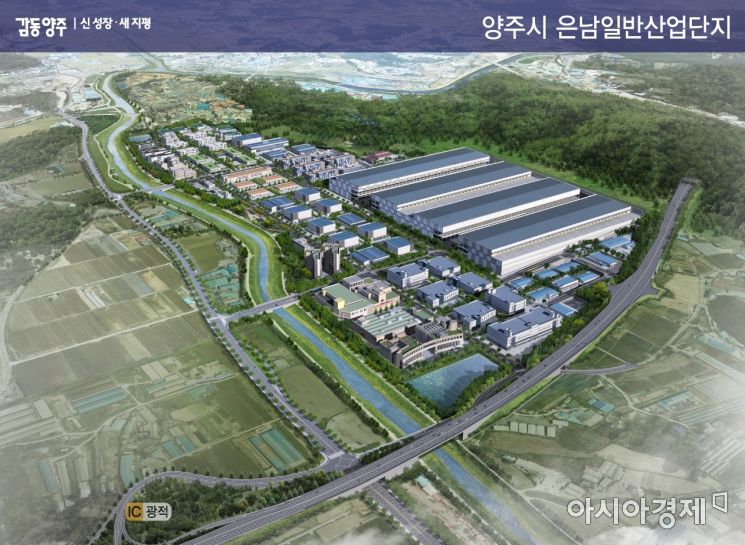
Covering 992,000㎡ in Dohari, Eunhyeon-myeon, and Sangsu-ri, Nam-myeon, the project is being promoted with a total budget of about 350 billion KRW, targeting completion in 2023.
Following the basic agreement for joint project implementation with Gyeonggi Housing and Urban Corporation in March, the city signed business agreements with regional innovation institutions such as the Small and Medium Business Corporation in April, establishing the overall conditions for the smart industrial belt in northern Gyeonggi.
Logistics Valley Co., Ltd., the largest complex logistics company in Korea, and Asung Daiso Co., Ltd., a leading household goods company, are expected to move in with areas of 180,000㎡ and 100,000㎡ respectively. Nine advanced promising industries including electronics, electrical, other machinery, and logistics are also preparing to settle.
With the Metropolitan Area 2nd Ring Expressway, National Road No. 39, GTX-C line, and inclusion in the development comprehensive plan for areas surrounding the US military base, the complex is evaluated to have competitive advantages such as tax benefits for resident companies and dedicated industrial water supply.
Industrial complex plan approval is expected in June, with appraisal and land compensation procedures to be completed this year, and construction scheduled to start in January 2022.
The city anticipates an economic effect of 394.6 billion KRW and employment inducement of about 10,800 people through the creation of the Eunnam General Industrial Complex.
■ Construction of 'Yangju Okjeong and Hoecheon New Towns' with Premium Living Convenience
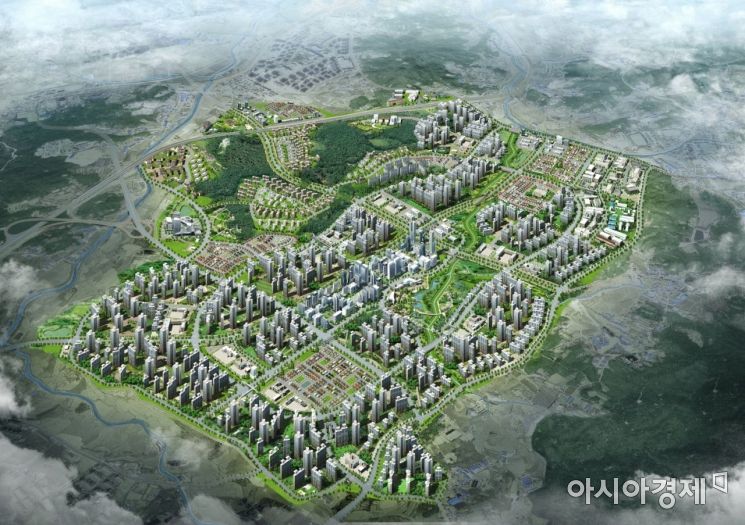
Since 2019, the city has been establishing plans for apartment site sales and last year sold commercial and neighborhood living facility sites, steadily building living convenience infrastructure.
The 'Gyeongwon Line Hoejeong Station New Construction Plan,' which adds Hoejeong Station between Deokjeong Station and Deokgye Station in Hoecheon New Town, was approved by the Ministry of Land, Infrastructure and Transport in December 2019, equipping northern Gyeonggi with a metropolitan railway network including GTX-C line and Subway Line 7 extension.
Additionally, road traffic infrastructure such as the National Road No. 3 alternative bypass and the Metropolitan Area 2nd Ring Road has been expanded.
■ Resumption of 'Gyoeoseon' Operation Connecting East and West Northern Gyeonggi
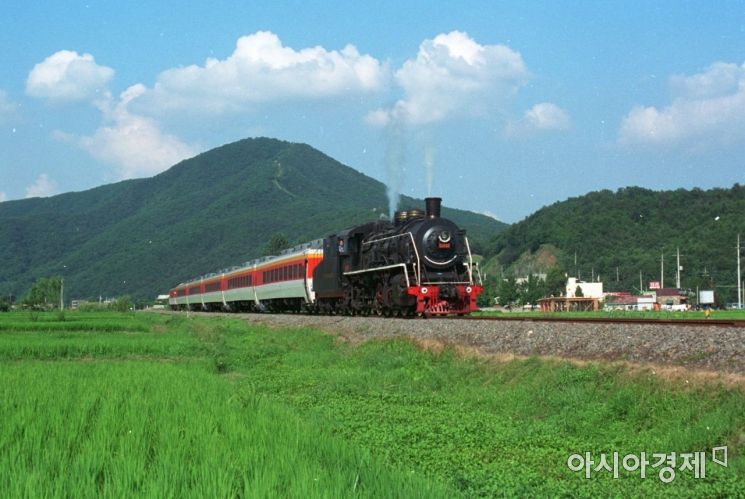
The Gyoeoseon railway line is the only rail line connecting the northwest of Gyeonggi Province east to west. It covers a 31.8 km section connecting Yangju Ilyeong Station, Jangheung Station, Songchu Station with Uijeongbu Station on Line 1 and Neunggok Station on the Gyeongui-Jungang Line.
In December last year, 4 billion KRW in national funds was secured for detailed design and construction costs for the renovation of Gyoeoseon, which had suspended operations since 2004, and preparations are underway to resume operations by the end of 2023.
The renovation cost for resuming operations is about 50 billion KRW, fully supported by national funds. Operating costs such as labor amount to about 5.3 billion KRW annually, shared by Goyang, Uijeongbu, and Yangju cities along the route.
With the resumption of Gyoeoseon operations, the southern area of Yangju will secure a driving force for transportation development, and development projects in Jangheung areas such as Ilyeong and Songchu, which have been on hold, are expected to proceed rapidly.
Mayor Lee Sung-ho said, "The three years of Yangju City's 7th elected administration have been a more dynamic period than ever, reestablishing Yangju's long history as the main base of northern Gyeonggi, serving as a forward base for inter-Korean exchanges suitable for an era of peace and prosperity, and laying the foundation for a new economic city on the Korean Peninsula." He emphasized, "Key priority projects that will firmly place Yangju's future 100 years on a solid foundation are sequentially getting on track, marking a new turning point."
© The Asia Business Daily(www.asiae.co.kr). All rights reserved.
!["The Woman Who Threw Herself into the Water Clutching a Stolen Dior Bag"...A Grotesque Success Story That Shakes the Korean Psyche [Slate]](https://cwcontent.asiae.co.kr/asiaresize/183/2026021902243444107_1771435474.jpg)


















