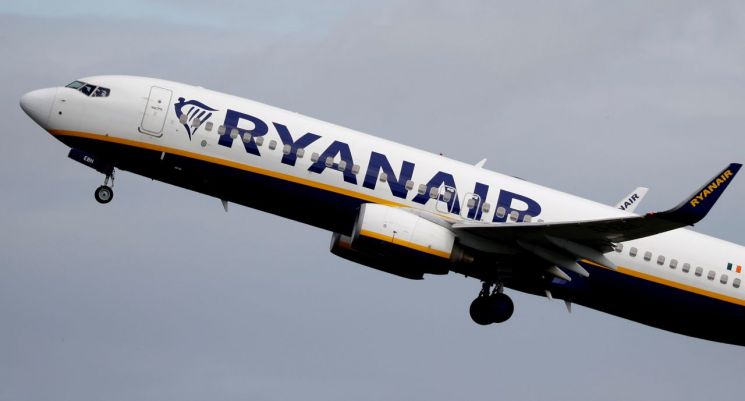
[Asia Economy Reporter Park Byung-hee] The European Union (EU) Commission is set to unveil a carbon market reform plan next month on the 14th (local time) that includes imposing a carbon tax on aviation fuel and heating oil, according to major foreign media reports on the 6th (local time). As a result, it is expected that the cost burden on airlines and household energy expenses will increase in the future.
This reform plan is part of measures to achieve the EU's greenhouse gas reduction target of cutting emissions by 55% from 1990 levels by 2030.
The reform plan is expected to include proposals for carbon emissions trading market reform and expansion of the carbon tax scope. Under the plan to expand the carbon tax scope, aviation fuel and heating oil, which have so far been exempt from the carbon tax, are expected to be newly included as taxable items.
The EU aims to impose the carbon tax uniformly across all sectors in the long term and plans to gradually reduce the scope of carbon tax exemptions accordingly.
If aviation fuel is excluded from the carbon tax exemption, the cost burden on airlines is expected to increase significantly. Moreover, the price of EU carbon emission allowances has risen by 130% over the past year.
Jeremy Lowbottom, an analyst at Deutsche Bank, estimated that low-cost carriers such as Ryanair, easyJet, and Wizz Air will face carbon tax costs exceeding 600 million euros in 2023. Before the COVID-19 pandemic, the cost was 330 million euros, but the rise in carbon emission allowance prices has increased the cost burden.
Some member states oppose excluding heating oil from the exemption due to concerns over increased household energy costs.
However, Germany supports including aviation fuel and heating oil in the taxable items. Germany has already started imposing a carbon tax of 25 euros per ton on heating oil and transport-related fuels from this year.
Germany is reportedly of the view that while the carbon tax exemption should be extended within an appropriate range, the exemption for aviation fuel carbon tax should end soon. It also believes that while imposing a carbon tax on heating oil, additional measures should be prepared for low-income groups or tenants to minimize social impact.
© The Asia Business Daily(www.asiae.co.kr). All rights reserved.

















