15% of the Population Completed First Dose in 100 Days of Vaccination
Remaining Challenges Persist in the Second Half 'Round 2'
Concerns Over Variants Amid Consistent Large-Scale Cases of 400-700
Key to Increasing Vaccine Supply and Uptake of '80 Million Doses in Q3'
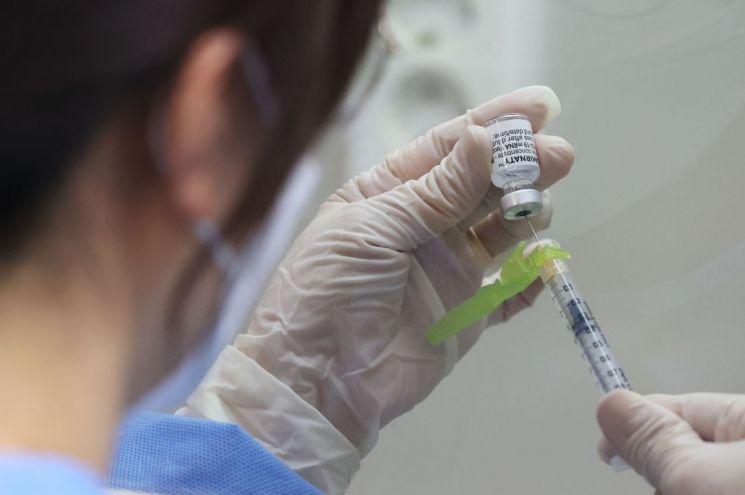
[Asia Economy Reporter Kim Ji-hee] It has been over 100 days since COVID-19 vaccinations began in South Korea on February 26. Although early skepticism arose due to overseas blood clot controversies, which cast a red light on achieving herd immunity by November, various concerns have since been smoothly overcome, with nearly 15% of the total population completing their first dose. The pre-booking rate for vaccines among the elderly aged 60 to 74, which closed on the 3rd, exceeded the target of 80%, and 99.8% of those who made reservations actually received the vaccine.
With vaccination momentum building, expectations for herd immunity and a return to normal life are growing. However, challenges remain. In addition to daily confirmed cases still reaching as high as 700, concerns about rapidly spreading variant viruses persist. Vaccines must be sufficiently secured in line with the second half schedule, which expands vaccination targets from the elderly and essential workers to the general public. Increasing the vaccination rate among those aged 30 to 50, who are evaluated to have less benefit from vaccination compared to the elderly, will also be a key task for the government.
Daily confirmed cases remain between 400 and 700 for months... Variant concerns rising recently
Since the end of last year, when daily confirmed cases exceeded 1,000, the spread of COVID-19 has somewhat slowed but continues to fluctuate around 500 cases daily. Notably, about once every ten days, daily cases surge to the 700 range, creating an uneasy atmosphere.
The spread of variant viruses is also a critical issue. According to the Korea Disease Control and Prevention Agency on the 1st, a total of 1,592 cases of major variant viruses have been identified domestically since October last year. Analysis of 610 cases over the past week found variants in 202 cases, resulting in a variant detection rate of 33.1%. The situation in Daegu is particularly concerning. Nearly 300 confirmed cases have been linked to a nightlife venue outbreak involving the UK variant. Consequently, Daegu raised its social distancing level from 1.5 to 2 starting on the 5th.
Authorities expect the scale of COVID-19 outbreaks to decrease after late July, when vaccination of the general public begins in earnest, and are accelerating the easing of quarantine measures. A more relaxed social distancing scheme is planned for introduction in July. Additionally, as part of vaccine incentives, partial easing of some quarantine rules will be provided sequentially this month, in July, and October to both fully vaccinated individuals and those who have received their first dose.
‘Second round of vaccination’ in the second half of the year: vaccine supply and vaccination rate improvement are key
From the second half of the year, both vaccine supply and vaccination targets will significantly increase. The third quarter is expected to see the introduction of 80 million doses, including five types: AstraZeneca (AZ), Pfizer, Moderna, Janssen, and Novavax. Vaccination of the general adult population is planned starting with those in their 50s in July, making the smooth and timely import of vaccines crucial.
However, to achieve the government’s goal of first-dose vaccination for 36 million people (70% of the population) by September, improving vaccination rates alongside vaccine supply is essential. While the elderly showed high reservation rates in the second quarter, the willingness of adults aged 30 to 50 to get vaccinated remains a separate issue. Although the Janssen vaccine pre-booking for reservists and civil defense personnel was fully booked within a day, indicating considerable willingness among younger people, some argue that the relatively low fatality rate in this age group reduces their incentive to vaccinate. The United States, which recently surpassed a 50% first-dose vaccination rate, has also seen a significant slowdown in vaccination speed, prompting the government to consider various support measures.
© The Asia Business Daily(www.asiae.co.kr). All rights reserved.
![Clutching a Stolen Dior Bag, Saying "I Hate Being Poor but Real"... The Grotesque Con of a "Human Knockoff" [Slate]](https://cwcontent.asiae.co.kr/asiaresize/183/2026021902243444107_1771435474.jpg)
















