Publication of the Final Volume in the Trilogy on Freedom of Expression
[Asia Economy Yeongnam Reporting Headquarters Reporter Kim Yong-woo] “Freedom of expression and citizens standing before the enemy who blocks this freedom, what should we do?”
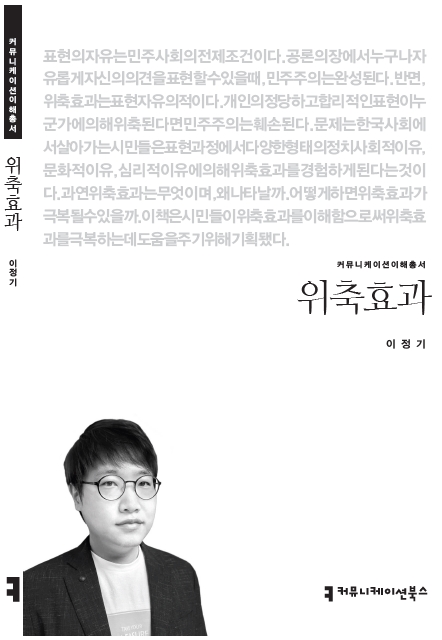
Professor Lee Jeong-gi of Dongmyung University’s Department of Advertising and PR has published a book deeply exploring freedom of expression titled The Chilling Effect (Communication Books).
Professor Lee will release his 19th book on the 2nd of next month.
This book is based on the premise that the chilling effect, which refers to a state of self-censorship caused by power, is the “enemy of freedom of expression.”
He examines the political, social, cultural, and psychological causes of the chilling effect and seeks ways to overcome it.
The Chilling Effect is organized into 10 chapters: the concept of the chilling effect; the National Security Act and the chilling effect; temporary blocking measures by portals and the chilling effect; defamation by factual statement and the chilling effect; punitive damages system and the chilling effect; strategic lawsuits against public participation (SLAPP) and the chilling effect; hate speech and the chilling effect; chilling effect psychology 1: fear; chilling effect psychology 2: individual perception; regime, political orientation, and the chilling effect.
This is the final book in a trilogy on freedom of expression, following The Reality of Freedom of Expression in the Republic of Korea published in June 2016 and The Reality of Freedom of Expression in the Republic of Korea 2 published in December 2020.
While the first and second books realistically diagnosed freedom of expression under conservative and progressive governments respectively, this book focuses on organizing the structural (legal and institutional) and psychological causes that have suppressed freedom of expression in Korean society from the past to the present.
The book contains clear diagnoses and explanations of how freedom of expression and the chilling effect that suppresses it relate to democracy.
Professor Lee Jeong-gi introduced, “The book The Chilling Effect is a work that organizes the relationship between freedom of expression, the chilling effect, and democracy.”
He explained the background of publishing by saying, “I want to contribute to creating a society where citizens can freely express rational thoughts without being intimidated by power or authority.”
© The Asia Business Daily(www.asiae.co.kr). All rights reserved.

















