Agreement Reached at China-Hungary Foreign Ministers Meeting
Factory Establishment Budget Allocated...Production to Start by End of Next Year
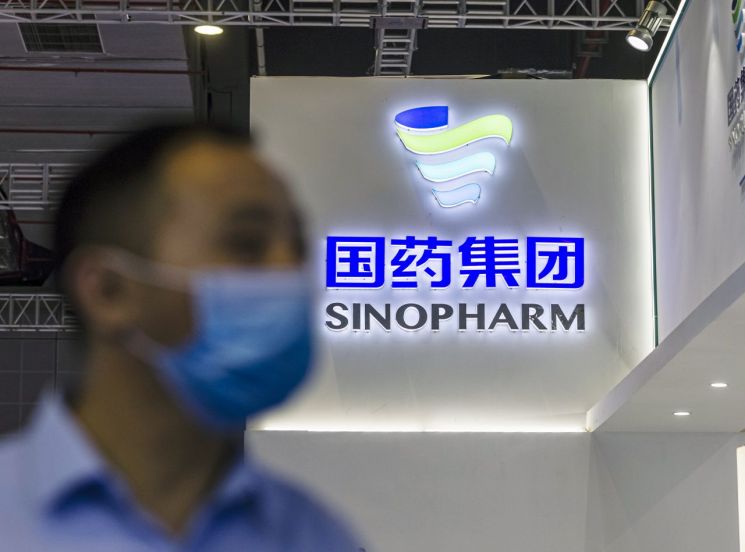
[Asia Economy Reporter Hyunwoo Lee] Hungary has announced that it will be the first European country to establish a production plant for China's Sinopharm COVID-19 vaccine within its territory, agreeing with China to start vaccine production from next year. The Chinese vaccine has not been approved for use within the European Union (EU), which is expected to spark controversy. As China actively pursues vaccine diplomacy with Eastern European countries such as Poland and Serbia in addition to Hungary, there are prospects that the number of countries locally producing Chinese vaccines in Eastern Europe may increase in the future.
According to major foreign media on the 31st (local time), P?ter Szijj?rt?, Hungary's Minister of Foreign Affairs, stated in a press release, "We have agreed with China to produce the Sinopharm COVID-19 vaccine locally in Hungary," adding, "Full-scale production will begin by the end of next year, and thereafter, vaccine self-sufficiency will be possible." It is known that Minister P?ter held talks with Wang Yi, China's Foreign Minister, and agreed on the local production of the Sinopharm vaccine in Hungary.
The Hungarian government is reported to have already allocated a budget of $193 million (approximately 213.9 billion KRW) for the construction of the plant. In February, Hungary became the first European country to approve the Sinopharm vaccine amid difficulties in vaccine supply within Europe. As Hungary, an EU member state, individually approved the Sinopharm vaccine without the European Medicines Agency (EMA) authorization and subsequently signed a local production contract, relations with major EU countries are expected to further deteriorate.
The agreement to produce the Sinopharm vaccine locally in Hungary is largely attributed to China's vaccine diplomacy. The Chinese government is reportedly in contact to sign vaccine supply contracts with Serbia, Poland, and others, raising expectations that the number of Chinese vaccine-producing countries in Eastern Europe may increase. As the EU recently froze the comprehensive investment agreement with China, concerns have arisen about disruptions to the Belt and Road Initiative (land and maritime Silk Road) projects with countries in Eastern Europe such as Serbia and Hungary. In response, China has been actively conducting vaccine diplomacy targeting Eastern European countries.
© The Asia Business Daily(www.asiae.co.kr). All rights reserved.
![Clutching a Stolen Dior Bag, Saying "I Hate Being Poor but Real"... The Grotesque Con of a "Human Knockoff" [Slate]](https://cwcontent.asiae.co.kr/asiaresize/183/2026021902243444107_1771435474.jpg)
















