China "Colluding with other countries to form cliques... No one can interfere in our internal affairs"
Also issues warnings at the level of willingness to use force
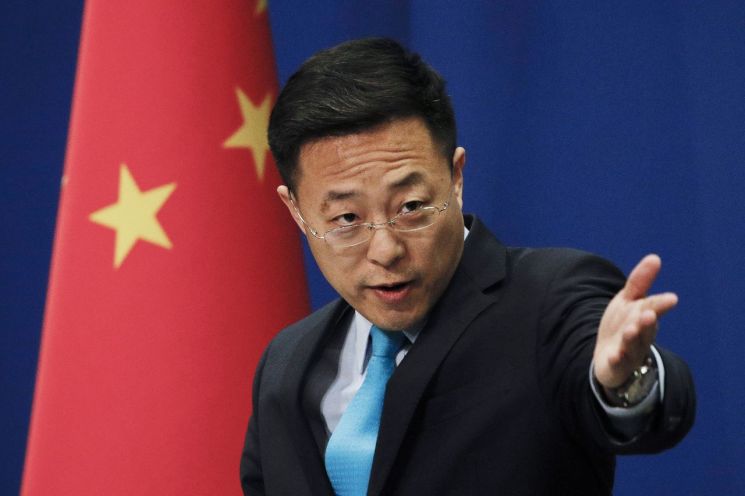
[Asia Economy Reporter Kim Suhwan] China strongly opposed the mention of the Taiwan issue during the summit between Japan and the European Union (EU), stating it would not hesitate to use force.
Zhao Lijian, spokesperson for the Chinese Ministry of Foreign Affairs, said at a regular briefing on the 28th in response to related inquiries, "The statements by the leaders of Japan and the EU have not only damaged international peace and stability, as well as mutual understanding and trust between countries, beyond the development of both sides, but also harmed the interests of third parties."
He added, "Engaging in 'Mike diplomacy' in relations with China is not the right path, and attacking or insulting China will backfire," criticizing, "Forming cliques by colluding with other countries is unhelpful, and threats and confrontations will lead to no way out."
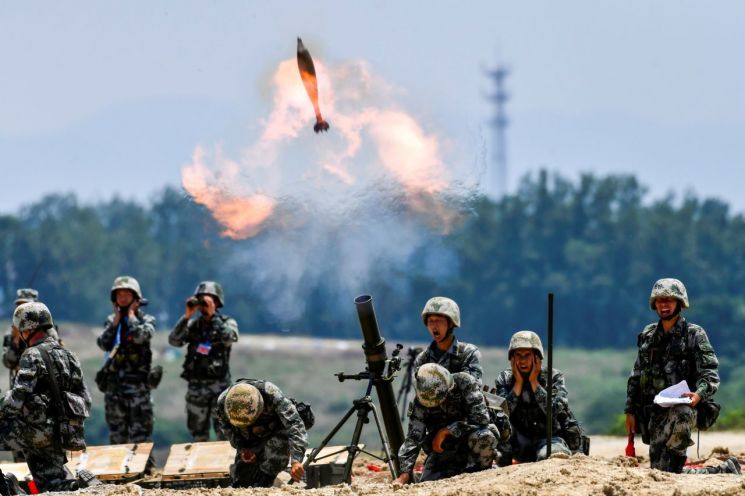
In particular, Spokesperson Zhao criticized Japan by quoting the idiom 'Hyeonaeryeokma,' which means grabbing the reins at the edge of a cliff to stop. Hyeonaeryeokma is a strong warning that does not hesitate to use force and was also used when pressuring South Korea to withdraw THAAD.
Earlier, Japanese Prime Minister Yoshihide Suga, on the 27th (local time), expressed concern about the situation in the East and South China Seas in a joint statement released immediately after a video conference with Charles Michel, President of the European Council, and Ursula von der Leyen, President of the European Commission. He emphasized "the importance of peace and stability in the Taiwan Strait" and recommended the peaceful resolution of cross-strait issues.
This was the second time the Taiwan issue was mentioned since the joint statement of the US-Japan summit last month, which explicitly stated the "importance of peace and stability in the Taiwan Strait."
The spokesperson for the Chinese delegation to the EU opposed the mention of the Taiwan issue, stating, "Taiwan, Hong Kong, and Xinjiang issues are China's internal affairs, and the East China Sea and South China Sea issues relate to China's territorial sovereignty and maritime rights and interests," adding, "These issues concern China's fundamental interests and no one can interfere."
Furthermore, "We express strong dissatisfaction and opposition to the joint statement by the leaders of Japan and the EU," emphasizing, "China will more firmly safeguard its national sovereignty, security, and development interests."
State-run media representing the Chinese government's position also warned that Japan's collusion with Western countries to exaggerate the China threat would have serious consequences. L? Yaodong, director of the Japan Research Institute at the Chinese Academy of Social Sciences, said in an interview with the state-run Global Times, "Japan's continuous interference in China's internal affairs ignores the China-Japan Joint Declaration and seriously damages China-EU and China-Japan relations." He added, "Japan has become a saboteur not only of East Asia but also of global development," criticizing, "At a time when East Asia is expected to lead the global economic recovery in the post-COVID era, Japan has cast a shadow over regional peace and stability."
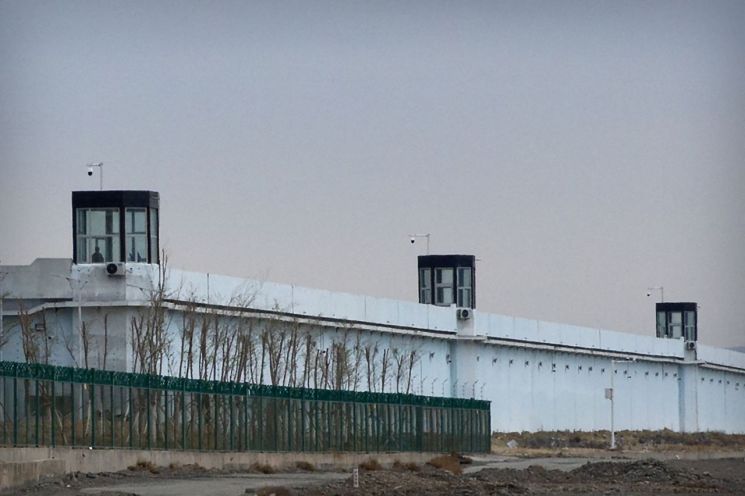
China also appears to be actively responding to the West raising issues about Hong Kong and the Xinjiang Uyghur population. Wang Yi, Chinese State Councilor and Foreign Minister, said during a phone call with Dominic Raab, UK Foreign Secretary, the day before, "The 'One Country, Two Systems' principle is China's fundamental policy and will not change in the future." He added, "Everything China does in Hong Kong is to ensure the stable development of 'One Country, Two Systems.'"
State Councilor Wang Yi addressed allegations of human rights abuses against the Uyghurs in Xinjiang, stating, "The essence of the Xinjiang issue is about anti-violence, anti-separatism, and anti-extremism." He argued, "China welcomes external personnel visiting Xinjiang to understand the situation, but we cannot accept investigations based on presumed guilt."
© The Asia Business Daily(www.asiae.co.kr). All rights reserved.
![Clutching a Stolen Dior Bag, Saying "I Hate Being Poor but Real"... The Grotesque Con of a "Human Knockoff" [Slate]](https://cwcontent.asiae.co.kr/asiaresize/183/2026021902243444107_1771435474.jpg)


















