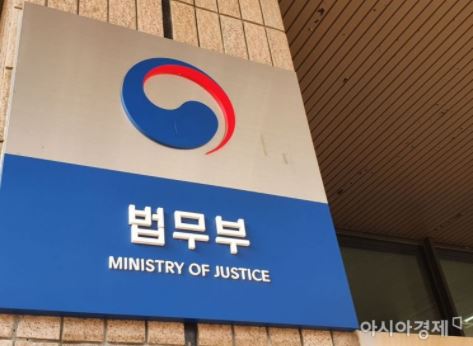
[Asia Economy Reporter Kim Daehyun] In response to netizens' concerns that the amendment to the Nationality Act, which grants nationality to children born in Korea to permanent residents, would turn Korea into a "tributary state of China," the Ministry of Justice clarified that "the concentration on specific countries will be alleviated in the future."
On the 28th, the Ministry of Justice held a press briefing at the Seoul High Prosecutors' Office building in Seocho-dong, Seoul, to explain the amendment to the Nationality Act.
At the briefing, Song Soyoung, Director of the Nationality Division at the Ministry of Justice, said, "From a national policy perspective, we considered which subjects would help national interests and facilitate social integration, targeting children born in Korea to permanent residents and those who have stayed in Korea for two generations." She added, "Due to historical and geographical factors, the proportion of foreigners from certain countries is large, but the concentration on specific countries will be alleviated in the future."
Earlier, on the 26th of last month, the Ministry of Justice announced a legislative notice on the amendment to the Nationality Act, which includes provisions allowing permanent residents with deep ties to Korea, such as overseas Chinese or Korean-Chinese, to acquire Korean nationality simply by registering if their children are born in Korea. The target includes permanent residents born in Korea over two to three generations, such as overseas Chinese residing in Korea, and those with historical and bloodline ties to Korea. Children under six years old can acquire nationality without additional requirements, while those aged seven or older can apply for nationality acquisition registration if they have resided in Korea for more than five years.
When asked whether the amendment abandons the principle of "jus sanguinis," which is the foundation of the nationality system, the Ministry responded, "We aim to maintain the foundation of jus sanguinis while partially supplementing it with jus soli." They emphasized, "By targeting children born in Korea to overseas Koreans with the same bloodline, the principle of jus sanguinis is preserved." They also mentioned, "As we enter a multicultural society, there is a thought that Korea should become a more inclusive society."
Regarding concerns about increased public burden, the Ministry answered, "Children of permanent residents who acquire nationality will bear all citizen obligations, including taxation and military service." They also explained, "The timing of nationality renunciation is restricted under the Nationality Act," so there is no need to worry about situations where benefits are enjoyed and nationality is renounced. Furthermore, recognizing children of permanent residents as members of society early can prevent social side effects caused by identity confusion," they evaluated.
In response to concerns that "the acquisition of nationality by these individuals might lead to public office and political advancement, turning Korea into a tributary state of China," the Ministry stated, "The entry of dual nationals into public office or politics is restricted by individual laws," adding, "(Such concerns are) groundless."
Previously, a petition titled "Strongly Oppose the Legislation of the Nationality Act Amendment" was posted on the Blue House's public petition board, garnering about 310,000 signatures as of 2:30 PM on the same day. The petition argues that many foreigners, including overseas Chinese, already have many rights in society and that Korean nationality should not be granted recklessly.
The Ministry of Justice expects that about 3,930 people will newly acquire nationality due to the amendment. However, they plan to collect sufficient opinions until the end of the legislative notice period on the 7th of next month.
© The Asia Business Daily(www.asiae.co.kr). All rights reserved.

















